Welcome to our in-depth look at high-quality plastic products and how they are transforming everyday life, industrial applications, and commercial projects. Before you dive in, stay connected with us for expert tips, industry insights, and practical solutions:
· Facebook – Join our community to ask questions and get the latest product updates
· Tiktok – Watch tutorials, installation guides, and project demonstrations
Let’s explore how durable and versatile plastic products can deliver efficiency, reliability, and long-term performance—read on to discover which solutions fit your needs best!
Table of Contents
Key Takeaways
- Durable, lightweight, and reusable storage solutions
- Moisture-resistant and impact-proof for safe handling
- Customizable sizes, colors, and thickness for versatile applications
- Reduces costs, waste, and operational inefficiencies
- Ideal for industrial, retail, electronics, and food supply chains
- Supports regulatory compliance and environmental standards
- Streamlines automation and warehouse management
Introduction
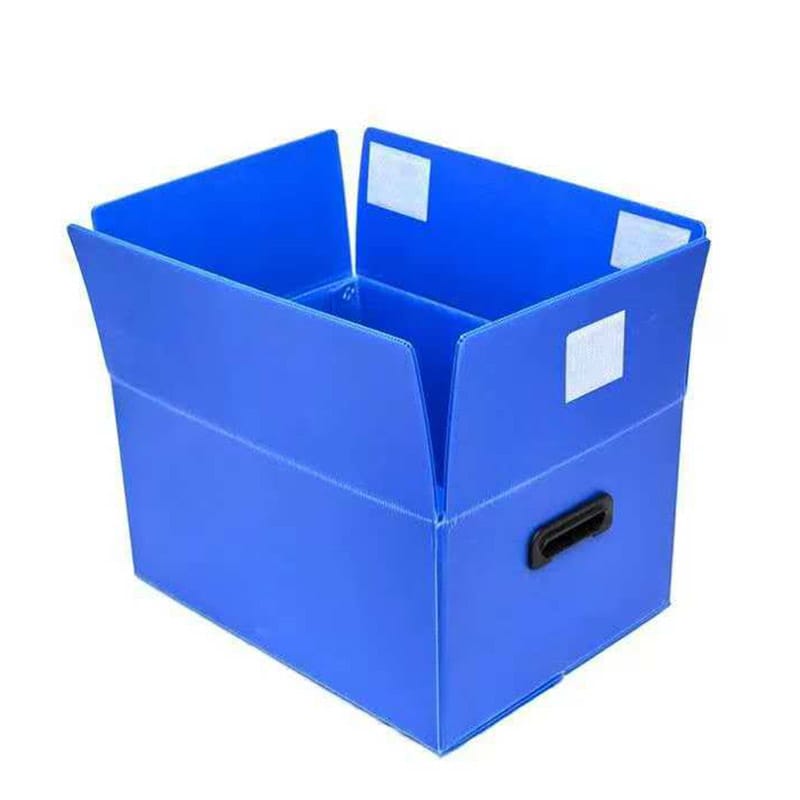
In today’s highly competitive global supply chain, efficiency and reliability are crucial. Traditional packaging solutions like cardboard and wooden crates are often insufficient to meet the demands of modern logistics, particularly in industries where product safety, sustainability, and cost control are paramount. Corrugated Plastic Boxes (CPBs) offer a transformative solution by combining durability, lightweight design, and versatility.
These boxes are engineered to withstand repeated handling, moisture, and impacts, reducing damage, replacement frequency, and operational costs. Across industries—ranging from electronics and food to retail and industrial manufacturing—CPBs improve workflow, optimize space, and ensure regulatory compliance. This article dives into the technical, operational, and economic advantages of corrugated plastic boxes and why they are essential for supply chain efficiency.
Understanding Corrugated Plastic Boxes
Definition and Construction
A corrugated plastic box is made from high-density polyethylene (HDPE) or polypropylene (PP), designed to replicate the structure of traditional corrugated cardboard but with superior durability and water resistance.
- Lightweight yet strong, capable of supporting heavy loads
- Resistant to moisture, UV exposure, chemicals, and abrasion
- Available in foldable and nestable designs for space efficiency
Key Features
Durability and Resilience
CPBs can endure continuous use over years without structural compromise. The rigid corrugated structure distributes weight evenly, reducing deformation during stacking.
- Can hold 25–40 kg per box depending on size
- Maintains shape even in humid or cold storage conditions
Lightweight and Ergonomic Design
The lightweight nature reduces labor strain and enables easier palletization.
- Average weight: 1.2–3 kg per standard size
- Smooth handles or handgrips improve manual handling
Eco-Friendly and Reusable
CPBs are reusable and recyclable, supporting circular supply chain strategies.
- Reusable up to 200 cycles in industrial use
- Reduces carbon footprint compared to disposable packaging
Customizable Options
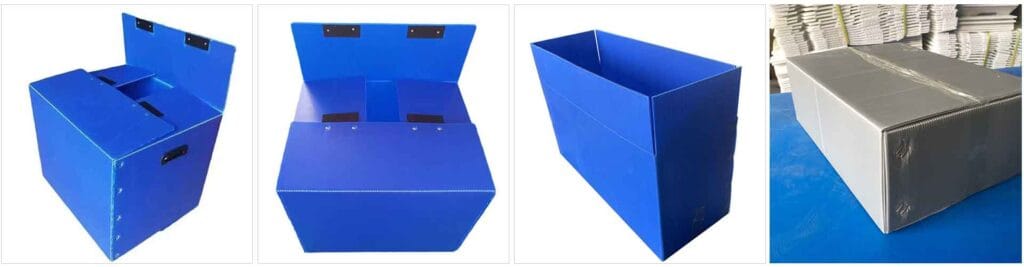
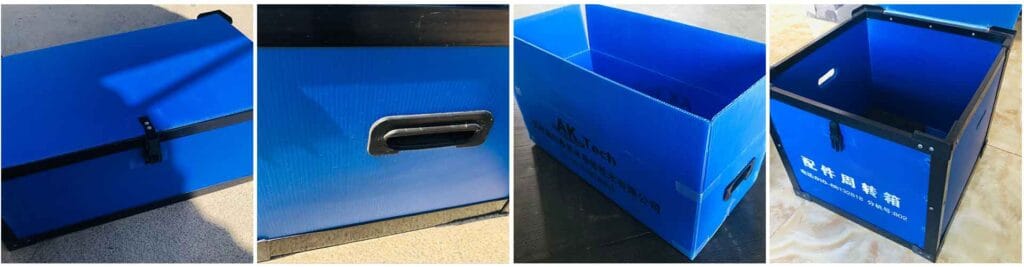
Boxes come in multiple thicknesses, colors, sizes, and closure options, including lids and ventilation holes.
- Standard sizes: 400x300x200 mm, 600x400x300 mm, 800x600x400 mm
- Custom printing for branding or inventory codes
Advantages of Corrugated Plastic Boxes
Product Protection
CPBs safeguard contents from moisture, impact, and contamination.
- Perfect for electronics: static-free options available
- Food industry: hygienic and FDA-approved materials
- Industrial parts: reduces breakage and misplacement
Cost Efficiency
Despite a higher initial investment, long-term savings are substantial.
- Life expectancy: 5–10 years vs 1–2 years for cardboard
- Reduced replacement frequency lowers procurement and labor costs
- Less damage means fewer returns and warranty claims
Operational Efficiency
Improves warehouse and logistics workflow.
- Stackable and nestable: saves up to 30% storage space
- Compatible with automation and conveyor systems
- Standardized sizes simplify inventory management
Environmental Compliance
CPBs comply with ISO 18604 (reuse of packaging), supporting green logistics and sustainable supply chain practices.
Comparing Storage Options
| Feature | Cardboard Box | Wooden Box | Corrugated Plastic Box | Key Benefit |
|---|---|---|---|---|
| Durability | Low | High | Very High | Long-lasting protection |
| Moisture Resistance | Poor | Moderate | Excellent | Protects sensitive items |
| Weight | Light | Heavy | Light | Reduces handling effort |
| Lifespan | 1–2 uses | 5–7 years | 5–10 years | Cost savings over time |
| Reusability | Limited | Moderate | High | Eco-friendly, sustainable |
| Customization | Limited | Limited | Extensive | Adaptable for diverse needs |
| Regulatory Compliance | Variable | Limited | High | Meets ISO, FDA, EU regulations |
Insight: Corrugated plastic boxes consistently outperform traditional cardboard and wooden solutions in durability, moisture resistance, and long-term cost-effectiveness.
Applications of Corrugated Plastic Boxes
Industrial Storage
Organize and transport tools, spare parts, and assembly components efficiently.
- Reduces errors in picking and sorting
- Compatible with automated racks and forklifts
Electronics
Protect sensitive devices from static, moisture, and impact.
- Anti-static corrugated plastic available
- Ideal for B2B logistics and safe shipping
Food and Beverage
Maintain hygiene standards while storing raw ingredients or packaged goods.
- FDA-approved materials for direct contact
- Suitable for cold chain and refrigerated storage
Retail and Logistics
Streamline transport, stacking, and display.
- Color-coded boxes for SKU management
- Nestable design reduces warehouse congestion
Pharmaceutical and Medical Supplies
CPBs meet stringent sanitation requirements for medical supply storage.
- Compatible with autoclaving or chemical disinfectants
- Ideal for hospitals and supply chain distributors
Installation and Handling Best Practices
Stacking and Palletization
- Do not exceed maximum stacking height (usually 3–5 boxes depending on size)
- Use pallets compatible with box dimensions
- Uniform stacking prevents deformation
Cleaning and Maintenance
- Wash boxes with mild detergent or pressure wash
- Inspect for cracks and wear regularly
- Avoid prolonged exposure to heat or corrosive chemicals
Handling Guidelines
- Train staff on ergonomic lifting
- Use hand trucks or forklifts for heavy loads
- Secure lids to prevent spillage
Enhancing Supply Chain Efficiency
Labor Savings
Lightweight and stackable boxes reduce manual handling time.
Product Safety
Minimizes breakage, moisture damage, and contamination.
Space Optimization
Standardized sizes allow better use of warehouse volume and improved inventory tracking.
Compliance and Traceability
CPBs support ISO and industry-specific packaging regulations.
Integration with Automation
Compatible with conveyor systems, automated storage, and retrieval systems (ASRS).
Case Study: European Electronics Supplier
A German electronics distributor replaced cardboard crates with CPBs in 2021. Results over two years:
- 30% reduction in product damage
- 20% improvement in warehouse throughput
- 25% decrease in packaging waste
- ROI achieved within 18 months
This demonstrates the tangible operational and financial benefits of adopting corrugated plastic boxes.
Industry Standards and Certifications
- ISO 18604: Packaging reuse and circular economy standards
- FSC/PEFC alternatives: Sustainable material sourcing for wood alternatives
- FDA Compliance: Food-grade material requirements
- EU REACH: Safe chemical standards in manufacturing
- UL/CE: Electrical and safety standards for certain industrial boxes
Adhering to these standards ensures regulatory compliance, product safety, and international shipping compatibility.
Conclusion
Corrugated Plastic Boxes are a cornerstone of modern, efficient, and sustainable supply chains. Their combination of durability, lightweight design, reusability, and customization options provides businesses with:
- Enhanced product protection
- Reduced operational and packaging costs
- Improved warehouse efficiency and space utilization
- Compliance with regulatory and environmental standards
From industrial manufacturing to electronics, food, retail, and medical industries, CPBs are revolutionizing how products are stored, handled, and transported. By adopting corrugated plastic boxes, companies can achieve a measurable return on investment while supporting eco-friendly practices and streamlining their supply chain operations.
FAQ
Q1: Are CPBs suitable for international shipping?
A: Yes, their durability and moisture resistance make them ideal for global transport, reducing handling-related damage.
Q2: How do I select the correct box size?
A: Measure your product dimensions, evaluate stacking weight, and account for padding. Thicker walls are better for fragile items.
Q3: Can CPBs be used for food storage?
A: Absolutely. FDA-approved boxes can be sanitized and reused safely.
Q4: Are they cost-effective long-term?
A: Yes. Although the initial investment is higher, the long lifespan, reusability, and reduced product damage result in significant cost savings.
Q5: Can they integrate with warehouse automation?
A: Yes. Standardized sizes allow compatibility with ASRS, conveyors, and RFID tracking systems.
Q6: How do CPBs contribute to sustainability goals?
A: Reusable design, recyclable materials, and reduced waste help companies meet circular economy and green logistics objectives.