Welcome to our in-depth look at high-quality plastic products and how they are transforming everyday life, industrial applications, and commercial projects. Before you dive in, stay connected with us for expert tips, industry insights, and practical solutions:
· Facebook – Join our community to ask questions and get the latest product updates
· Tiktok – Watch tutorials, installation guides, and project demonstrations
Let’s explore how durable and versatile plastic products can deliver efficiency, reliability, and long-term performance—read on to discover which solutions fit your needs best!
Table of Contents
Key Takeaways for This Guide
- Critical scaffold safety netting standards globally and regionally.
- Differences between materials, mesh sizes, and load ratings.
- Installation best practices, tensioning, and anchoring techniques.
- Comparison of common scaffold safety netting types with performance metrics.
- Real-world case studies demonstrating compliance and accident prevention.
- Regulatory requirements including ISO, EN, OSHA, BS, and AS/NZS standards.
- Emerging trends: smart netting, eco-friendly materials, and global standard harmonization.
- Maintenance, inspection schedules, and common challenges.
Introduction

Construction sites are inherently high-risk environments. Scaffold safety netting is a critical line of defense against falling tools, debris, and personnel accidents. In 2025 alone, OSHA reported that falls from height accounted for 33% of all construction fatalities in the United States. Proper netting not only saves lives but also reduces liability, insurance costs, and downtime caused by accidents.
With technological advances, construction managers must choose nets that are compliant, durable, and tailored to specific site conditions. This guide consolidates all essential standards, installation practices, and selection strategies to help professionals stay ahead in 2026.
Understanding Scaffold Safety Netting
What is Scaffold Safety Netting?
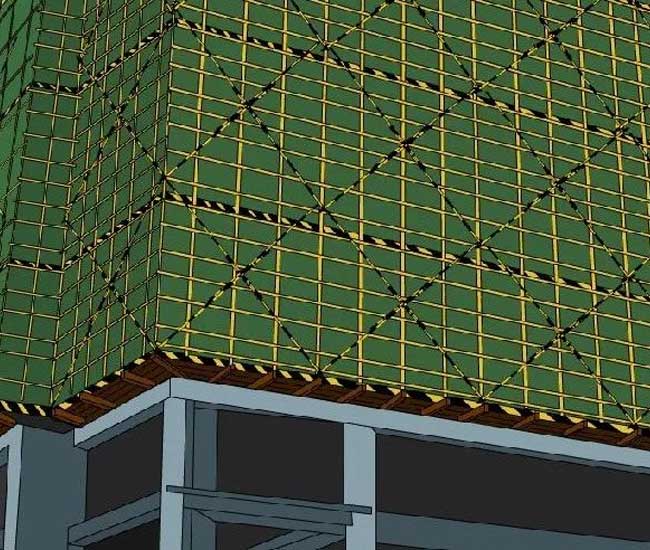
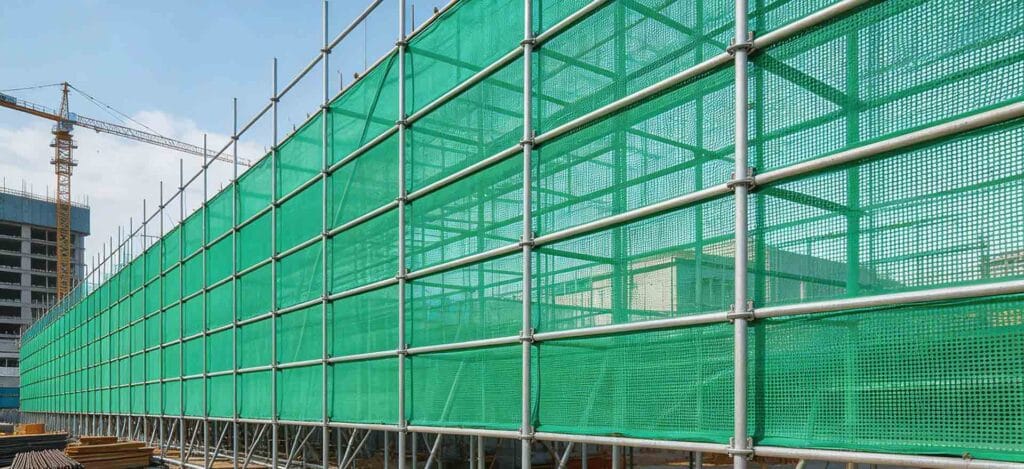
Scaffold safety netting is a high-strength, durable mesh installed around scaffolds and towers to prevent objects or personnel from falling. The nets are designed to absorb impact and provide a reliable barrier without impeding ventilation or access.
Key Functions:
- Prevent falling debris injuries
- Reduce project liability
- Protect equipment and materials below scaffold areas
Materials Used in Scaffold Safety Netting
- Polyethylene (PE): Lightweight, UV-resistant, widely used in temporary sites.
- Nylon: Superior tensile strength for long-term or heavy-duty projects.
- Polypropylene (PP): Resistant to chemicals and abrasion, ideal for industrial sites.
- Composite Blends: Newer blends combining PE and Nylon for enhanced durability and flexibility.
Performance Consideration: Material choice impacts tensile strength, lifespan, and cost-efficiency.
Common Sizes and Mesh Types
- 25mm–75mm Mesh: Smaller mesh captures fine debris but reduces airflow. Larger mesh allows better ventilation and reduces wind load.
- Knotted vs. Knotless: Knotted nets provide higher durability, knotless offers flexibility.
- Edge Reinforcement: Nets with reinforced edges prevent fraying and extend service life.
Global Scaffold Safety Netting Standards
ISO Standards
The International Organization for Standardization (ISO) provides widely recognized benchmarks:
- ISO 22857: General safety requirements for scaffolds and netting.
- ISO 14122: Access and fall protection for machinery, indirectly influencing net standards.
- ISO 12480: Safety nets for temporary fall protection, detailing load and deflection limits.
Key Metrics: Tensile strength ≥ 150 kg/m², maximum elongation ≤ 15%, UV degradation < 10% over 2 years.
European EN Standards
European regulations often reference EN standards for construction netting:
- EN 1263-1: Test methods for mechanical strength.
- EN 1263-2: Performance requirements, including impact absorption.
- EN 13374: Temporary edge protection and scaffolding net integration.
Example Requirement: The net must withstand 2 kJ impact energy without tearing.
OSHA Regulations (United States)
OSHA mandates strict scaffold netting compliance:
- Minimum tensile strength: 5,000 lbs for debris nets
- Net coverage: extend at least 8 ft beyond scaffold edge
- Inspection: at least every 7 days or after severe weather events
- Anchoring: nets must be securely fastened to prevent slippage
UK and Australia Standards
- BS 8437:2012 (UK): Covers industrial safety nets, including mesh size, load rating, and anchorage.
- AS/NZS 1891 (Australia/New Zealand): Specifies fall arrest systems integrated with safety nets for scaffolds.
Performance Metrics for Scaffold Safety Netting
Tensile Strength and Load Ratings
Tensile strength ensures the net can absorb falling object energy:
| Material | Tensile Strength (kg/m²) | Maximum Impact Energy (kJ) | UV Resistance |
|---|---|---|---|
| Polyethylene | 150–200 | 1.5 | High |
| Nylon | 200–300 | 2.5 | Medium |
| Polypropylene | 180–250 | 2.0 | High |
UV Resistance and Durability
Exposure to sunlight degrades polymer fibers over time. UV-stabilized nets can maintain over 90% tensile strength after 2 years of continuous outdoor use.
Fire Resistance
Standards such as EN 13501 or ASTM E84 test for flame retardancy. Fire-retardant nets are mandatory for welding, grinding, or high-heat operations.
Installation Best Practices
Proper Tensioning
- Nets must be taut but not overstretched.
- Use tensioning tools to maintain uniform load distribution.
Anchor Points and Spacing
- Anchor points every 2 meters along scaffold edges
- Heavy-duty fasteners reduce slipping risks
Edge Protection
- Reinforced edges prevent fraying
- Corner wrapping ensures maximum safety and load distribution
Comparison of Common Scaffold Safety Netting Types
| Feature | Polyethylene Net | Nylon Net | Polypropylene Net |
|---|---|---|---|
| Tensile Strength (kg/m²) | 150–200 | 200–300 | 180–250 |
| UV Resistance | High | Medium | High |
| Fire Resistance | Low | Medium | Medium |
| Cost | Low | High | Medium |
| Recommended Use | Temporary | Heavy-duty | Industrial |
Analysis: Nylon is best for heavy-duty and long-term installations. PE is suitable for temporary projects, while PP is ideal for chemical and industrial exposure.
Case Studies and Industry Insights
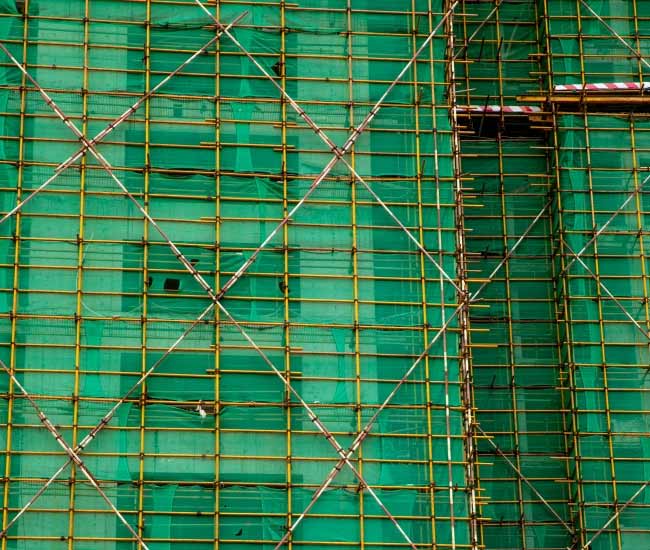
Case Study 1: NYC High-Rise Construction
- EN-compliant nylon scaffold safety netting used around a 50-story building.
- Outcome: Zero major debris incidents over 12 months.
- Benefit: Insurance premiums reduced by 8% due to proactive safety compliance.
Case Study 2: Industrial Plant Refurbishment in Germany
- PE nets per ISO 22857 standards implemented.
- Minor tool drops prevented costly equipment damage.
- Worker confidence and regulatory compliance significantly improved.
Case Study 3: Dubai Metro Expansion (2024–2025)
- High-strength nylon nets installed at elevated platforms.
- Nets designed to withstand 3 kJ falling object energy, complying with EN 1263-2.
- Result: No downtime from debris-related accidents; project completed ahead of schedule.
Common Challenges and Mitigation Strategies
Weather Effects
- Heavy rain, wind, and snow can compromise netting.
- Solution: Use wind-permeable nets or temporary removal/storage.
Wear and Tear
- Nets degrade over time due to UV, abrasion, or chemical exposure.
- Solution: Implement replacement schedule every 12–24 months.
Inspection Compliance
- Nets must be checked regularly to meet OSHA/EN standards.
- Solution: Maintain documented inspection logs for accountability.
Innovations in Scaffold Safety Netting
Smart Netting Technology
Smart netting represents the next generation of safety solutions on construction sites. Embedded sensors within the mesh can continuously monitor tension, tears, and UV degradation, providing precise, real-time data on the net’s condition. These sensors use IoT connectivity to send alerts directly to site supervisors’ dashboards or mobile devices, enabling immediate preventative maintenance before accidents occur.
- Real-World Example: A 2024 pilot project in Singapore integrated smart nets on a 60-story building scaffold. Alerts allowed the maintenance team to replace or retension nets within 30 minutes of detecting anomalies, avoiding potential hazards and preventing downtime.
- Data Insight: Smart nets have been shown to reduce inspection labor hours by up to 40% while maintaining compliance with EN 1263-2 and ISO 22857 standards.
- Additional Benefit: Integration with digital construction management platforms allows predictive maintenance schedules, improving overall project efficiency and safety compliance.
Eco-Friendly Materials
The construction industry is under increasing pressure to adopt sustainable practices, and scaffold safety netting is no exception. Modern nets are now manufactured from recycled polyethylene (PE) and biodegradable nylon, significantly reducing environmental impact without compromising performance.
- Environmental Impact: Using recycled PE reduces plastic waste and lowers the carbon footprint by an estimated 1.2 kg CO₂ per square meter of netting compared to virgin PE.
- LEED Alignment: Eco-friendly nets contribute to LEED v4 points under the “Materials & Resources” category, enhancing the sustainability credentials of construction projects.
- Durability Note: Despite being eco-friendly, these nets retain tensile strength up to 200 kg/m² and maintain UV resistance comparable to standard PE nets, making them suitable for long-term installations.
Global Standard Harmonization
With international construction projects on the rise, harmonized standards for scaffold safety netting are increasingly important. ISO standards such as ISO 22857 are being widely adopted to ensure consistent safety levels across borders.
- Procurement Simplification: Using standardized nets reduces complexity when sourcing materials from multiple countries, avoiding compatibility issues with scaffold dimensions or anchor points.
- Compliance Advantage: Projects in regions with overlapping regulatory frameworks (e.g., EN 1263 in Europe and OSHA in the U.S.) can achieve dual compliance by selecting ISO-certified nets.
- Worker Safety Improvement: Standardized quality ensures predictable tensile strength, tear resistance, and UV longevity, reducing the risk of accidents on multinational construction sites.
- Future Outlook: Industry analysts predict that by 2030, over 70% of scaffold safety netting on international projects will conform to ISO or ISO-aligned standards, promoting global consistency and safer work environments.
FAQ
How high should scaffold safety netting extend?
OSHA recommends at least 8 feet beyond scaffold edges; EN standards typically require 2.5 meters minimum.
Can scaffold safety netting be reused?
Yes, if nets pass inspections for tears, UV damage, and secure anchoring.
What is the difference between debris nets and fall protection nets?
Debris nets catch falling objects, while fall protection nets prevent personnel from falling. Some nets serve both purposes if designed to EN/ISO specifications.
Are fire-retardant nets necessary?
Highly recommended for welding, grinding, or operations with heat exposure. Check ASTM E84 or EN 13501 compliance.
How do I choose between PE, Nylon, and PP netting?
Consider project duration, load requirements, UV exposure, and budget. Nylon is best for long-term or heavy-duty sites, PE for temporary, PP for chemical exposure.
Regulatory References and White Papers
- OSHA 1926 Subpart M – Fall Protection Guidelines (2025 Edition)
- EN 1263-1 and EN 1263-2 Technical Reports (European Committee for Standardization)
- ISO 22857:2020 – Safety Nets for Industrial Applications
- White Paper: Reducing Construction Falls with Safety Net Technology, Global Construction Safety Association, 2024
Conclusion
Selecting and installing scaffold safety netting according to global and regional standards is essential for worker safety, regulatory compliance, and project efficiency. By understanding materials, tensile strength, UV/fire resistance, proper installation, and inspection protocols, construction managers can ensure effective protection for both personnel and property.
Implementing smart, eco-friendly nets and adopting standardized practices will position your construction projects for maximum safety and efficiency in 2026 and beyond.