Table of Contents
Corrugated Plastic Boxes: Test Stacking With Real Payloads addresses a specific B2B decision: stack height dwell time and payload distribution. The right choice depends on the finished application and the way it is handled, not just the product name. Use the checks below to compare samples, prepare a clear request for quotation and approve a repeatable supply specification.
The decision for corrugated plastic boxes
The practical starting point is a warehouse stacking loaded reusable boxes. The risk is specific: empty-box stiffness is used to approve loaded stacks. A decision about corrugated plastic boxes should therefore begin with stack height dwell time and payload distribution, rather than a comparison based only on a photograph or the nominal material name. This article sets out a qualification and purchasing method for that situation. It does not assign a universal load rating, service life or certification to an unspecified grade.
A useful acceptance statement is that the stack remains stable without unacceptable wall deformation. Translate that statement into a short inspection record before asking for quotations or changing the current design. Decide who will observe the result and which product condition must remain unchanged. Where a drawing dimension is involved, agree the measurement position and method. Where appearance or handling matters, retain a physical reference or a clear operating example.
The first trial should stack production-equivalent boxes with the intended contents. Keep the actual product, its support arrangement and the relevant operating sequence in the comparison. Record the sample code, drawing revision, conditions and observations together. If a detail is changed during the trial, identify the revised sample separately. This makes it possible to distinguish a useful improvement from a different setup that was never compared fairly.
The most informative failure to investigate is the one connected to stack height dwell time and payload distribution. Photograph the relevant area before and after the trial and record whether the problem appeared during preparation, operation or unpacking. Do not merge distinct failure causes into one rejected-sample count. That distinction helps determine whether the next action belongs in material selection, conversion, packing or the working method.
For the order, keep stack height dwell time and payload distribution visible in the drawing or acceptance sheet. Ask the supplier to identify any proposed deviation before production. The release decision should refer to the sample and evidence that were actually reviewed. An appealing prototype is a starting point; repeatability in the supplied batch is what allows corrugated plastic boxes to work as a dependable purchasing specification.
Keep handling comfortable and predictable
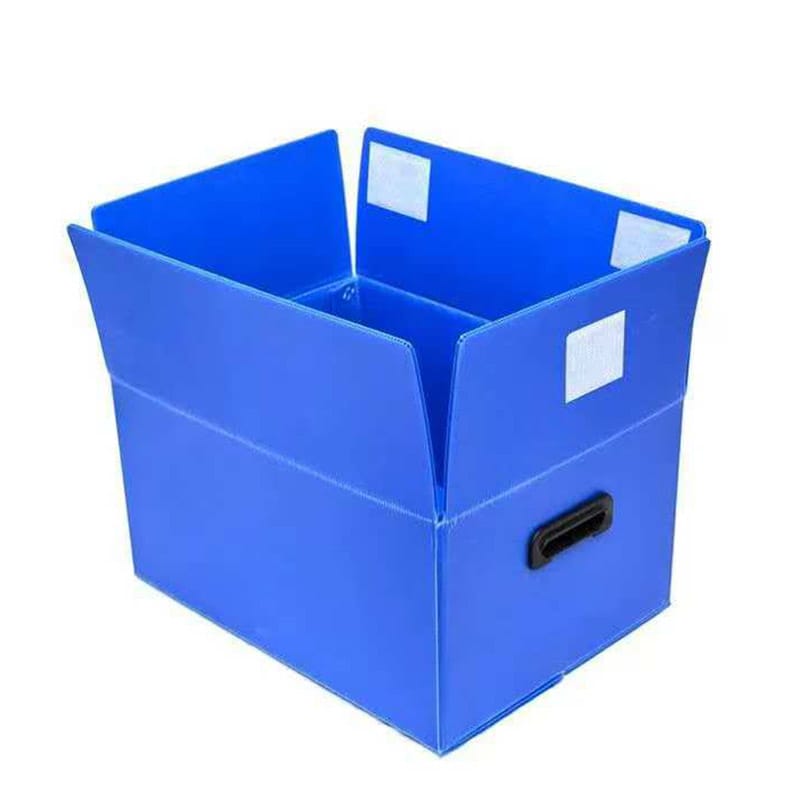
When specifying corrugated plastic boxes, load the sample before evaluating handles. The payload’s center of mass can change the balance and make an apparently convenient grip awkward. Examine cutout edges, hand clearance and the effect of lifting on the walls. Use the site’s approved manual-handling procedures and mechanical assistance where needed. A packaging trial should not ask an operator to accept an unsuitable lifting task.
Observe carrying, placement and removal at the real workstation. Note whether the box catches on fixtures, blocks sight lines or requires an unusual wrist position. A larger handle opening can improve access while reducing the remaining wall material. Evaluate the complete detail rather than selecting its size in isolation. Record the handling method that the design assumes so later users have clear guidance.
The buyer should be able to repeat the comparison and stack production-equivalent boxes with the intended contents. Use the same identification method for the production batch.

Design cleaning and drying into the box
When comparing corrugated plastic boxes, describe the actual cleaning sequence, including detergent, concentration, exposure, rinsing and drying. Open channels, joints, label pockets and closure components can retain liquid or debris. A water-resistant sheet face does not make every box construction easy to clean. Review whether the box needs disassembly and whether staff can inspect the areas most likely to retain contamination.
Use the intended process on production-equivalent samples and check them after drying. Look for residue, trapped moisture, color transfer, damaged creases and changes in closure function. If the application involves direct food contact or a controlled hygiene environment, obtain documentation for the exact material and use conditions. A general product photograph or resin description does not establish approval for that application.
When reviewing a substitute, return to stack height dwell time and payload distribution. Nominally similar material is only a candidate until the relevant checks are complete.
Calculate the fleet from complete loop time
For a project using corrugated plastic boxes, a returnable container may be filling, in transit, waiting for unloading, awaiting collection, being cleaned or held for inspection. Count the entire loop when estimating the fleet. Peak demand and delays can matter more than the average outbound shipping rate. Track each stage separately during a pilot so that additional boxes are assigned to a real operating need.
Compare the number dispatched with the number returned in usable condition. Separate missing boxes from damaged boxes and boxes temporarily unavailable for cleaning. A lower purchase price does not compensate for a loop that loses packaging without a record. Use route or customer identifiers where practical, and agree responsibility at each handover before expanding the fleet.
The priority for this project is stack height dwell time and payload distribution. Keep it visible when comparing the candidates.
Count all components in the empty return
When qualifying corrugated plastic boxes, fold-flat boxes can reduce empty volume, but the return configuration must include lids, dividers, straps, inserts and any packing needed to keep them together. Measure a realistic return bundle instead of an isolated folded blank. Check whether workers can assemble the return load consistently and whether small reusable parts are likely to be lost.
Use the measured return package in the freight comparison. Include the labor required to collapse, sort and rebuild the packaging. If the return route is irregular, model the space required while empty containers wait for collection. The best arrangement is the one that fits the actual loop with manageable handling, rather than the one with the smallest theoretical folded dimension.
For the situation described here, stack production-equivalent boxes with the intended contents. Record the result before releasing the order.
Use identification that survives the loop
Before ordering corrugated plastic boxes, provide a clear location for the current part number, quantity and route information. Decide whether labels are disposable, removable or held in a reusable pocket. Scan barcodes on the loaded package under operating conditions. A label position that works on a flat sample can become hidden when boxes are stacked or placed on a shelf.
Remove or cover obsolete identifiers before the next load. Color can support identification, but it should not be the only distinction between similar parts. Check the marking method after cleaning and normal handling. Keep the box’s permanent asset identity separate from the changing contents label where the fleet needs to be tracked across several product types.
The decision should demonstrate that the stack remains stable without unacceptable wall deformation. An unexplained pass mark is less useful than the observation behind it.
Separate a screening result from a service claim
When inspecting corrugated plastic boxes, a short screening trial can compare candidates and reveal obvious weaknesses. It does not automatically predict performance through every transport, temperature or reuse condition. State what the trial demonstrates and where further evidence is needed. For packaging exposed to distribution hazards, use an appropriate complete-pack evaluation selected for the actual route and product rather than a convenient test with a familiar name.
Record the sequence of conditions, because cleaning before loading or loading before stacking can produce different results from isolated checks. Retain failed samples when they help explain a weakness. If a laboratory or specialist report is used, verify its configuration and scope before connecting its result to the intended order. Evidence is strongest when the tested construction matches the supplied one.
Keep the qualification focused on stack height dwell time and payload distribution. Ask the supplier to explain deviations from the approved construction.
Use a first-article record that purchasing can repeat
For production using corrugated plastic boxes, create a compact record linking the approved drawing, material code, sample identity and acceptance method. Include photographs that show scale and the relevant details. Record unresolved deviations instead of allowing them to disappear into a general sample-approved note. The aim is to make the first production check reproducible by someone who was not present during development.
Keep the reference sample protected from damage and contamination. If it changes with age or storage, retain the original measurement record as well as the physical piece. A reorder should identify the same revision explicitly. When a new requirement is introduced, make the change visible so that existing stock and newly approved stock are not mixed under an ambiguous description.
In the operating trial, check whether empty-box stiffness is used to approve loaded stacks. The relevant observation should determine the next design change.
Make the working instruction fit the real process
When approving corrugated plastic boxes, write a short instruction for identification, orientation, assembly and inspection at the point of use. Include a drawing or clear photograph where words alone could be misread. Test the instruction with an operator who did not take part in development. Confusing part codes or hidden orientation marks are design issues that can often be corrected before rollout.
Keep the instruction consistent with the approved sample and drawing. If operators must improvise an extra fold, cut or attachment to make the item work, record and review that step. A production process should not depend on an undocumented adjustment that is known to only one experienced worker. Review the instruction after the first delivery to capture practical lessons without changing the requirement informally.
The reference sample should support one clear conclusion: the stack remains stable without unacceptable wall deformation. Preserve the conditions that made that result possible.
Compare options for corrugated plastic boxes
For corrugated plastic boxes, compare the current construction, the proposed alternative and any reduced-material option against the same acceptance statement. Keep changes in dimensions, load arrangement and process conditions visible. The table is a project checklist rather than a claim that one standard grade fits every application.
| Requirement | What to record | How to judge the result |
|---|---|---|
| Application | a warehouse stacking loaded reusable boxes | Use a production-equivalent configuration |
| Critical variable | stack height dwell time and payload distribution | Agree a repeatable method before the comparison |
| Relevant risk | empty-box stiffness is used to approve loaded stacks | Observe the actual operating stage where it begins |
| Trial | Stack production-equivalent boxes with the intended contents | Keep setup and sample identity with the record |
| Acceptance | The stack remains stable without unacceptable wall deformation | Record evidence and unresolved deviations |
| Reorder | Drawing revision, sample code and material identity | Compare the received batch with the approved reference |
Sources and related product information
Independent reference: ISTA. Use the relevant guidance with the project-specific qualification plan. This reference is not a test report or certification for a Zenlink product.
For available product formats, review Zenlink’s corrugated plastic product page and hollow-board product category. Ask which dimensions and modifications can be supplied for your drawing; availability and supporting documentation should be confirmed for the exact order.
Frequently asked questions
What should a buyer specify first for corrugated plastic boxes?
Start with stack height dwell time and payload distribution. Describe the finished use and identify the relevant drawing or product condition. For this project, the intended result is that the stack remains stable without unacceptable wall deformation.
Is nominal thickness enough to approve the material?
No. Thickness is one part of the construction. Review area weight where relevant, flute direction, conversion details and the actual operating function. Compare equivalent samples using the same method and acceptance criteria.
How should the first sample be tested?
The first trial should stack production-equivalent boxes with the intended contents. Record the sample identity, setup, conditions and observations. Review deviations before approving tooling or a larger order.
Can a similar-looking board be substituted without review?
A similar appearance does not establish equivalent behavior. Check the proposed change against stack height dwell time and payload distribution and repeat the affected functional or dimensional checks before release.
What information helps Zenlink prepare a useful quotation?
Provide the drawing or finished dimensions, quantity, intended application, relevant material requirements, conversion details, delivery destination and the checks required for sample approval. Include a reference sample code or current packaging problem where available.
Discuss the specification with Zenlink
Send Zenlink the application drawing, required quantity and the issue you need to resolve. For corrugated plastic boxes, highlight stack height dwell time and payload distribution and describe the trial you expect to use. The team can review the relevant hollow-board or packaging format and discuss sample requirements for your project. Use the inquiry form below or the contact page to provide the working details.