
Table of Contents
Corrugated Plastic Board: Thickness and Weight Tolerances addresses a specific B2B decision: measurement locations and acceptance tolerances. The right choice depends on the finished application and the way it is handled, not just the product name. Use the checks below to compare samples, prepare a clear request for quotation and approve a repeatable supply specification.
The decision for corrugated plastic board
The practical starting point is a quality team creating an incoming inspection sheet. The risk is specific: nominal thickness conceals large differences in actual material. A decision about corrugated plastic board should therefore begin with measurement locations and acceptance tolerances, rather than a comparison based only on a photograph or the nominal material name. This article sets out a qualification and purchasing method for that situation. It does not assign a universal load rating, service life or certification to an unspecified grade.
A useful acceptance statement is that the batch meets agreed tolerances at the specified measurement positions. Translate that statement into a short inspection record before asking for quotations or changing the current design. Decide who will observe the result and which product condition must remain unchanged. Where a drawing dimension is involved, agree the measurement position and method. Where appearance or handling matters, retain a physical reference or a clear operating example.
The first trial should measure a grid of points without crushing the hollow section. Keep the actual product, its support arrangement and the relevant operating sequence in the comparison. Record the sample code, drawing revision, conditions and observations together. If a detail is changed during the trial, identify the revised sample separately. This makes it possible to distinguish a useful improvement from a different setup that was never compared fairly.
The most informative failure to investigate is the one connected to measurement locations and acceptance tolerances. Photograph the relevant area before and after the trial and record whether the problem appeared during preparation, operation or unpacking. Do not merge distinct failure causes into one rejected-sample count. That distinction helps determine whether the next action belongs in material selection, conversion, packing or the working method.
For the order, keep measurement locations and acceptance tolerances visible in the drawing or acceptance sheet. Ask the supplier to identify any proposed deviation before production. The release decision should refer to the sample and evidence that were actually reviewed. An appealing prototype is a starting point; repeatability in the supplied batch is what allows corrugated plastic board to work as a dependable purchasing specification.
Define the finished part before choosing the board
When specifying corrugated plastic board, begin with the component that the board will become. A flat separator, folded sleeve and removable liner put different demands on the same hollow structure. Mark the supported regions, contact points, cutouts and assembly direction on a sketch. Identify which dimensions control fit and which surfaces are visible. This prevents a material comparison from drifting into a comparison of different finished designs.
Use one drawing revision throughout the trial. If a sample is trimmed, reinforced or rotated during evaluation, record that change rather than treating the modified part as evidence for the original design. Keep a labeled reference piece with the drawing. When a new delivery arrives, the inspector should be able to identify the approved geometry and compare the relevant features directly.
The reference sample should support one clear conclusion: the batch meets agreed tolerances at the specified measurement positions. Preserve the conditions that made that result possible.
Separate thickness from material distribution
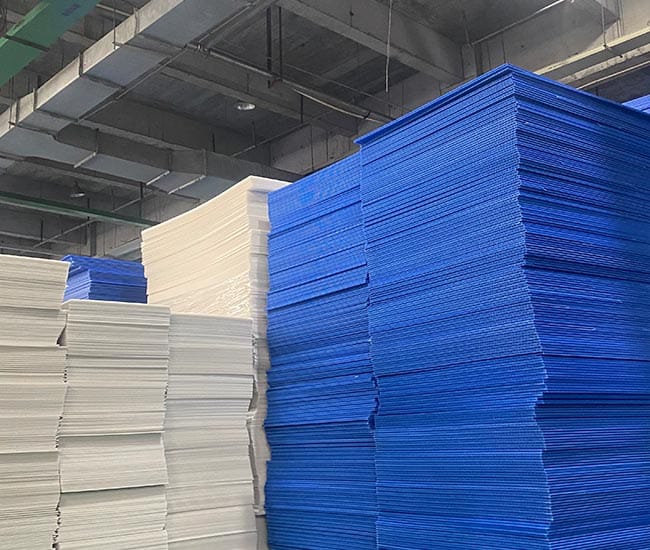
When comparing corrugated plastic board, nominal thickness describes the depth of a hollow sheet, but it does not describe how much polymer is present or where that polymer is distributed. Skin thickness, rib spacing and channel geometry affect the way a board responds to handling. Compare samples with equal outside dimensions and the same flute direction. Record thickness and mass per unit area separately so that neither measure conceals a different construction.
For a rectangular sample, area weight in grams per square meter equals sample mass in grams divided by its area in square meters. For example, an illustrative 0.20 by 0.20 meter sample weighing 28 grams has an area weight of 700 grams per square meter. These are calculation inputs, not a Zenlink specification. Use an appropriate scale and avoid samples with labels, tape or contamination.
The buyer should be able to repeat the comparison and measure a grid of points without crushing the hollow section. Use the same identification method for the production batch.
Measure without crushing the hollow section
For a project using corrugated plastic board, a contact gauge can compress a hollow board if the contact pressure is excessive or the measuring face is too small. Agree the instrument and method before setting acceptance limits. Take readings at defined locations across the width and length, away from a damaged cut edge unless that edge is the feature being assessed. Keep the sample flat and identify the measured face.
Include multiple boards and different bundle positions in the receiving check. Record individual results instead of reporting only an average, because a mean can hide an unacceptable local condition. Where two parties obtain different measurements, first compare the method, instrument and sample condition. A tolerance is useful only when both parties can reproduce the measurement to a suitable level of agreement.
When reviewing a substitute, return to measurement locations and acceptance tolerances. Nominally similar material is only a candidate until the relevant checks are complete.
Store flat boards with supported edges
When qualifying corrugated plastic board, support the stack on a clean, reasonably flat surface and protect corners from impacts during unloading. Avoid assuming that a thin upper board will spread a tight strap load evenly. Agree packing boards or other load-spreading details where needed. Keep the storage arrangement compatible with fire controls and the site’s handling procedures. Hollow board is packaging material, not a walking platform.
Allow practical space for retrieving the required blank without dragging it across neighboring stacks. Separate specifications with clear labels that remain visible after a bundle is opened. For long storage, inspect representative boards before conversion rather than discovering a problem at the machine. Record abnormal heat, moisture or compression exposure when it could explain a change in flatness or appearance.
The priority for this project is measurement locations and acceptance tolerances. Keep it visible when comparing the candidates.
Approve changes to resin and additives explicitly
Before ordering corrugated plastic board, a material description should identify the intended polymer and relevant modifications. Color, recycled content, surface treatment, ultraviolet stabilization and static-control behavior are separate questions. Do not infer an additive package from the board’s color. Ask which properties are controlled for the supplied grade and which claims require a product-specific report. Keep supplier statements separate from your own acceptance test results.
Agree which changes trigger notice and a new sample review. A change in resin source, formulation, channel geometry or conversion method may affect the finished application even when the nominal dimensions remain the same. The appropriate response depends on the function being protected. Document the reason for any requalification so that later purchasing decisions do not lose the connection between the material and its approved use.
For the situation described here, measure a grid of points without crushing the hollow section. Record the result before releasing the order.
Choose the acceptance rule before the trial
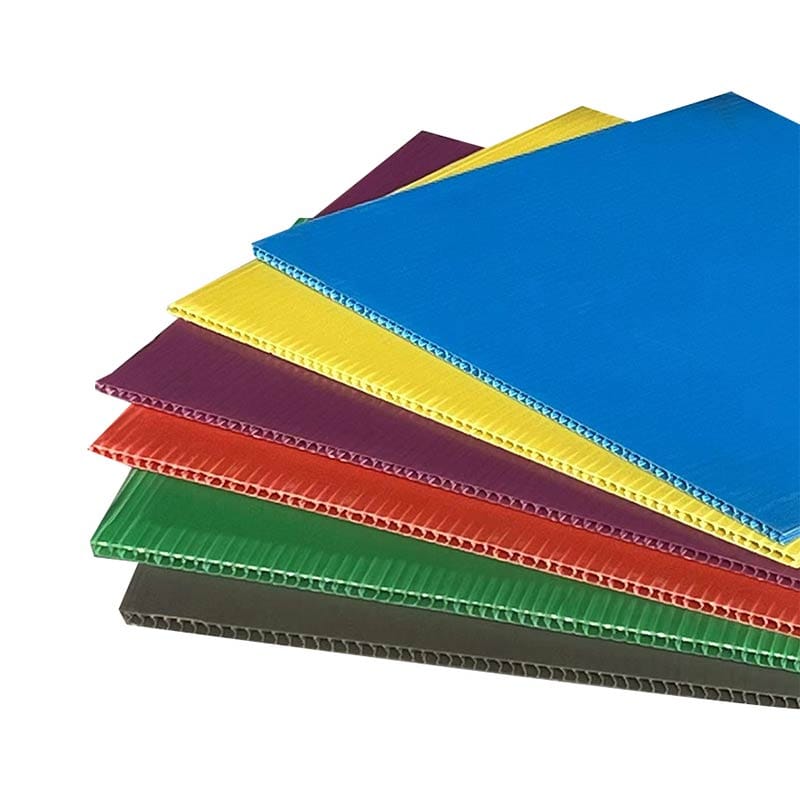
When inspecting corrugated plastic board, write down what success means in observable terms. Useful limits can include fit, protected-product condition, maximum permitted movement, reliable closure or repeatable print appearance. Avoid using a vague instruction such as good quality as the only acceptance rule. Set the criterion with the person responsible for the operating task so the trial answers the decision that actually needs to be made.
Use the same rule for every candidate and retain the result, including failures. If the requirement changes during development, identify the new revision and repeat affected comparisons. This prevents a favored sample from being judged by a different standard. The record does not need to be complicated, but it should show the tested configuration, conditions, observation and decision clearly.
The decision should demonstrate that the batch meets agreed tolerances at the specified measurement positions. An unexplained pass mark is less useful than the observation behind it.
Inspect across the delivery rather than at one easy location
For production using corrugated plastic board, choose samples from more than the most accessible top board or first box. Include different bundles and positions where variation or packing damage could occur. Agree the sample selection and handling method before the shipment arrives. For high-consequence features, consider whether a specialist inspection plan is needed rather than inventing a universal sample size.
Separate product nonconformity from damage introduced during unloading or storage. Photographs taken before wrapping is removed can help explain edge or strap damage. Record lot and bundle identity with any rejected item. A useful inspection result tells the supplier and receiving team where the problem occurred and which material needs to be held for review.
Keep the qualification focused on measurement locations and acceptance tolerances. Ask the supplier to explain deviations from the approved construction.
Make the working instruction fit the real process
When approving corrugated plastic board, write a short instruction for identification, orientation, assembly and inspection at the point of use. Include a drawing or clear photograph where words alone could be misread. Test the instruction with an operator who did not take part in development. Confusing part codes or hidden orientation marks are design issues that can often be corrected before rollout.
Keep the instruction consistent with the approved sample and drawing. If operators must improvise an extra fold, cut or attachment to make the item work, record and review that step. A production process should not depend on an undocumented adjustment that is known to only one experienced worker. Review the instruction after the first delivery to capture practical lessons without changing the requirement informally.
In the operating trial, check whether nominal thickness conceals large differences in actual material. The relevant observation should determine the next design change.
Compare options for corrugated plastic board
For corrugated plastic board, compare the current construction, the proposed alternative and any reduced-material option against the same acceptance statement. Keep changes in dimensions, load arrangement and process conditions visible. The table is a project checklist rather than a claim that one standard grade fits every application.
| Requirement | What to record | How to judge the result |
|---|---|---|
| Application | a quality team creating an incoming inspection sheet | Use a production-equivalent configuration |
| Critical variable | measurement locations and acceptance tolerances | Agree a repeatable method before the comparison |
| Relevant risk | nominal thickness conceals large differences in actual material | Observe the actual operating stage where it begins |
| Trial | Measure a grid of points without crushing the hollow section | Keep setup and sample identity with the record |
| Acceptance | The batch meets agreed tolerances at the specified measurement positions | Record evidence and unresolved deviations |
| Reorder | Drawing revision, sample code and material identity | Compare the received batch with the approved reference |
Sources and related product information
Independent reference: ISTA. Use the relevant guidance with the project-specific qualification plan. This reference is not a test report or certification for a Zenlink product.
For available product formats, review Zenlink’s corrugated plastic product page and hollow-board product category. Ask which dimensions and modifications can be supplied for your drawing; availability and supporting documentation should be confirmed for the exact order.
Frequently asked questions
What should a buyer specify first for corrugated plastic board?
Start with measurement locations and acceptance tolerances. Describe the finished use and identify the relevant drawing or product condition. For this project, the intended result is that the batch meets agreed tolerances at the specified measurement positions.
Is nominal thickness enough to approve the material?
No. Thickness is one part of the construction. Review area weight where relevant, flute direction, conversion details and the actual operating function. Compare equivalent samples using the same method and acceptance criteria.
How should the first sample be tested?
The first trial should measure a grid of points without crushing the hollow section. Record the sample identity, setup, conditions and observations. Review deviations before approving tooling or a larger order.
Can a similar-looking board be substituted without review?
A similar appearance does not establish equivalent behavior. Check the proposed change against measurement locations and acceptance tolerances and repeat the affected functional or dimensional checks before release.
What information helps Zenlink prepare a useful quotation?
Provide the drawing or finished dimensions, quantity, intended application, relevant material requirements, conversion details, delivery destination and the checks required for sample approval. Include a reference sample code or current packaging problem where available.
Discuss the specification with Zenlink
Send Zenlink the application drawing, required quantity and the issue you need to resolve. For corrugated plastic board, highlight measurement locations and acceptance tolerances and describe the trial you expect to use. The team can review the relevant hollow-board or packaging format and discuss sample requirements for your project. Use the inquiry form below or the contact page to provide the working details.