جدول المحتويات
Corrugated Plastic Pallet Dividers: Control Lateral Movement addresses a specific B2B decision: surface friction and restraint layout. The right choice depends on the finished application and the way it is handled, not just the product name. Use the checks below to compare samples, prepare a clear request for quotation and approve a repeatable supply specification.
The decision for corrugated plastic pallet dividers
The practical starting point is a warehouse separating mixed products in pallet stacks. The risk is specific: a separator is assumed to prevent sliding by itself. A decision about corrugated plastic pallet dividers should therefore begin with surface friction and restraint layout, rather than a comparison based only on a photograph or the nominal material name. This article sets out a qualification and purchasing method for that situation. It does not assign a universal load rating, service life or certification to an unspecified grade.
A useful acceptance statement is that the restraint system limits movement without relying on the pad alone. Translate that statement into a short inspection record before asking for quotations or changing the current design. Decide who will observe the result and which product condition must remain unchanged. Where a drawing dimension is involved, agree the measurement position and method. Where appearance or handling matters, retain a physical reference or a clear operating example.
The first trial should observe a loaded pallet during normal handling and braking simulation. Keep the actual product, its support arrangement and the relevant operating sequence in the comparison. Record the sample code, drawing revision, conditions and observations together. If a detail is changed during the trial, identify the revised sample separately. This makes it possible to distinguish a useful improvement from a different setup that was never compared fairly.
The most informative failure to investigate is the one connected to surface friction and restraint layout. Photograph the relevant area before and after the trial and record whether the problem appeared during preparation, operation or unpacking. Do not merge distinct failure causes into one rejected-sample count. That distinction helps determine whether the next action belongs in material selection, conversion, packing or the working method.
For the order, keep surface friction and restraint layout visible in the drawing or acceptance sheet. Ask the supplier to identify any proposed deviation before production. The release decision should refer to the sample and evidence that were actually reviewed. An appealing prototype is a starting point; repeatability in the supplied batch is what allows corrugated plastic pallet dividers to work as a dependable purchasing specification.
Build divider cells around the assembled dimensions
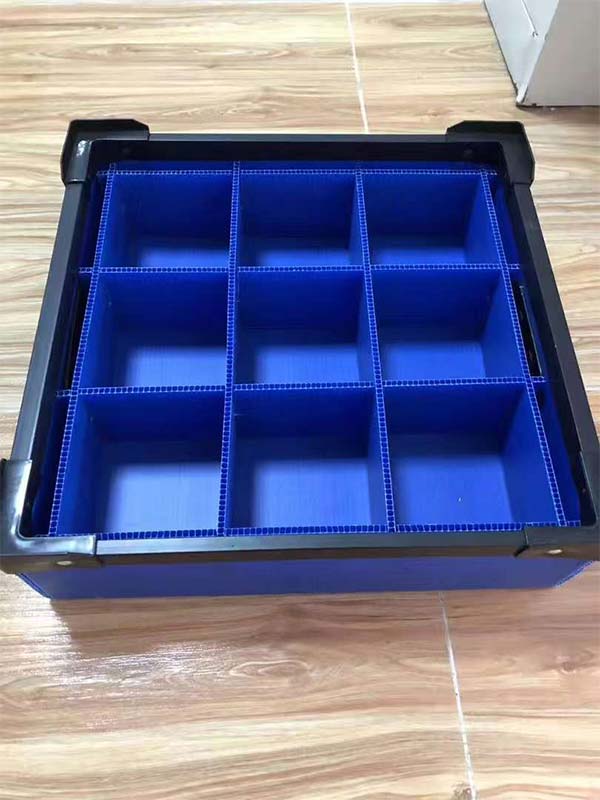
When specifying corrugated plastic pallet dividers, slot width and depth interact with board thickness, flute direction and the outer container. Measure cells after the full grid is assembled in its box or tray. A loose strip on the bench can look correct while the installed cell is too narrow. Include any liner, bag or part projection in the fit assessment and check the cells at corners as well as the center.
Rehearse both loading and unloading. A tightly located part may be protected in transit yet difficult to remove at the workstation. Provide appropriate finger or tool access without exposing adjacent parts to contact. Where divider strips look similar, mark their positions clearly and test whether an unfamiliar operator can assemble the grid correctly using the supplied instructions.
The priority for this project is surface friction and restraint layout. Keep it visible when comparing the candidates.
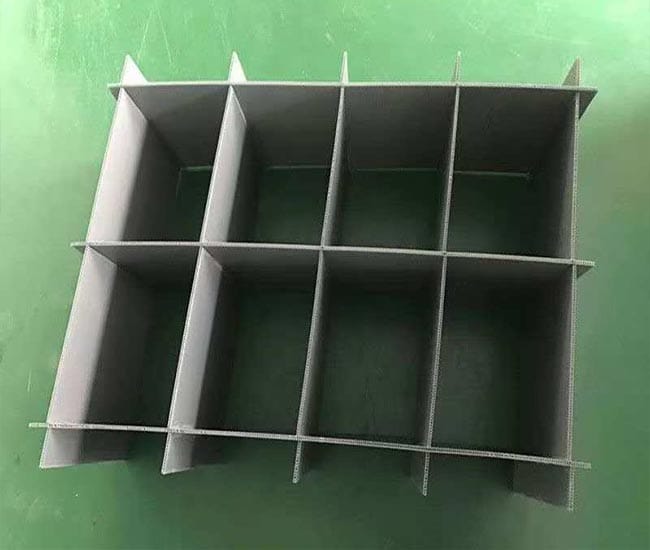
Inspect slot roots and remaining wall material
When comparing corrugated plastic pallet dividers, slots interrupt a divider’s load path. Deep slots can leave a narrow remaining section that bends or tears during assembly. Review the slot root geometry, the fit between intersecting strips and the material remaining above or below each slot. Avoid solving a tight fit by forcing the strips together, because damage at assembly may later appear to be a transport failure.
Make production-equivalent samples using the planned tooling. Assemble and disassemble them through the intended return routine. Inspect around the slot roots under consistent lighting and compare the shape with an unused reference. If the grid is intended to remain assembled, test its actual handling method instead of repeatedly disassembling it solely for convenience during development.
For the situation described here, observe a loaded pallet during normal handling and braking simulation. Record the result before releasing the order.
Manage moisture at the assembly level
For a project using corrugated plastic pallet dividers, a PP sheet face can resist water while open channels and joints still admit or retain liquid. Identify where moisture can enter, where it can drain and where it could remain against the product. Consider temperature changes and condensation as well as direct splashes. An impermeable face does not by itself establish a dry packaging environment.
Inspect the complete pack after a representative exposure and after the intended drying interval. Check difficult areas such as divider slots, edge closures and the underside of a bottom pad. If water remains trapped, changing the geometry or cleaning method may be more useful than simply adding thicker material. The acceptance decision should be based on the protected contents and the defined exposure.
The decision should demonstrate that the restraint system limits movement without relying on the pad alone. An unexplained pass mark is less useful than the observation behind it.
Compare protection against the current packing method
When qualifying corrugated plastic pallet dividers, use the same product condition, quantity and handling sequence when comparing candidate separators with the existing arrangement. Evaluate product damage, loading time, removal access, pack volume and cleaning effort. A separator that reduces one type of marking may introduce a tight fit or require extra handling. Keep these outcomes visible instead of judging the design only by material cost.
An initial screening trial can eliminate unsuitable constructions before a larger route pilot. Retain photographs before packing and after unpacking with consistent lighting and orientation. Where transport hazards are important, have a packaging specialist select an appropriate complete-pack test. A successful material bend or compression demonstration does not establish transport performance for the filled pack.
Keep the qualification focused on surface friction and restraint layout. Ask the supplier to explain deviations from the approved construction.
Specify sets and replacement parts clearly
Before ordering corrugated plastic pallet dividers, a divider order should identify the complete set as well as each strip or pad within it. State dimensions, orientation, slot arrangement, quantity per set and the drawing revision. If replacement pieces may be ordered separately, give them stable part codes. This helps avoid a visually similar strip entering a set with the wrong cell geometry.
Use the same part codes on the packing list and at the storage location. Include an assembly drawing where the grid is not self-evident. For mixed-size orders, count complete usable sets rather than total individual pieces alone. A delivery with the right total strip count can still leave the line short of one critical component and unable to build the required number of packs.
In the operating trial, check whether a separator is assumed to prevent sliding by itself. The relevant observation should determine the next design change.
Choose the acceptance rule before the trial
When inspecting corrugated plastic pallet dividers, write down what success means in observable terms. Useful limits can include fit, protected-product condition, maximum permitted movement, reliable closure or repeatable print appearance. Avoid using a vague instruction such as good quality as the only acceptance rule. Set the criterion with the person responsible for the operating task so the trial answers the decision that actually needs to be made.
Use the same rule for every candidate and retain the result, including failures. If the requirement changes during development, identify the new revision and repeat affected comparisons. This prevents a favored sample from being judged by a different standard. The record does not need to be complicated, but it should show the tested configuration, conditions, observation and decision clearly.
The reference sample should support one clear conclusion: the restraint system limits movement without relying on the pad alone. Preserve the conditions that made that result possible.
Keep the operating cost basis visible
For production using corrugated plastic pallet dividers, compare alternatives on the same function and usable output. Material price is only one input. Conversion yield, setup labor, rejected pieces, freight, cleaning and return handling may change the practical result. Include the costs that belong to the actual application and avoid adding speculative savings. Where an input is unknown, label it as an assumption and identify how a pilot could measure it.
For a reusable item, distinguish a completed usable trip from a dispatch that has not yet returned. Missing and damaged items should not vanish from the denominator. Update the comparison when route data becomes available. A transparent model with a few well-defined inputs is more useful than a precise payback claim based on a service life that has never been observed.
The buyer should be able to repeat the comparison and observe a loaded pallet during normal handling and braking simulation. Use the same identification method for the production batch.
حل الفشل الأول قبل إضافة المواد
When approving corrugated plastic pallet dividers, observe where the problem begins. A local tear, global bend, poor surface bond or handling error calls for a different remedy. Photograph the first damaged region and compare it with the load path or process step. Adding thickness everywhere may increase cost while leaving the original weak detail unchanged.
قم بتغيير متغير مهم واحد في الوقت الذي تسمح فيه التجربة بذلك. احتفظ بعينة أساسية حتى يمكن مقارنة النتيجة المنقحة في ظل نفس الظروف. إذا انتقل الفشل إلى موقع آخر، قم بمراجعة التصميم الكامل مرة أخرى. الهدف هو بناء عملي يلبي المتطلبات باستمرار، بدلاً من سلسلة من التعديلات غير المسجلة المطبقة على العينات الفردية.
When reviewing a substitute, return to surface friction and restraint layout. Nominally similar material is only a candidate until the relevant checks are complete.
Compare options for corrugated plastic pallet dividers
For corrugated plastic pallet dividers, compare the current construction, the proposed alternative and any reduced-material option against the same acceptance statement. Keep changes in dimensions, load arrangement and process conditions visible. The table is a project checklist rather than a claim that one standard grade fits every application.
| متطلبات | ماذا تسجل | كيفية الحكم على النتيجة |
|---|---|---|
| طلب | a warehouse separating mixed products in pallet stacks | استخدم تكوينًا مكافئًا للإنتاج |
| متغير حاسم | surface friction and restraint layout | الموافقة على طريقة قابلة للتكرار قبل المقارنة |
| المخاطر ذات الصلة | a separator is assumed to prevent sliding by itself | راقب مرحلة التشغيل الفعلية حيث تبدأ |
| محاكمة | Observe a loaded pallet during normal handling and braking simulation | احتفظ بالإعداد وعينة الهوية مع السجل |
| قبول | The restraint system limits movement without relying on the pad alone | تسجيل الأدلة والانحرافات التي لم يتم حلها |
| إعادة ترتيب | مراجعة الرسم ونموذج الكود والهوية المادية | قارن الدفعة المستلمة بالمرجع المعتمد |
المصادر ومعلومات المنتج ذات الصلة
مرجع مستقل: ISTA. استخدم الإرشادات ذات الصلة مع خطة التأهيل الخاصة بالمشروع. هذا المرجع ليس تقرير اختبار أو شهادة لمنتج Zenlink.
للتعرف على تنسيقات المنتجات المتاحة، قم بمراجعة Zenlink صفحة المنتجات البلاستيكية المموجة و فئة المنتجات المجوفة. اسأل عن الأبعاد والتعديلات التي يمكن توفيرها للرسم الخاص بك؛ يجب تأكيد التوفر والوثائق الداعمة للطلب الدقيق.
الأسئلة المتداولة
What should a buyer specify first for corrugated plastic pallet dividers?
Start with surface friction and restraint layout. Describe the finished use and identify the relevant drawing or product condition. For this project, the intended result is that the restraint system limits movement without relying on the pad alone.
هل السمك الاسمي كافٍ للموافقة على المادة؟
رقم السماكة جزء واحد من البناء. مراجعة وزن المنطقة حيثما كان ذلك مناسبًا، واتجاه الفلوت، وتفاصيل التحويل ووظيفة التشغيل الفعلية. مقارنة العينات المكافئة باستخدام نفس الطريقة ومعايير القبول.
كيف ينبغي اختبار العينة الأولى؟
The first trial should observe a loaded pallet during normal handling and braking simulation. Record the sample identity, setup, conditions and observations. Review deviations before approving tooling or a larger order.
هل يمكن استبدال لوحة ذات مظهر مماثل دون مراجعة؟
A similar appearance does not establish equivalent behavior. Check the proposed change against surface friction and restraint layout and repeat the affected functional or dimensional checks before release.
ما هي المعلومات التي تساعد Zenlink في إعداد عرض أسعار مفيد؟
توفير أبعاد الرسم أو الانتهاء والكمية والتطبيق المقصود ومتطلبات المواد ذات الصلة وتفاصيل التحويل ووجهة التسليم والفحوصات المطلوبة للموافقة على العينة. قم بتضمين رمز العينة المرجعي أو مشكلة التغليف الحالية حيثما كان ذلك متاحًا.
ناقش المواصفات مع Zenlink
Send Zenlink the application drawing, required quantity and the issue you need to resolve. For corrugated plastic pallet dividers, highlight surface friction and restraint layout and describe the trial you expect to use. The team can review the relevant hollow-board or packaging format and discuss sample requirements for your project. Use the inquiry form below or the صفحة الاتصال لتقديم تفاصيل العمل.