مرحبًا بكم في نظرتنا المتعمقة إلى المنتجات البلاستيكية عالية الجودة وكيف تعمل على تغيير الحياة اليومية والتطبيقات الصناعية والمشاريع التجارية. قبل أن تغوص، ابق على اتصال معنا للحصول على نصائح الخبراء ورؤى الصناعة والحلول العملية
· فيسبوك /cat انضم إلى مجتمعنا لطرح الأسئلة والحصول على آخر تحديثات المنتج
· تيك توك heat شاهد البرامج التعليمية وأدلة التثبيت وعروض المشروع
دعونا نستكشف كيف يمكن للمنتجات البلاستيكية المتينة والمتعددة الاستخدامات أن توفر الكفاءة والموثوقية والأداء على المدى الطويل لاكتشاف الحلول التي تناسب احتياجاتك بشكل أفضل!
جدول المحتويات
الوجبات السريعة الرئيسية
- An underground water line should be sized from required flow, route length, elevation change, operating pressure, and acceptable pressure loss—not diameter alone.
- HDPE is widely used for buried water pipelines because its flexibility, corrosion resistance, and fusion-compatible jointing suit underground infrastructure.
- A larger pipe reduces water velocity and friction loss, but unnecessary oversizing may increase installation complexity and reduce project efficiency.
- DR or SDR affects wall thickness, inside diameter, and pressure capability, so two HDPE pipes with the same outside diameter may perform differently.
- Fittings, bends, valves, elevation changes, and long pipe runs must be included when checking available pressure.
- Butt fusion and electrofusion can both create reliable HDPE pipeline joints, but the appropriate method depends on pipe size, access, installation environment, and project requirements.
- Burial depth cannot be selected from a universal number; frost depth, surface loading, soil conditions, groundwater, local codes, and pipe structural design all matter.
- Final underground water line selection should combine hydraulic design, structural checks, compatible fittings, installation requirements, and applicable standards.
What Is an Underground Water Line?
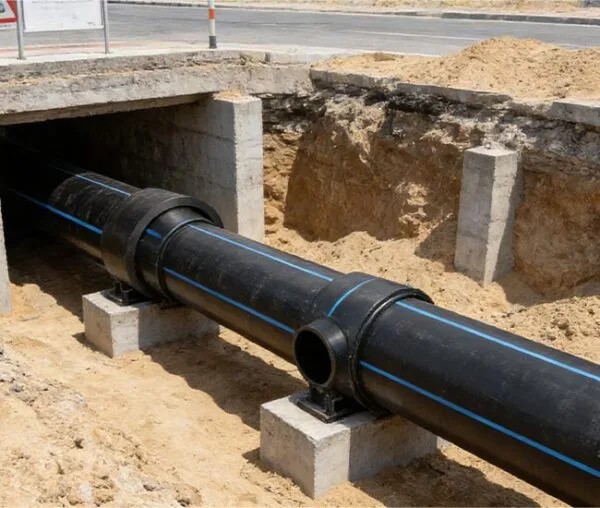
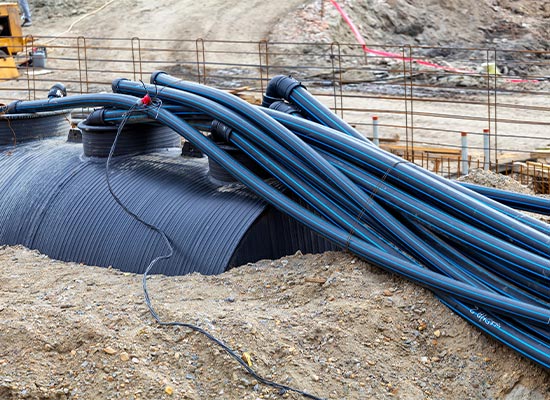
An underground water line is a buried pipeline that transports water between a source, storage facility, municipal network, pump station, building, irrigation system, or industrial facility.
Unlike indoor plumbing, buried pipelines must operate while surrounded by soil and exposed to external loads, groundwater, temperature changes, settlement, construction activity, and sometimes vehicle traffic.
The term can refer to several systems, including:
- Municipal water distribution mains
- Building water service lines
- Agricultural water supply lines
- Industrial process-water pipelines
- Fire-water supply systems
- Well-to-building pipelines
- Long-distance water transmission lines
Because these systems operate under different conditions, there is no single underground water line size that is appropriate for every project.
Why HDPE Is Commonly Considered for Underground Water Lines
High-density polyethylene is a thermoplastic material widely used for corrosion-resistant piping.
For underground applications, HDPE offers several characteristics that are particularly relevant:
- Resistance to soil-related corrosion
- Flexibility under ground movement
- Availability in long straight lengths or coils depending on size
- Fusion-compatible connections
- Smooth internal waterway
- Broad use in municipal and industrial piping systems
Zenlink supplies polyethylene pipes and plastic piping products for water supply, drainage, irrigation, construction, and infrastructure projects.
However, selecting an HDPE water pipe should begin with engineering conditions rather than simply choosing a material.
What Size Underground Water Line Do I Need?
This is one of the most common questions in underground water supply projects.
The answer depends on at least six variables:
- Required flow rate
- Pipeline length
- Available inlet pressure
- Required outlet pressure
- Elevation difference
- Pipe inside diameter
Fittings, valves, pumps, temperature, and future system expansion can also affect the final selection.
معدل التدفق
Flow rate tells you how much water the pipeline must transport within a specific period.
A small residential service line, an agricultural mainline, and a municipal water main may all use HDPE, but their required flows can differ dramatically.
Peak Flow Matters More Than Average Flow
A system should normally be checked against the maximum expected operating demand rather than only average consumption.
Peak demand may occur when:
- Multiple fixtures operate simultaneously
- Irrigation zones run together
- Production equipment starts
- Storage tanks refill
- Fire protection demand is activated
- Municipal demand reaches a daily peak
An underground water line that performs well during average conditions may still suffer unacceptable pressure loss during peak demand.
Pipeline Length
Friction accumulates as water travels through a pipe.
For otherwise similar conditions, a 500-meter pipeline generally loses more pressure to friction than a 30-meter pipeline.
This is why asking only:
“What diameter HDPE pipe do I need?”
does not provide enough information.
A more useful question is:
“What HDPE pipe size can deliver my required flow over this distance while maintaining sufficient pressure at the outlet?”
Elevation Difference
Water moving uphill requires additional pressure.
Water moving downhill gains static pressure.
The elevation difference between the source and the destination should therefore be included in an underground water line calculation.
Static Head
A significant elevation increase may consume a large portion of the available pressure before friction losses are considered.
For pumping systems, the pump must overcome both elevation and hydraulic losses.
For gravity-fed systems, the available elevation may provide the pressure required to move water through the pipeline.
Underground Water Line Sizing Factors at a Glance
| Design factor | Why it matters | What happens if ignored |
|---|---|---|
| Required flow | Determines hydraulic demand | Insufficient water delivery |
| Pipe length | Influences friction loss | Low outlet pressure |
| القطر الداخلي | Controls flow area and velocity | Excessive velocity or pressure loss |
| Inlet pressure | Defines available energy | System may not meet endpoint demand |
| Required outlet pressure | Defines minimum usable pressure | Equipment may operate poorly |
| Elevation change | Adds or reduces static pressure | Incorrect pressure calculation |
| DR/SDR | Changes wall thickness and inside diameter | Wrong pressure class or flow capacity |
| Fittings and valves | Add local hydraulic losses | Pressure may be overestimated |
| Burial conditions | Affect structural performance | Deflection or installation failure |
| Future expansion | Changes long-term flow demand | Early system undersizing |
HDPE Pipe Diameter: OD vs ID
One of the easiest mistakes when choosing an underground water line is assuming that the stated pipe diameter always represents the actual waterway.
It may not.
القطر الخارجي
Outside diameter, or OD, is measured across the external surface of the pipe.
HDPE piping systems commonly use controlled outside diameters so that compatible fittings and fusion equipment can be selected.
القطر الداخلي
Inside diameter, or ID, represents the actual internal opening available for water flow.
It directly affects:
- منطقة التدفق
- Water velocity
- Friction loss
- Hydraulic capacity
A pipe can have the same outside diameter but a different inside diameter because its wall thickness is different.
For a more detailed dimensional explanation, see Zenlink’s PE Pipe Sizes: A Practical Selection Guide.
Why Inside Diameter Matters More Hydraulically
Imagine two HDPE water pipes with the same outside diameter.
One has a relatively thick wall.
The other has a thinner wall.
The thicker-wall pipe has a smaller internal opening. Under the same flow conditions, this can increase water velocity and hydraulic resistance.
The thicker wall may provide an important pressure-performance advantage, but its reduced ID must still be considered during hydraulic design.
What Does DR or SDR Mean for an HDPE Water Pipe?
DR and SDR describe the dimensional relationship between pipe outside diameter and wall thickness.
In simplified form:
Dimension Ratio = Pipe Outside Diameter ÷ Wall Thickness
The terminology and applicable dimension series depend on the product standard being used.
Lower DR
For the same outside diameter, a lower DR generally means:
- Thicker pipe wall
- Smaller inside diameter
- Greater pressure capability
- More material in the pipe wall
Higher DR
For the same outside diameter, a higher DR generally means:
- Thinner pipe wall
- Larger inside diameter
- Lower pressure capability than a lower-DR pipe of the same material and OD
Why DR11 Is Not Automatically Better Than DR17
It is easy to assume that the thicker pipe is always the better underground water line.
That is not the correct selection method.
If the application does not require the additional pressure capability, choosing a much thicker wall may unnecessarily reduce the internal flow area.
Conversely, choosing a thin wall only because it provides a larger waterway can create problems if the pipe does not meet operating pressure, surge, temperature, handling, or project requirements.
The correct DR should satisfy both hydraulic and mechanical requirements.
ال Plastics Pipe Institute provides technical publications covering HDPE water pipe, pressure classes, municipal water applications, surge, fatigue, and design considerations.
How Does Pipe Diameter Affect Water Pressure?
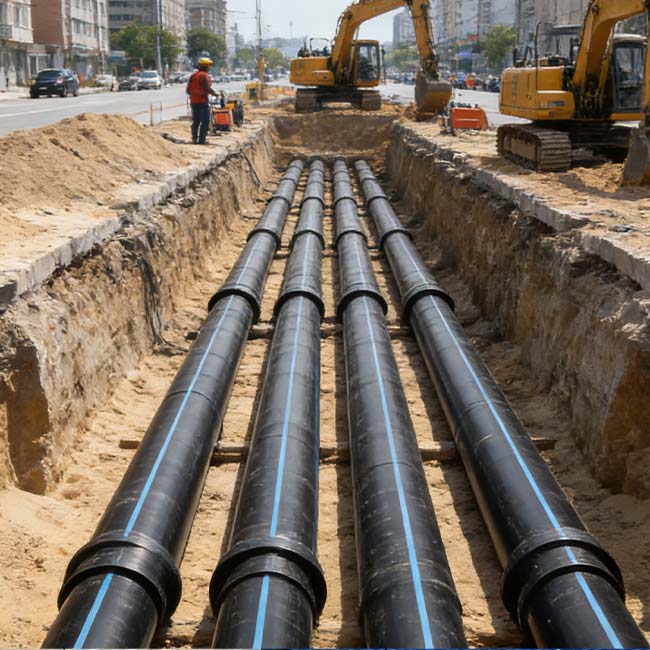
A common misconception is that a smaller pipe “creates more pressure.”
It does not create additional system energy.
For a given flow, reducing the inside diameter usually increases water velocity and friction loss. This means less pressure may remain at the end of a long underground water line.
Smaller Diameter
A smaller pipe may result in:
- Higher velocity
- Higher friction loss
- Lower downstream pressure
- Greater sensitivity to long runs and fittings
Larger Diameter
A larger pipe generally provides:
- Lower velocity for the same flow
- Lower friction loss
- Better pressure retention over long distances
- Additional hydraulic capacity
However, larger is not automatically better.
The objective is to select an efficient diameter that meets required flow and pressure without unnecessary oversizing.
How Is Pressure Loss Calculated?
Pipeline engineers commonly evaluate pressure loss using established hydraulic methods such as the Darcy-Weisbach equation or, in some water-distribution applications, the Hazen-Williams approach.
The exact method depends on the engineering standard and application.
Friction Loss
Friction loss occurs as flowing water interacts with the internal pipe surface.
The amount depends on:
- القطر الداخلي
- Flow velocity
- Pipe length
- Water properties
- Internal roughness
- Fittings and components
A relatively small reduction in inside diameter can produce a meaningful increase in pressure loss when flow is high or the route is long.
The Plastics Pipe Institute provides plastic piping design calculators and engineering resources that can support preliminary pressure-pipe analysis.
Do Not Size a Long Water Line from a Short-Run Rule of Thumb
A diameter that works adequately over 20 meters may perform very differently over 500 meters.
Long routes deserve dedicated hydraulic analysis.
This is particularly important for:
- Farms
- Industrial facilities
- Large commercial properties
- Municipal networks
- Remote buildings
- Well-water systems
- Long-distance transmission pipelines
A Practical Underground Water Line Selection Matrix
| Project condition | Design priority | What to evaluate |
| Short building service | Compact installation | Peak flow, service pressure, connection size |
| Long rural supply line | Pressure retention | Pipe ID, route length, elevation |
| Municipal distribution | Capacity and reliability | Peak demand, DR, surge, fittings, standards |
| Agricultural mainline | Flow over long distance | Pump pressure, friction loss, branching |
| Industrial water line | Operating conditions | Pressure, chemicals, temperature, flow |
| Hilly terrain | Static pressure | Elevation profile, pressure zones, surge |
| High-pressure system | Pressure capability | DR, material, surge, fittings |
| Restricted installation area | Jointing access | Electrofusion or suitable mechanical transitions |
| Trenchless route | Pulling and structural loads | Pipe material, DR, bend radius, installation method |
How to Choose an Underground Water Line Step by Step
Step 1: Define the Application
Begin by identifying what the pipeline is actually doing.
Is it carrying:
- Potable water?
- Irrigation water?
- Process water?
- Cooling water?
- Fire water?
- Well water?
The intended service affects applicable standards, pressure requirements, material certification, and fittings.
Step 2: Define Required Flow
Record both normal and peak flow.
Avoid selecting pipe from a generic diameter chart before determining the actual demand.
Step 3: Measure the Complete Route
The route should include:
- Horizontal length
- Elevation profile
- Bends
- Road crossings
- Building entries
- Valve locations
- Branch connections
A straight-line map distance may underestimate the actual installed pipe length.
Step 4: Establish Available Pressure
Determine pressure at the source.
If a pump is used, review its operating curve instead of relying only on its maximum advertised pressure.
Step 5: Define Minimum Required Outlet Pressure
Different applications require different endpoint conditions.
An irrigation system, storage tank inlet, industrial machine, domestic building, and fire-water system may each have a different pressure requirement.
Step 6: Compare Candidate Pipe Sizes
Calculate pressure loss for several realistic sizes.
This is generally more useful than selecting one diameter immediately.
For example, compare candidate sizes based on:
- Flow velocity
- Friction loss
- Remaining endpoint pressure
- Actual inside diameter
- DR
- Fitting availability
Step 7: Select the Appropriate DR
Confirm that the pipe can withstand:
- Normal operating pressure
- Pump pressure
- Surge
- Temperature conditions
- Installation loads
- Applicable safety factors
Step 8: Select Compatible Fittings
Zenlink’s تجهيزات الأنابيب HDPE include components used to change direction, create branches, reduce diameter, terminate pipelines, and transition between system elements.
The fitting must match the actual pipe dimension and connection system.
Step 9: Confirm Burial Conditions
Hydraulic performance alone does not determine whether an underground water line is suitable.
Buried flexible pipe performance also depends strongly on:
- Native soil
- Bedding
- Side support
- Backfill
- Compaction
- Traffic loading
- Groundwater
- Cover depth
Step 10: Verify Standards and Project Specifications
Final pipe selection should be checked against the standards required for the project location and application.
For municipal water applications, the PPI Polyethylene Piping Systems Field Manual provides guidance related to PE water piping, handling, joining, installation, and field practices.
How Deep Should an Underground Water Line Be?
There is no universal burial depth that works everywhere.
A common online question is:
“How many inches or feet deep should I bury an HDPE water line?”
A responsible answer requires more information.
Frost Depth
In cold climates, freezing can damage water systems.
Required burial depth may therefore be related to local frost conditions and building or utility codes.
Surface Loading
A pipeline beneath a landscaped area experiences different loading from one installed beneath:
- A highway
- Industrial pavement
- A warehouse yard
- Heavy construction equipment
- A railway corridor
More Cover Is Not Always the Only Solution
Buried flexible-pipe design depends on the complete pipe-soil system.
Pipe stiffness, bedding quality, trench conditions, backfill, compaction, surface load, groundwater, and installation method all contribute to structural performance.
The U.S. Environmental Protection Agency also notes that buried water infrastructure design and rehabilitation must account for hydraulic and structural conditions rather than material selection alone. The EPA’s drinking-water infrastructure resources can be explored through the EPA drinking water portal.
Butt Fusion vs Electrofusion for Underground HDPE Water Lines
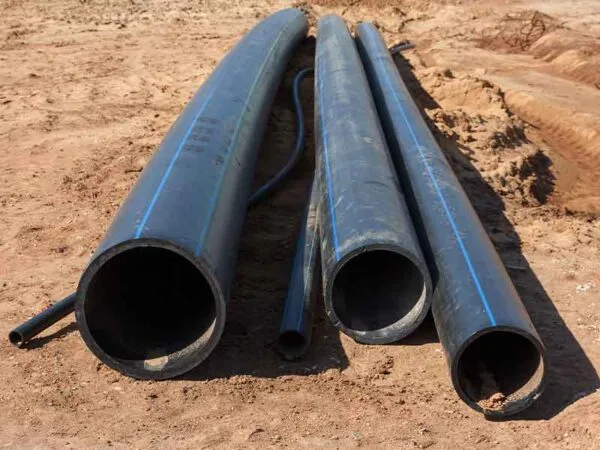
The jointing method can be as important as the pipe itself.
بعقب الانصهار
Butt fusion heats the prepared ends of two compatible HDPE components and joins them under controlled conditions.
It is commonly considered for long pipeline runs where:
- Pipe ends are accessible
- Fusion equipment can be positioned
- Continuous pipeline construction is required
- The project involves substantial straight runs
الانصهار الكهربائي
Electrofusion uses specially designed fittings with embedded heating elements.
Zenlink’s تجهيزات أنابيب الصهر الكهربائي are designed for polyethylene water distribution and infrastructure connections where controlled, secure joints are required.
Electrofusion can be particularly useful for:
- Repairs
- Branch connections
- Restricted workspaces
- Tie-ins
- Complex connection points
Connection Comparison
| Factor | بعقب الانصهار | الانصهار الكهربائي |
| Typical use | Long continuous pipe runs | Tie-ins, branches, repairs |
| Additional fitting needed for straight joint | Usually no | نعم |
| Workspace requirement | Fusion machine needs operating space | Often suitable for tighter areas |
| Surface preparation | Pipe ends must be properly prepared | Pipe surface preparation is critical |
| Installation control | Temperature, pressure and alignment | Scraping, clamping and fusion cycle |
| Underground use | Common | Common |
| Best choice | Depends on project layout | Depends on access and connection type |
Neither process compensates for poor installation practice.
Fusion parameters, pipe compatibility, equipment condition, surface preparation, operator procedures, and cooling time must all be controlled.
HDPE vs PVC for an Underground Water Line
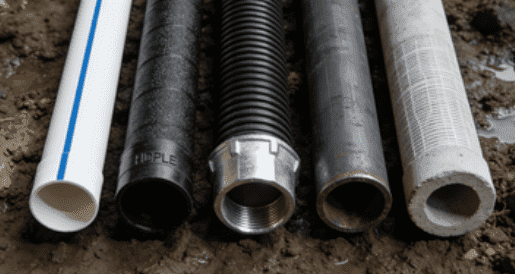
Zenlink already provides a broader guide to الأنواع الشائعة لأنابيب المياه للتطبيقات تحت الأرض, which is useful when comparing material families.
For project selection, HDPE and PVC should be compared on more than material name.
| Factor | HDPE | بي في سي |
| Material behavior | Flexible | More rigid |
| تآكل | Resistant | Resistant |
| Long continuous runs | Available depending on diameter | Commonly supplied in straight lengths |
| Jointing | Fusion or compatible fittings | Commonly gasketed or other system-specific joints |
| Ground movement | Flexible response can be advantageous | Requires appropriate bedding and installation |
| Trenchless applications | Widely considered | Product and method dependent |
| Waterway | Smooth | Smooth |
| Pressure selection | Based on applicable DR/pressure class | Based on applicable pressure class |
| Installation decision | Depends strongly on fusion and soil conditions | Depends strongly on joints and soil conditions |
The best material depends on system design, local standards, installation methods, contractor capability, pipe availability, and lifecycle requirements.
What About PEX for Underground Water Supply?
PEX is common in building plumbing and service applications, while HDPE is frequently considered for larger or longer underground piping networks.
Zenlink’s article PEX vs HDPE Benefits for Plumbing provides a related comparison between these two polyethylene-based piping approaches.
The correct choice depends on:
- Pipe diameter
- Route length
- طلب
- Applicable code
- Joining system
- Pressure
- بيئة التثبيت
Avoid selecting a material only because it is described online as “best.”
Engineering context matters more than a universal ranking.
When Should a Steel Wire Reinforced PE Pipe Be Considered?
Not every underground water project uses standard solid-wall HDPE.
For projects requiring a combination of plastic corrosion resistance and enhanced structural reinforcement, Zenlink also supplies إطار من الأسلاك الفولاذية للأنابيب المسلحة.
Potential applications include:
- إمدادات المياه البلدية
- نقل السوائل الصناعية
- Fire-water systems
- Agricultural pipelines
- مشاريع البنية التحتية
Selection should still be based on the specified pressure, diameter, connection system, applicable standard, and project engineering requirements.
Underground Water Line Installation: What Matters Most?
A high-quality pipe can perform poorly when installed incorrectly.
Bedding
The pipe should receive uniform support according to the project specification.
Large rocks, construction debris, concentrated loads, or irregular trench bottoms can create undesirable stress.
Backfill
Backfill material and compaction are particularly important for buried flexible piping.
Poorly placed material can lead to:
- Excessive deflection
- Settlement
- Loss of alignment
- Surface subsidence
- Localized pipe loading
Thermal Movement
HDPE changes length with temperature.
Long pipelines, above-ground staging, hot-weather installation, and transitions into fixed structures may require consideration of thermal expansion and contraction.
Bending
HDPE flexibility can reduce the number of directional fittings needed in some layouts.
However, the pipe must not be bent below the allowable bend radius specified for the actual pipe product and installation condition.
Groundwater
High groundwater can complicate trench construction and may create flotation forces before the pipeline is completely installed and backfilled.
Groundwater conditions should therefore be evaluated during design and construction planning.
8 Common Underground Water Line Mistakes
1. Choosing Pipe Diameter from Flow Alone
Flow is only one variable.
Length, pressure, elevation, fittings, and pipe ID must also be considered.
2. Confusing OD with ID
The outside diameter determines physical compatibility with the piping system, while the inside diameter strongly influences hydraulic performance.
Always check both.
3. Ignoring Pressure Loss
A long small-diameter line may deliver far less pressure than expected at its endpoint.
Calculate friction rather than assuming the source pressure will remain unchanged.
4. Ignoring Elevation
A pipeline climbing a hill cannot be evaluated the same way as a level pipeline.
Include static head.
5. Selecting DR Only from Wall Thickness
A lower DR is not automatically the correct answer.
Pressure, surge, flow area, temperature, and project requirements must be reviewed together.
6. Selecting Pipe Without Checking Fittings
Pipe availability alone does not create a complete water system.
Confirm elbows, tees, reducers, adapters, flange connections, valves, and fusion fittings before finalizing the specification.
7. Using One Burial Depth Everywhere
Soil, climate, frost, traffic load, local codes, and construction conditions vary by site.
8. Treating Installation as Separate from Design
Pipe selection, joining method, trench design, equipment access, testing, and commissioning should be planned as one system.
Underground Water Line for Municipal Projects
Municipal systems may include:
- Distribution mains
- Branch networks
- Service connections
- Pumping mains
- Reservoir connections
- Utility crossings
Zenlink’s الحلول الهندسية البلدية cover plastic pipe systems, pipe fittings, drainage, water supply, and infrastructure applications.
For a municipal underground water line, designers should consider:
- Current demand
- Future demand
- Pressure zones
- Fire flow
- Pump operation
- Surge
- Isolation valves
- Branching
- Maintenance access
- Trenchless crossings
- Water quality requirements
A pipe is only one component of a complete distribution network.
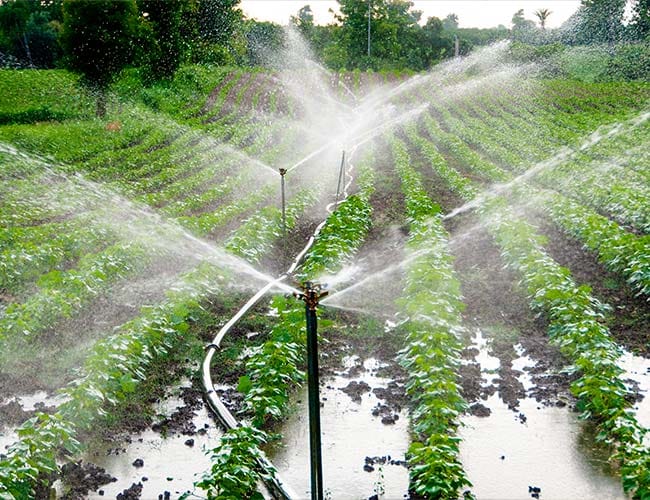
Underground Water Line for Agricultural Irrigation
Agricultural water systems often involve long distances and large changes in elevation.
This makes pressure-loss analysis especially important.
Zenlink also discusses agricultural polyethylene applications in ما هي استخدامات أنابيب HDPE في الزراعة؟.
For irrigation projects, evaluate:
- Pump flow
- Mainline pressure
- Field elevation
- Number of operating zones
- Filtration
- Fertigation requirements
- Branch-line diameter
- Drip or sprinkler pressure
- Future field expansion
HDPE may be used as a main water-transport pipeline, while products such as الري بالشريط بالتنقيط can distribute water closer to individual crop rows.
This creates a complete system in which the mainline transports water efficiently and the irrigation components control final delivery.
A Better Way to Request an HDPE Underground Water Line
Instead of sending only:
“I need 200 mm HDPE pipe.”
prepare a more complete project specification.
Useful information includes:
- طلب
- Required flow rate
- Total pipeline length
- Elevation difference
- Inlet pressure
- Required outlet pressure
- Pipe diameter if already specified
- Required DR or pressure class
- Water temperature
- Burial depth
- ظروف التربة
- Groundwater conditions
- Quantity
- Required fittings
- Butt fusion or electrofusion preference
- Applicable product standard
- موقع المشروع
- Special testing or documentation requirements
Providing these parameters makes it easier to evaluate the complete underground water line rather than simply matching a nominal pipe size.
Underground Water Line Selection Checklist
Before finalizing the pipe system, confirm:
- Is the required peak flow known?
- Has the actual installed route length been measured?
- Has elevation change been included?
- Is the available source pressure known?
- Has minimum outlet pressure been defined?
- Has pressure loss been calculated?
- Is pipe size based on actual ID as well as OD?
- Is the selected DR appropriate?
- Have surge conditions been considered?
- Are all fittings dimensionally compatible?
- Is the joining method suitable for the site?
- Have burial depth and soil conditions been reviewed?
- Has groundwater been considered?
- Are applicable water-quality certifications required?
- Does the system allow future expansion?
- Are testing and commissioning procedures specified?
If several answers are still unknown, pipe ordering is probably premature.
الأفكار النهائية
Choosing an underground water line requires more than comparing pipe diameters.
A reliable design connects hydraulic requirements with pipe dimensions, pressure capability, elevation, fittings, soil conditions, joining methods, and future demand.
For HDPE systems, the most important principle is to select the pipeline as a complete system rather than treating the pipe, fittings, pressure rating, and installation method as separate decisions.
A practical sequence is to first define flow and pressure requirements, then compare candidate inside diameters, verify DR and pressure capability, select compatible fittings, and finally confirm burial and installation conditions.
Zenlink’s polyethylene pipe products, تجهيزات الأنابيب HDPE, تجهيزات أنابيب الصهر الكهربائي, ، و الحلول الهندسية البلدية can be reviewed together when planning a complete underground water supply system.
For additional technical background, the Plastics Pipe Institute potable water resources provide engineering information covering polyethylene water piping, standards, pressure classes, joining, surge, and field installation.
الأسئلة الشائعة
What is the best pipe for an underground water line?
There is no single best material for every project. HDPE is often considered where corrosion resistance, flexibility, fusion connections, long runs, or ground movement are important. PVC, PEX, reinforced PE, and other systems may also be suitable depending on pressure, diameter, installation conditions, local codes, and application requirements.
What size HDPE pipe should I use for an underground water line?
The correct size depends on peak flow, total route length, elevation change, inlet pressure, required outlet pressure, fittings, and actual pipe inside diameter. A short service connection and a long agricultural or municipal main may require very different diameters even when their source pressure is similar.
Does a bigger HDPE water pipe increase water pressure?
A larger pipe does not create pressure, but it can reduce friction loss for a given flow rate. This can help preserve more of the available source pressure at the end of a long underground water line. Final sizing should balance velocity, pressure loss, required flow, DR, fittings, and installation conditions.
How deep should HDPE water pipe be buried?
There is no universal burial depth. Required cover depends on local frost depth, soil conditions, traffic loading, pipe design, groundwater, trench construction, and applicable building or utility regulations. Municipal and engineered projects should follow their approved structural and installation specifications.
Should I use butt fusion or electrofusion underground?
Both can be appropriate for underground HDPE systems. Butt fusion is frequently suited to continuous pipe runs where fusion equipment has adequate access. Electrofusion can be useful for repairs, branches, tie-ins, and restricted areas. The pipe, fitting, dimensions, preparation procedure, and fusion equipment must all be compatible.