Welcome to our in-depth look at PE & HDPE pipes and how they are transforming water supply, construction, and agricultural projects. Before you dive in, stay connected with us for expert tips, industry insights, and practical solutions:
· Facebook – Join our community to ask questions and get the latest product updates
· Tiktok – Watch tutorials, installation guides, and project demonstrations
Let’s explore how high-performance plastic pipes can deliver efficiency, reliability, and long-term performance—read on to find out which solutions fit your project best!
Table of Contents
Choosing the right water pipe for underground systems is no longer just a material decision—it is a long-term infrastructure strategy. With underground water networks expected to operate reliably for decades, even minor misjudgments in pipe selection can lead to leakage, contamination, costly excavation, and system downtime.
According to multiple municipal infrastructure studies, over 60% of underground water system failures are linked to improper pipe material selection or mismatch with soil and pressure conditions. This makes understanding pipe types, performance characteristics, and real-world behavior below ground level more critical than ever.
This comprehensive guide will help you:
- Understand how underground environments impact pipe performance
- Compare the most commonly used underground water pipe materials
- Match pipe types with real applications and operating conditions
- Evaluate durability, cost, and lifecycle value—not just price
- Answer practical, buyer-focused questions used in modern Google searches
Understanding Water Pipe for Underground Systems
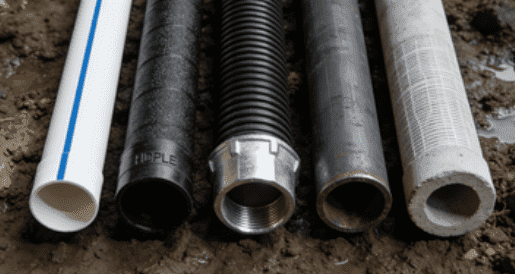
A water pipe for underground installation must function in an environment that is invisible, inaccessible, and constantly changing. Unlike exposed piping, underground systems are affected by soil chemistry, groundwater levels, traffic loads, temperature fluctuations, and settlement forces.
Engineering experts often emphasize that underground pipe selection should prioritize failure prevention, not ease of replacement. Once buried, every pipe becomes part of a long-term system where maintenance is disruptive and expensive.
From residential water supply lines to large-scale municipal transmission networks, underground piping must balance mechanical strength, corrosion resistance, flexibility, and joint integrity.
Common Types of Water Pipe for Underground Use
PVC Water Pipe for Underground Installations
PVC remains one of the most widely used materials in underground water systems, particularly in residential and light commercial applications. Its popularity stems from its low cost, ease of installation, and resistance to most forms of chemical corrosion.
PVC pipes are typically used for cold water supply lines and operate best under moderate pressure conditions. Industry data shows that properly installed PVC underground pipes can achieve service lives of 25–40 years.
However, PVC’s rigidity means it is more sensitive to soil movement and improper bedding. In regions with unstable ground or heavy surface loads, additional precautions are required.
HDPE Water Pipe for Underground Projects
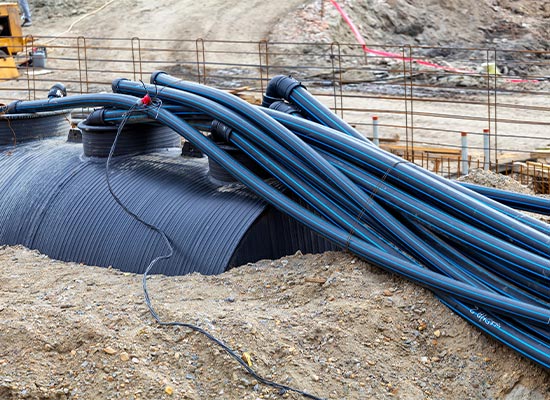
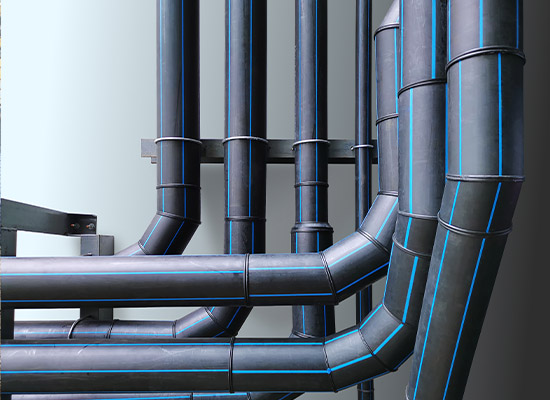
HDPE is increasingly considered the benchmark material for modern underground water systems. Its flexibility allows it to accommodate soil movement, vibration, and thermal expansion without cracking.
One of HDPE’s most significant advantages is its fusion-welded joints, which create a continuous, leak-free pipeline. Studies from municipal water authorities indicate that HDPE systems experience up to 50% fewer leak incidents compared to traditional rigid pipes.
This water pipe for underground use is commonly selected for:
- Municipal water distribution
- Agricultural irrigation systems
- Long-distance water transmission
- Areas with seismic activity
Ductile Iron Water Pipe for Underground Networks
Ductile iron has a long-standing reputation in underground infrastructure due to its exceptional mechanical strength and pressure-handling capability. It is often chosen for main distribution lines beneath roads, industrial zones, and dense urban areas.
Modern ductile iron pipes are lined internally with cement mortar and coated externally to improve corrosion resistance. When installed correctly, ductile iron pipelines can exceed 75 years of service life.
Despite higher installation costs, engineers continue to favor ductile iron where reliability under extreme conditions is non-negotiable.
Steel Water Pipe for Underground Applications
Steel pipes are typically reserved for high-pressure or industrial underground water systems. Their strength makes them suitable for specialized applications such as pumping stations, industrial plants, and cross-country pipelines.
However, steel’s vulnerability to corrosion requires comprehensive protection strategies. Without coatings or cathodic protection, steel pipes may suffer accelerated degradation underground.
From a lifecycle perspective, steel is often selected when performance requirements outweigh maintenance complexity.
Concrete and Composite Water Pipes Underground
Concrete pipes are mainly used for large-diameter underground water transmission. Their compressive strength allows them to support heavy loads, making them suitable beneath highways or industrial zones.
Composite pipes combine different materials to optimize performance. These pipes are gaining attention in large-scale infrastructure projects where engineers seek both durability and corrosion resistance.
Key Engineering Concepts That Define Underground Pipe Performance
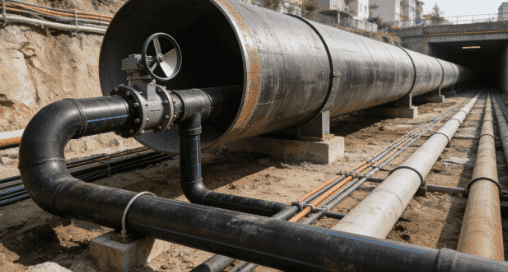
Soil Interaction and Load Distribution
Underground pipes do not exist in isolation; they interact continuously with surrounding soil. Flexible pipes rely on soil support, while rigid pipes resist loads structurally.
Joint Integrity and Leak Prevention
Leakage often originates at joints rather than pipe walls. Fusion-welded systems significantly reduce this risk in underground environments.
Hydraulic Efficiency
Internal surface smoothness affects flow efficiency. Plastic pipes typically maintain lower friction loss over time compared to metal alternatives.
Comparison of Common Underground Water Pipe Types
| Pipe Material | Typical Lifespan | Flexibility | Corrosion Resistance | Common Use |
|---|---|---|---|---|
| PVC | 25–40 years | Low | High | Residential supply |
| HDPE | 50+ years | Very High | Very High | Municipal systems |
| Ductile Iron | 75+ years | Low | Medium (coated) | Urban mains |
| Steel | 40–60 years | Low | Low–Medium | Industrial use |
| Concrete | 50+ years | Very Low | High | Transmission lines |
Matching Water Pipe for Underground Use with Real Applications
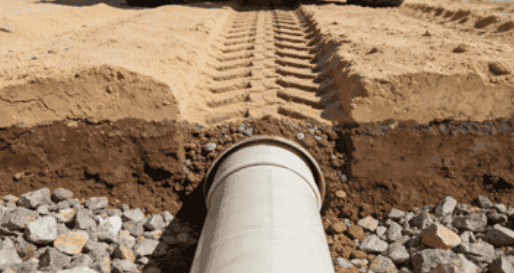
Residential Water Supply
PVC and HDPE are commonly used due to ease of installation and cost efficiency.
Municipal Infrastructure
HDPE and ductile iron dominate large-scale networks due to durability and leak resistance.
Agricultural Irrigation
HDPE is favored for its flexibility, chemical resistance, and long-distance performance.
Industrial Water Systems
Steel and ductile iron remain standard where pressure and mechanical loads are high.
Cost vs Lifecycle Value in Underground Water Pipe Selection
Initial purchase price is only a fraction of total system cost. Excavation, downtime, repairs, and replacement often far exceed material costs.
Infrastructure economists estimate that up to 70% of underground pipeline costs occur after installation. This makes durability and failure prevention critical factors in selection.
Industry Perspectives on Underground Water Pipe Selection
Many civil engineers emphasize that underground pipe decisions should be made with a 50–100 year mindset, not short-term budgets. As one infrastructure consultant noted, “The cheapest pipe upfront is often the most expensive pipe underground.”
Water Pipe for Underground vs Above-Ground Applications
Above-ground pipes prioritize UV resistance and accessibility, while underground pipes prioritize compression resistance, corrosion protection, and joint integrity. Materials designed for exposed environments may fail prematurely when buried.
Final Thoughts
Selecting the right water pipe for underground systems is a technical decision with long-term consequences. By understanding material behavior, environmental interaction, and lifecycle value, engineers and buyers can build water networks that remain safe, efficient, and reliable for generations.
FAQ
What is the most reliable water pipe for underground systems?
HDPE and ductile iron are widely regarded as the most reliable options for long-term underground use.
How deep should underground water pipes be installed?
Depth varies by climate and application, but pipes are typically buried below frost lines and protected from surface loads.
Can underground water pipes handle temperature changes?
Flexible materials like HDPE handle thermal expansion better than rigid pipes.
Are plastic pipes safe for drinking water underground?
Yes. Most modern plastic pipes meet international potable water standards.
How do I reduce underground pipe maintenance costs?
Selecting corrosion-resistant materials and leak-free joint systems significantly reduces maintenance needs.