Table of Contents
Corrugated Plastic Layer Pads: Sizing to the Real Load Footprint addresses a specific B2B decision: actual load footprint and pallet pattern. The right choice depends on the finished application and the way it is handled, not just the product name. Use the checks below to compare samples, prepare a clear request for quotation and approve a repeatable supply specification.
The decision for corrugated plastic layer pads
The practical starting point is a beverage distributor separating packaged goods on pallets. The risk is specific: the pad leaves edges unsupported or protrudes into wrapping. A decision about corrugated plastic layer pads should therefore begin with actual load footprint and pallet pattern, rather than a comparison based only on a photograph or the nominal material name. This article sets out a qualification and purchasing method for that situation. It does not assign a universal load rating, service life or certification to an unspecified grade.
A useful acceptance statement is that the pad covers required contact areas without creating handling interference. Translate that statement into a short inspection record before asking for quotations or changing the current design. Decide who will observe the result and which product condition must remain unchanged. Where a drawing dimension is involved, agree the measurement position and method. Where appearance or handling matters, retain a physical reference or a clear operating example.
The first trial should place a full-size pad between the intended product layers. Keep the actual product, its support arrangement and the relevant operating sequence in the comparison. Record the sample code, drawing revision, conditions and observations together. If a detail is changed during the trial, identify the revised sample separately. This makes it possible to distinguish a useful improvement from a different setup that was never compared fairly.
The most informative failure to investigate is the one connected to actual load footprint and pallet pattern. Photograph the relevant area before and after the trial and record whether the problem appeared during preparation, operation or unpacking. Do not merge distinct failure causes into one rejected-sample count. That distinction helps determine whether the next action belongs in material selection, conversion, packing or the working method.
For the order, keep actual load footprint and pallet pattern visible in the drawing or acceptance sheet. Ask the supplier to identify any proposed deviation before production. The release decision should refer to the sample and evidence that were actually reviewed. An appealing prototype is a starting point; repeatability in the supplied batch is what allows corrugated plastic layer pads to work as a dependable purchasing specification.
Map the contact surfaces and clearance
When specifying corrugated plastic layer pads, draw where each product can touch the separator and where adjacent products could meet if the divider deflects. Include projections, burrs and cosmetic surfaces. An interleaf that protects a broad flat surface may perform differently around a sharp corner. Determine whether the application needs simple separation, positive location or a softer contact layer before choosing the final construction.
Use actual production parts in the fit trial, including representative size variation. Identify which face is the approved contact face and whether the separator can be reversed. If an extra liner is required, qualify the liner and board together. The added layer can change clearance, cleaning, friction and end-of-life separation, so it should be included in the drawing and cost comparison.
Keep the qualification focused on actual load footprint and pallet pattern. Ask the supplier to explain deviations from the approved construction.
Check the real pallet and layer geometry
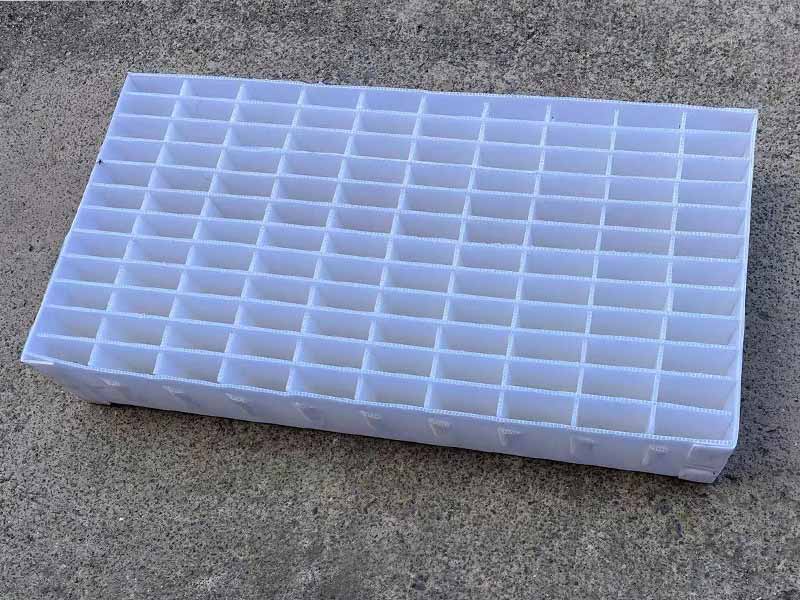
When comparing corrugated plastic layer pads, measure the complete load footprint after the intended product pattern has been assembled. A nominal pallet dimension does not necessarily describe where the goods actually contact an interlayer. Note gaps, overhang, uneven rows and concentrated contact points. The separator should be evaluated between representative layers, on the approved pallet type and in the intended direction.
Look for unsupported regions after the load has remained in position for the relevant dwell time. Check whether the pad projects into wrapping, catches during unloading or shifts when the upper layer is placed. A pad helps separate surfaces but does not automatically stabilize the pallet. Review the restraint and pallet pattern as part of the same system.
In the operating trial, check whether the pad leaves edges unsupported or protrudes into wrapping. The relevant observation should determine the next design change.
Prevent grit from becoming an abrasive contact
For a project using corrugated plastic layer pads, a separator cannot protect a finish if hard debris is trapped at the contact interface. Define cleanliness at the packing station and protect stored pads from workshop dust. Inspect both the board and the product before stacking. If the material is reused, the return and cleaning process becomes part of the surface-protection system rather than a separate housekeeping task.
Use representative finished surfaces to evaluate contact marks after handling and unpacking. Distinguish a mark caused by relative movement from one caused by an embedded particle or an exposed product edge. The remedies differ. A softer liner may help some finishes, but its own cleanliness, shedding, attachment and compatibility need to be checked with the actual product.
The reference sample should support one clear conclusion: the pad covers required contact areas without creating handling interference. Preserve the conditions that made that result possible.
Consider movement separately from separation
When qualifying corrugated plastic layer pads, a flat layer pad creates a physical interlayer, but its surface friction and the restraint system determine whether the load can slide. Do not rely on the presence of a plastic pad as evidence that a pallet is stable. Observe the complete loaded unit through the handling sequence and use the site’s approved procedures for any trial involving moving equipment.
Check how separators behave during upper-layer placement and removal. A pad that shifts while loading can leave an edge unprotected even before transport starts. If locating tabs or a shaped profile are proposed, test whether they stay engaged without damaging the goods. Record the intended loading sequence so that the final design is evaluated in a reproducible way.
The buyer should be able to repeat the comparison and place a full-size pad between the intended product layers. Use the same identification method for the production batch.
Keep returned separators identifiable and usable
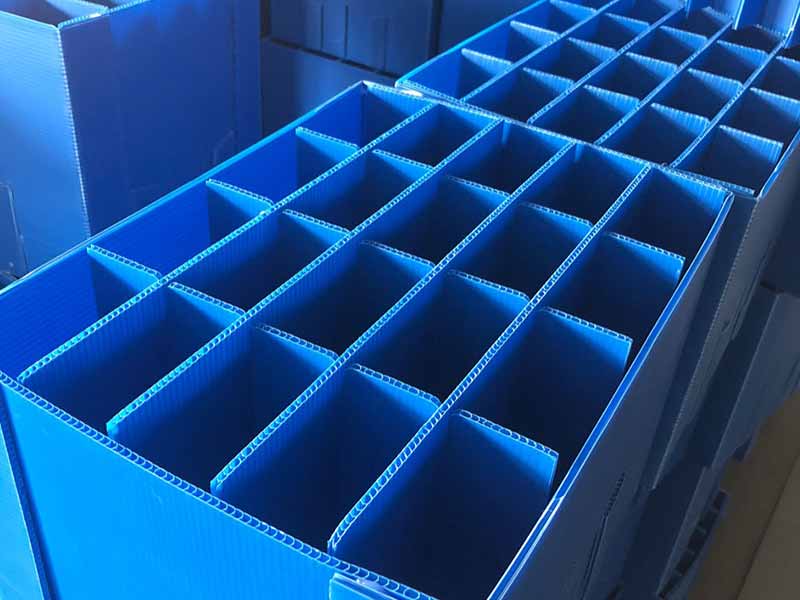
Before ordering corrugated plastic layer pads, sort used pads and divider sets before they reach the packing station. The check should cover cuts, crushed areas, contamination and missing pieces. Provide a clear count or set identifier for multi-part grids. A partial divider set can create apparently usable cells while leaving some products without the intended separation.
Record damaged and missing material independently. If the same location repeatedly fails, compare that location with the payload contact and operator handling. Retain a labeled example for corrective action. Where practical, store cleaned sets in their approved return configuration so that a complete usable set can be picked without searching through mixed loose strips.
When reviewing a substitute, return to actual load footprint and pallet pattern. Nominally similar material is only a candidate until the relevant checks are complete.
Inspect across the delivery rather than at one easy location
When inspecting corrugated plastic layer pads, choose samples from more than the most accessible top board or first box. Include different bundles and positions where variation or packing damage could occur. Agree the sample selection and handling method before the shipment arrives. For high-consequence features, consider whether a specialist inspection plan is needed rather than inventing a universal sample size.
Separate product nonconformity from damage introduced during unloading or storage. Photographs taken before wrapping is removed can help explain edge or strap damage. Record lot and bundle identity with any rejected item. A useful inspection result tells the supplier and receiving team where the problem occurred and which material needs to be held for review.
The priority for this project is actual load footprint and pallet pattern. Keep it visible when comparing the candidates.
Keep the operating cost basis visible
For production using corrugated plastic layer pads, compare alternatives on the same function and usable output. Material price is only one input. Conversion yield, setup labor, rejected pieces, freight, cleaning and return handling may change the practical result. Include the costs that belong to the actual application and avoid adding speculative savings. Where an input is unknown, label it as an assumption and identify how a pilot could measure it.
For a reusable item, distinguish a completed usable trip from a dispatch that has not yet returned. Missing and damaged items should not vanish from the denominator. Update the comparison when route data becomes available. A transparent model with a few well-defined inputs is more useful than a precise payback claim based on a service life that has never been observed.
For the situation described here, place a full-size pad between the intended product layers. Record the result before releasing the order.
Define the environmental conditions that matter
When approving corrugated plastic layer pads, list the exposures relevant to the intended job: storage temperature, sunlight, moisture, cleaning, abrasion and duration under load. Do not assume that success in a clean indoor sample room establishes performance in a different environment. Ask for grade-specific information and use representative trials where the exposure could change fit, appearance or a required property.
Keep the conditions proportionate to the real application. A temporary indoor display and a repeatedly washed return box do not need the same qualification plan. Record why each condition was included and what observation it addresses. This makes the evaluation easier to interpret and helps determine which checks need to be repeated if the route or operating environment changes.
The decision should demonstrate that the pad covers required contact areas without creating handling interference. An unexplained pass mark is less useful than the observation behind it.
Compare options for corrugated plastic layer pads
For corrugated plastic layer pads, compare the current construction, the proposed alternative and any reduced-material option against the same acceptance statement. Keep changes in dimensions, load arrangement and process conditions visible. The table is a project checklist rather than a claim that one standard grade fits every application.
| Requirement | What to record | How to judge the result |
|---|---|---|
| Application | a beverage distributor separating packaged goods on pallets | Use a production-equivalent configuration |
| Critical variable | actual load footprint and pallet pattern | Agree a repeatable method before the comparison |
| Relevant risk | the pad leaves edges unsupported or protrudes into wrapping | Observe the actual operating stage where it begins |
| Trial | Place a full-size pad between the intended product layers | Keep setup and sample identity with the record |
| Acceptance | The pad covers required contact areas without creating handling interference | Record evidence and unresolved deviations |
| Reorder | Drawing revision, sample code and material identity | Compare the received batch with the approved reference |
Sources and related product information
Independent reference: ISTA. Use the relevant guidance with the project-specific qualification plan. This reference is not a test report or certification for a Zenlink product.
For available product formats, review Zenlink’s corrugated plastic product page and hollow-board product category. Ask which dimensions and modifications can be supplied for your drawing; availability and supporting documentation should be confirmed for the exact order.
Frequently asked questions
What should a buyer specify first for corrugated plastic layer pads?
Start with actual load footprint and pallet pattern. Describe the finished use and identify the relevant drawing or product condition. For this project, the intended result is that the pad covers required contact areas without creating handling interference.
Is nominal thickness enough to approve the material?
No. Thickness is one part of the construction. Review area weight where relevant, flute direction, conversion details and the actual operating function. Compare equivalent samples using the same method and acceptance criteria.
How should the first sample be tested?
The first trial should place a full-size pad between the intended product layers. Record the sample identity, setup, conditions and observations. Review deviations before approving tooling or a larger order.
Can a similar-looking board be substituted without review?
A similar appearance does not establish equivalent behavior. Check the proposed change against actual load footprint and pallet pattern and repeat the affected functional or dimensional checks before release.
What information helps Zenlink prepare a useful quotation?
Provide the drawing or finished dimensions, quantity, intended application, relevant material requirements, conversion details, delivery destination and the checks required for sample approval. Include a reference sample code or current packaging problem where available.
Discuss the specification with Zenlink
Send Zenlink the application drawing, required quantity and the issue you need to resolve. For corrugated plastic layer pads, highlight actual load footprint and pallet pattern and describe the trial you expect to use. The team can review the relevant hollow-board or packaging format and discuss sample requirements for your project. Use the inquiry form below or the contact page to provide the working details.