Welcome to our in-depth look at high-quality plastic products and how they are transforming everyday life, industrial applications, and commercial projects. Before you dive in, stay connected with us for expert tips, industry insights, and practical solutions:
· Facebook – Join our community to ask questions and get the latest product updates
· Tiktok – Watch tutorials, installation guides, and project demonstrations
Let’s explore how durable and versatile plastic products can deliver efficiency, reliability, and long-term performance—read on to discover which solutions fit your needs best!
Table of Contents
Key Takeaways of Scaffold Debris Netting
- Enhances worker and public safety by preventing falling objects
- Made from HDPE/PP with UV and anti-aging protection
- Suitable for high-rise, industrial, and infrastructure projects
- Lightweight yet highly impact-resistant structure
- Customizable in size, color, and mesh density
- Reduces long-term construction risk and maintenance costs
Introduction

On modern construction sites, safety is no longer just a compliance requirement—it is a productivity factor, a cost-control mechanism, and a legal necessity. Among all protective systems used in scaffolding environments, scaffold debris netting has become one of the most critical components in preventing accidents caused by falling objects.
In high-rise construction, even a small falling tool can generate impact forces exceeding 100–200 joules depending on height and weight. Industry safety reports from construction safety authorities consistently show that a significant percentage of site accidents are caused by falling materials rather than structural failure. This is exactly where scaffold debris netting plays a decisive role.
Today’s advanced netting systems are no longer simple protective fabrics. They are engineered safety solutions combining high-density polymer technology, UV stabilization, reinforced weaving structures, and international compliance testing. This article provides a deep technical and practical breakdown of how heavy duty scaffold debris netting works, where it is used, how to choose it, and what standards define its performance.
Understanding Scaffold Debris Netting in Modern Engineering Context
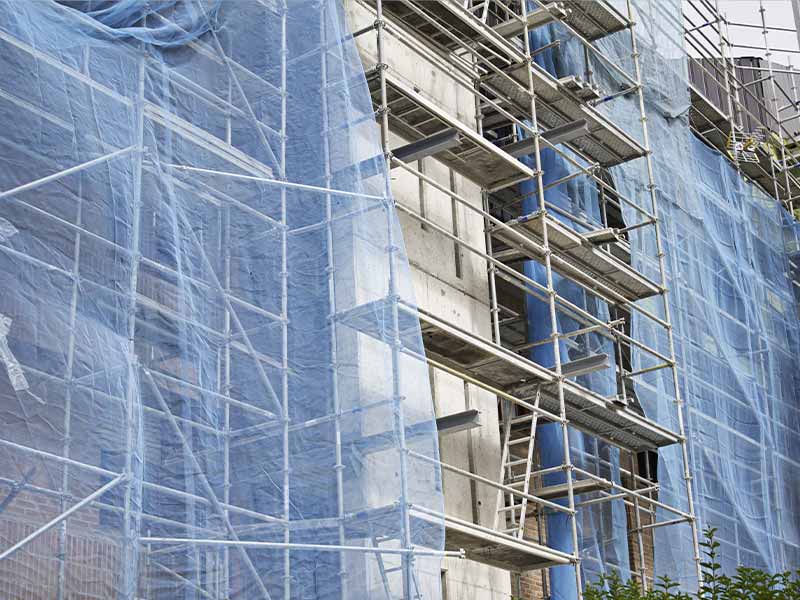
Scaffold debris netting is a high-strength protective mesh installed on scaffolding systems to contain falling debris, tools, dust, and construction waste. It acts as a vertical safety barrier between the working platform and surrounding public or operational areas.
Unlike traditional tarpaulins, scaffold debris netting is engineered to maintain airflow while retaining structural integrity under dynamic loads such as wind pressure and impact force.
Engineering Materials Behind Scaffold Debris Netting Performance
HDPE and PP Fiber Engineering Structure
Most high-performance scaffold debris netting is manufactured using High-Density Polyethylene (HDPE) or Polypropylene (PP) fibers. These materials are chosen due to their molecular structure, which provides:
- High tensile strength
- Flexibility under stress
- Resistance to cracking under low temperatures
- Lightweight handling for installation efficiency
Industry-grade HDPE netting typically achieves tensile strength values between 25–45 MPa, depending on fiber grade and weaving density.
UV Stabilization and Anti-Aging Technology
UV degradation is one of the primary failure causes for outdoor construction netting. Advanced scaffold debris netting incorporates UV stabilizers that extend service life by absorbing and dispersing ultraviolet radiation.
Field testing shows that UV-treated HDPE nets can maintain over 80% structural integrity after 3,000+ hours of UV exposure, compared to untreated nets which degrade significantly within 6–12 months.
Thermal Stability Performance
High-quality scaffold debris netting is designed to operate under temperature ranges from -30°C to +70°C. This makes it suitable for both cold-region infrastructure projects and high-temperature industrial environments.
Eco-Compliant Manufacturing Standards
Modern construction procurement increasingly requires environmental compliance. Premium scaffold debris netting materials often comply with:
- RoHS (Restriction of Hazardous Substances)
- REACH chemical safety standards
- ISO 14001 environmental management systems
These certifications ensure the product is safe for workers and environmentally sustainable.
Structural Design Principles of Scaffold Debris Netting
High-Density Mesh Geometry
The mesh structure is engineered using controlled spacing ratios, typically ranging from 2mm to 10mm aperture sizes, depending on application requirements.
Smaller apertures improve debris retention, while larger apertures enhance airflow and reduce wind load stress.
Reinforced Load Distribution Pattern
Modern netting uses cross-weave reinforcement techniques to distribute impact forces evenly across the mesh surface. This reduces localized tearing and increases overall durability.
Load distribution testing shows that reinforced netting can handle dynamic impact loads of up to 1200–1500 N per square meter in certified configurations.
Edge Reinforcement Systems
Edge failure is one of the most common installation issues in low-quality netting systems. High-performance scaffold debris netting uses:
- Double-stitched borders
- Polyamide reinforcement tapes
- Metal eyelet integration systems
These improvements increase installation lifespan by up to 40–60%.
International Safety Standards and Compliance Framework
Scaffold debris netting used in professional construction projects must comply with global safety regulations. Key standards include:
- EN 1263-1 (European Fall Protection Netting Standard)
- ANSI/ASSP A10.11 (USA Construction Safety Net Systems)
- BS 6399 (Wind Load and Structural Safety Guidance)
- ISO 18064 (Synthetic Fiber Safety Testing)
These standards regulate:
- Minimum tensile strength
- Energy absorption capacity
- UV resistance requirements
- Fire-retardant behavior (optional applications)
Compliance with these standards ensures the netting is suitable for government and large-scale infrastructure projects.
Real-World Case Studies of Scaffold Debris Netting Applications
Case Study: High-Rise Development Project in Urban Environment
A 48-story residential project used scaffold debris netting across all external scaffolding levels. During the 18-month construction period:
- Reported zero pedestrian safety incidents
- Reduced debris cleanup costs by 32%
- Improved site inspection approval rates
Project safety audits highlighted netting as a critical factor in maintaining compliance with municipal regulations.
Case Study: Bridge Construction in Wind-Prone Area
In a coastal bridge project, scaffold debris netting was tested under wind speeds exceeding 45 km/h.
Results showed:
- No structural failure or detachment
- Minimal deformation under sustained wind load
- Effective containment of welding debris and metal fragments
Case Study: Industrial Facility Maintenance Shutdown
During a refinery shutdown, scaffold debris netting was used to isolate work zones.
Outcomes included:
- Reduced dust spread by approximately 60%
- Improved worker visibility and safety
- Lowered PPE contamination rates
Scaffold Debris Netting vs Alternative Safety Systems
| System Type | Primary Function | Strength Level | Cost Efficiency | Best Use Case |
|---|---|---|---|---|
| Scaffold Debris Netting | Debris containment | High | High | Construction scaffolding |
| Safety Mesh Fencing | Perimeter protection | Medium | Medium | Site boundaries |
| Tarpaulin Sheeting | Weather protection | Low | Low | Temporary covering |
| Steel Mesh Panels | Structural shielding | Very High | Low | Permanent industrial zones |
This comparison shows that scaffold debris netting provides the best balance between cost, flexibility, and safety performance.
Installation Engineering Guidelines
Pre-Installation Site Assessment
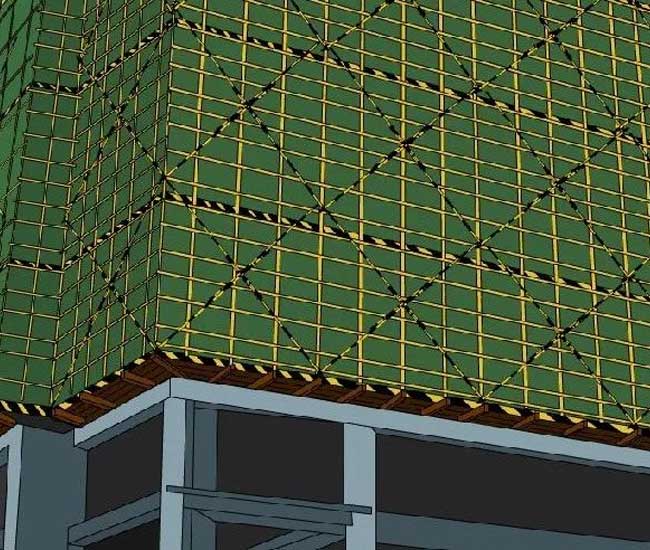
Before installation, engineers typically evaluate:
- Scaffold structure load capacity
- Wind exposure classification
- Debris type and density
- Height segmentation requirements
Installation Tension Optimization
Proper tensioning ensures structural stability. Industry guidelines recommend:
- Minimum 15–20% pre-tension adjustment
- Even spacing of fastening points every 30–50 cm
- Reinforced anchoring at corners and load zones
Maintenance and Inspection Cycles
Recommended inspection intervals:
- Weekly visual inspection for high-risk sites
- Monthly structural assessment
- Immediate replacement if tear length exceeds 5 cm
Economic Analysis: Cost vs Safety ROI
Investing in scaffold debris netting provides measurable financial returns:
- Reduced workplace accident insurance claims
- Lower material loss from falling tools
- Faster regulatory approvals
- Reduced labor cleanup time
Studies from construction safety audits indicate ROI improvements of 18%–35% when proper debris netting systems are implemented.
Market Trends and Industry Developments
The global scaffold safety market is shifting toward:
- Lightweight composite fiber netting
- Smart monitored safety systems
- Fire-retardant enhanced netting materials
- Modular reusable safety systems
Demand is increasing particularly in Asia-Pacific and Middle East infrastructure sectors due to rapid urbanization.
Scaffold Debris Netting Selection Guide

Choosing Based on Project Type
- High-rise buildings → High-density reinforced HDPE netting
- Infrastructure bridges → Wind-resistant cross-weave systems
- Industrial plants → Chemical-resistant coated netting
Key Technical Parameters to Evaluate
- Tensile strength (MPa rating)
- Mesh density (aperture size)
- UV resistance duration (hours tested)
- Fire retardant certification (if required)
FAQ
What is scaffold debris netting mainly used for?
It is used to prevent falling construction materials, tools, and debris from scaffolding structures, improving safety for workers and pedestrians.
How strong is heavy duty scaffold debris netting?
High-grade netting can withstand impact forces up to 1200–1500 N/m² depending on material and reinforcement design.
How long does scaffold debris netting last outdoors?
Typically 3–5 years with UV-stabilized HDPE materials under normal construction conditions.
Can scaffold debris netting withstand strong wind?
Yes, properly installed reinforced netting is designed to perform under wind loads exceeding 40–60 km/h depending on configuration.
Is scaffold debris netting reusable?
Yes, most heavy-duty systems are reusable if inspected and stored properly after each project.
Conclusion
As construction projects become taller, faster, and more complex, risk management becomes a defining factor in project success. Scaffold debris netting is no longer an optional accessory—it is a fundamental safety infrastructure component.
Its combination of engineered materials, international compliance, and real-world performance makes it one of the most cost-effective safety investments in the construction industry today. Whether applied in high-rise buildings, bridges, or industrial facilities, it consistently reduces risk, improves efficiency, and supports regulatory compliance.
For contractors and project managers, selecting the right scaffold debris netting is ultimately a decision that impacts not only safety outcomes but also long-term operational profitability.