Daftar Isi
Key Takeaways
- HDPE water pipe selection should begin with operating conditions, not simply the nominal pipe diameter.
- Flow rate, route length, elevation and required outlet pressure determine how much internal diameter a water pipeline needs.
- DR or SDR affects wall thickness, inside diameter and pressure capability.
- Potable-water applications require the correct pipe material, product standard and applicable certification.
- Butt fusion and electrofusion serve different installation conditions, so joining method should be considered before finalizing the pipe specification.
- Fittings must match the pipe diameter, dimensional system, pressure requirements and connection method.
- Burial depth, soil conditions, groundwater, traffic loads and trench preparation can affect long-term underground performance.
- A reliable HDPE piping system should be evaluated as a complete combination of pipe, fittings, joints and installation conditions.
What Is an HDPE Water Pipe?
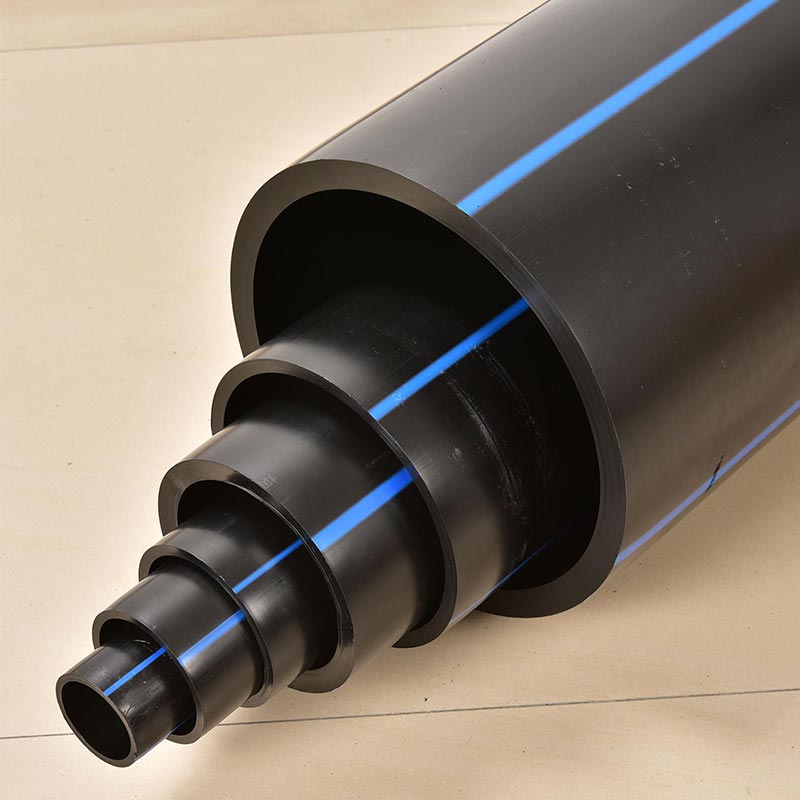
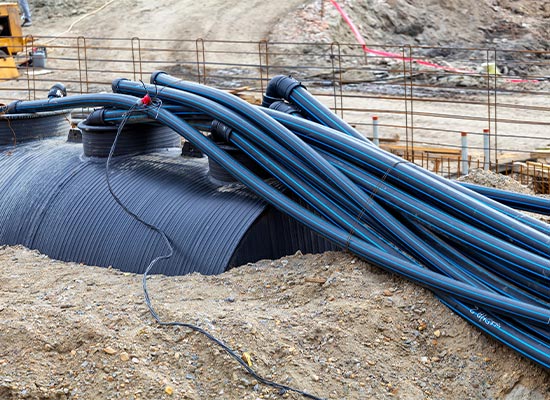
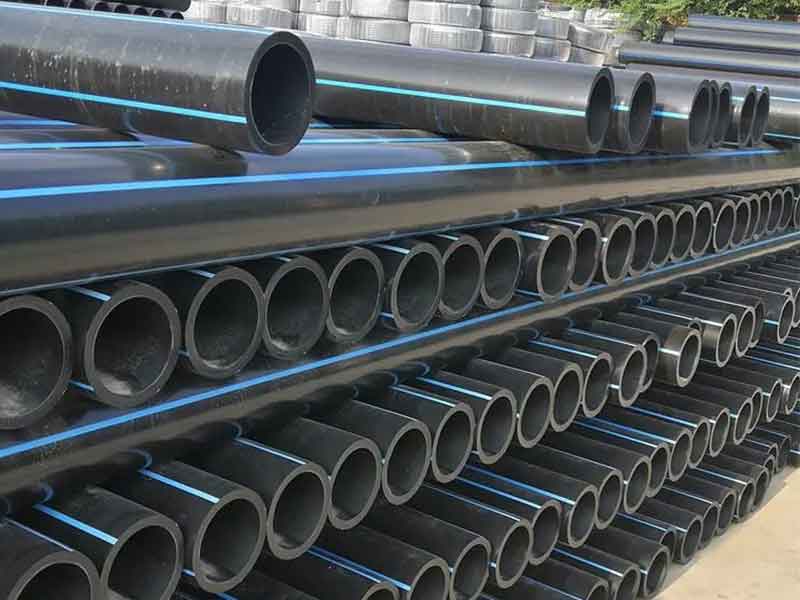
An HDPE water pipe is a polyethylene piping product used to transport water in pressure and non-pressure applications such as municipal distribution, rural water supply, irrigation, industrial water transport and underground infrastructure.
HDPE refers to high-density polyethylene, a thermoplastic material valued in pipeline applications for corrosion resistance, flexibility and compatibility with heat-fusion joining methods.
Zenlink's polyethylene pipe product range includes PE and HDPE piping products for municipal water supply, agricultural irrigation, industrial projects and infrastructure applications. The company also supplies compatible fittings for building complete pipeline systems.
Choosing the correct HDPE water pipe, however, requires more than deciding that polyethylene is suitable for the project.
Before confirming a specification, seven areas deserve particular attention.
1. Check the Required Flow Before Choosing HDPE Water Pipe Size
Pipe diameter is not the first question.
Flow demand is.
Before selecting an HDPE water pipe, establish how much water the system must carry under realistic operating conditions.
Average Flow
Average flow describes typical water demand over a defined period.
It can help estimate normal system use, but it should not be the only value used for a system that experiences short periods of significantly higher demand.
Peak Flow
Peak flow represents the highest expected water demand.
Examples include:
- Several irrigation zones operating simultaneously
- Municipal morning or evening demand
- Industrial equipment operating together
- Storage tanks refilling
- Fire-water demand
- Multiple building fixtures operating at once
If an HDPE water pipe is sized only for average consumption, outlet pressure can fall below the required level when demand increases.
Route Length Changes the Answer
A diameter that performs well over a short distance may create excessive friction loss over a long route.
This means two projects with the same flow requirement can need different pipe sizes simply because one pipeline is much longer.
Ask This Question Instead
Rather than asking:
“What size HDPE water pipe carries this flow?”
ask:
“What size HDPE water pipe can carry this flow over the required distance while maintaining acceptable pressure?”
That question produces a much more useful engineering answer.
For a detailed explanation of OD, ID, wall thickness and dimensional selection, refer to Zenlink’s PE Pipe Sizes Practical Selection Guide. The existing guide already covers the relationship between pipe dimensions, SDR, pressure rating, flow demand and connection method.
2. Check Operating Pressure, Surge and DR/SDR
An HDPE water pipe must withstand more than the normal pressure shown on a pump gauge.
Design conditions can include:
- Normal operating pressure
- Maximum operating pressure
- Pump startup and shutdown
- Valve operation
- Pressure surges
- Changes in elevation
- Temperature effects
The Plastics Pipe Institute potable-water resources include technical information addressing PE4710 water pipe, pipe sizes, pressure classes, surge considerations and municipal water applications.
What Does DR Mean?
Dimension Ratio describes the relationship between outside diameter and wall thickness.
In simplified form:
DR = Outside Diameter ÷ Minimum Wall Thickness
For pipes with the same outside diameter, a lower DR generally corresponds to a thicker wall and a smaller internal diameter.
DR11 vs DR17: What Changes?
Consider two HDPE pipes with the same outside diameter.
The DR11 pipe generally has a thicker wall.
The DR17 pipe generally has a thinner wall and therefore a larger internal opening.
This creates an important engineering tradeoff:
| Perbandingan | Lower DR | Higher DR |
|---|---|---|
| Ketebalan dinding | Thicker | Thinner |
| Inside diameter at same OD | Lebih kecil | Lebih besar |
| Pressure capability | Generally higher | Generally lower |
| Flow area | Lebih kecil | Lebih besar |
| Material in pipe wall | More | Less |
| Selection priority | Higher pressure conditions | Lower pressure where permitted |
The correct DR should be based on actual design conditions and applicable product standards rather than automatically choosing the thickest available wall.
Do Not Ignore Surge
Water does not always move through a pipeline under perfectly steady conditions.
Rapid changes in pump operation or valve position can create transient pressure changes. PPI maintains dedicated technical resources covering occasional and recurring surge considerations for HDPE water piping.
For large municipal, industrial or pumped systems, surge analysis may therefore be just as important as the normal operating pressure.
3. Check OD, ID and Wall Thickness
One of the most common HDPE water pipe selection mistakes is treating nominal diameter as if it completely describes the pipe.
It does not.
Diameter Luar
Outside diameter affects:
- Dimensional compatibility
- Fitting selection
- Fusion equipment
- Flange adapters
- Installation tooling
Diameter Dalam
Inside diameter affects:
- Flow area
- Water velocity
- Friction loss
- Hydraulic capacity
Ketebalan Dinding
Wall thickness connects these two dimensions.
For a controlled outside diameter, increasing wall thickness reduces the internal opening.
Why This Matters
Suppose two suppliers offer a pipe described with the same outside diameter.
If one pipe has a different DR, its inside diameter can also be different.
A quotation comparison based only on OD therefore may overlook a meaningful difference in hydraulic capacity.
Zenlink’s existing PE Pipe Sizes guide is a useful internal reference for this topic because it specifically explains OD, ID, SDR, wall thickness, pressure rating and flow considerations.
HDPE Water Pipe Dimension Checklist
Before approving a pipe size, confirm:
| Parameter | Why confirm it? |
| Nominal designation | Identifies the specified product size |
| Diameter luar | Determines fitting and equipment compatibility |
| Ketebalan dinding | Influences strength and ID |
| Inside diameter | Determines hydraulic opening |
| DR/SDR | Relates OD to wall thickness |
| Kelas tekanan | Must match system conditions |
| Product standard | Controls dimensional and performance requirements |
Do not assume that similar-looking product descriptions from different specifications are automatically interchangeable.
4. Check Whether the Pipe Is Intended for Potable Water
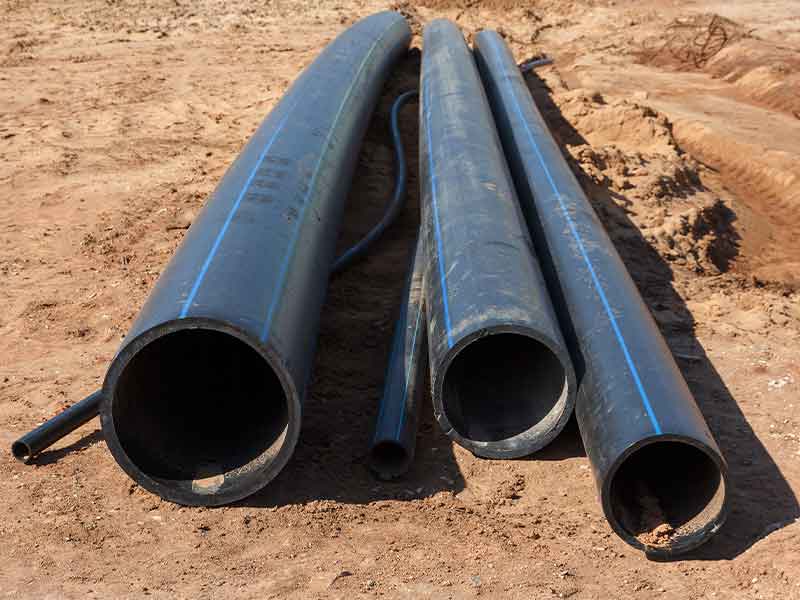
Not every polyethylene pipe is automatically suitable for drinking-water service.
If the project carries potable water, the specification should identify the required material designation, applicable water-pipe standard and certifications required by the project authority or destination market.
PPI’s potable-water technical resources discuss PE4710 distribution water pipe, pressure classes, potable-water applications and related municipal water guidance.
Potable Water and General Water Transport Are Different Requirements
An HDPE pipe carrying agricultural irrigation water may operate under completely different regulatory requirements from a municipal drinking-water main.
Likewise, an industrial cooling-water line does not automatically require the same certification as a potable-water distribution system.
Therefore, the application should be stated clearly when requesting a pipe specification.
Information to Confirm
For potable-water projects, check:
- Required material grade
- Applicable national or international standard
- Kelas tekanan
- Pipe dimensions
- Required drinking-water approval
- Temperature range
- Jointing method
- Fitting compatibility
- Project documentation
Avoid the Phrase “Food Grade” as the Only Specification
A broad marketing description is not a substitute for a defined project standard.
For municipal and regulated water projects, provide the actual required standard or certification instead of relying on general material descriptions.
5. Check the HDPE Pipe Fittings Before Finalizing the Pipe
A water pipeline is not built from straight pipe alone.
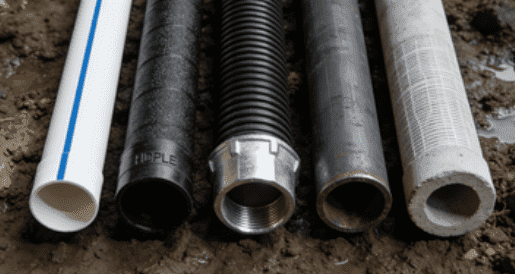
Typical systems may require:
- Elbows
- Tees
- Reducers
- Couplers
- End caps
- Stub ends
- Flange adapters
- Branch saddles
- Transition fittings
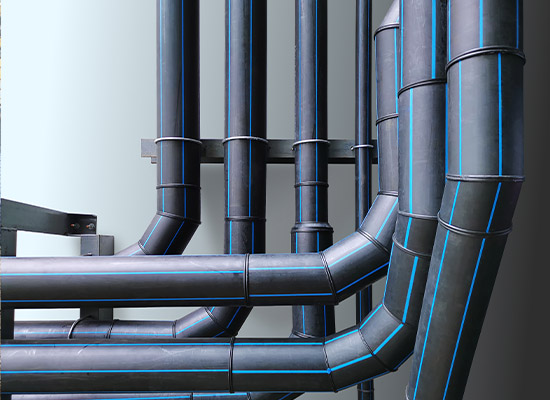
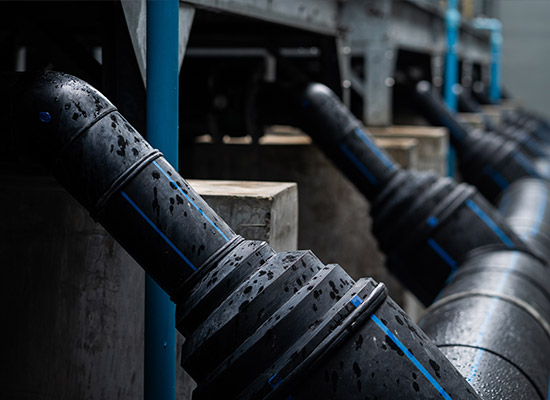
Zenlink's Fitting Pipa HDPE are designed for polyethylene piping systems used in municipal water distribution, irrigation, wastewater, industrial fluid transport and underground infrastructure.
Why Fitting Compatibility Matters
A fitting should match more than the general term “HDPE.”
Confirm:
- Diameter luar
- Dimension series
- Pressure requirements
- Material compatibility
- Joining method
- Flange standard where applicable
- Operating medium
A pipe system can encounter problems when the straight pipe is selected first and fittings are treated as an afterthought.
Reduce Unnecessary Transitions
Every reducer, adapter, bend or transition changes the pipeline layout and may introduce additional installation requirements.
A cleaner system design can simplify installation, inspection and future maintenance.
Elbows
Used where the pipeline changes direction.
Some HDPE installations can take advantage of permissible pipe bending, reducing the number of elbows, but allowable bend radius must be checked for the specific pipe and installation method.
Tees
Used where the water line branches.
Branch flow should be included in hydraulic calculations because downstream demand affects both pipe sizing and pressure.
Reducers
Used where pipeline diameter changes.
Diameter transitions should be intentional and hydraulically justified rather than selected only because different pipe sizes happen to be available.
6. Check Butt Fusion vs Electrofusion
Joining method should be considered before the pipe arrives on site.
Two common approaches for HDPE water pipe systems are butt fusion and electrofusion.
Butt Fusion
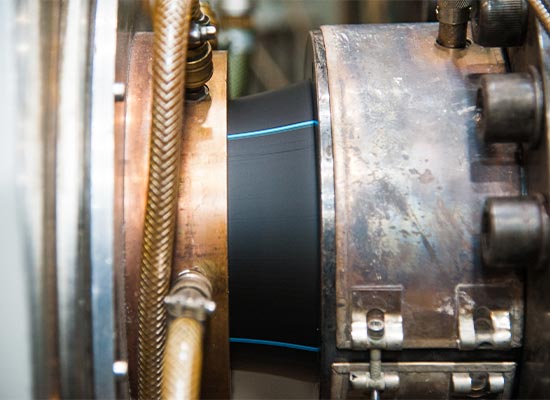
Butt fusion joins compatible pipe ends using controlled heating, alignment and pressure.
It is commonly suited to long pipeline runs where adequate working space is available.
Elektrofusion
Electrofusion uses fittings containing integrated electrical heating elements to create a fused connection.
Zenlink supplies Fitting Pipa Elektrofusi for polyethylene pipeline connections. Its product information positions these fittings for secure HDPE connections in water and infrastructure systems.
Butt Fusion vs Electrofusion
| Selection factor | Butt fusion | Elektrofusion |
| Long straight runs | Very suitable | Possible but fitting required |
| Confined working space | Can be difficult | Often advantageous |
| Branch connection | Requires suitable fitting/process | Well suited with correct fitting |
| Repairs and tie-ins | Site dependent | Frequently practical |
| Straight connection | Pipe-to-pipe fusion possible | Coupler required |
| Equipment access | Fusion machine needs room | Different equipment footprint |
| Surface preparation | Pipe ends prepared | Pipe surface preparation critical |
Neither method should be treated as automatically superior.
The right choice depends on installation access, diameter, system layout, project procedure and available qualified equipment.
Preparation Is Part of the Joint
Fusion performance depends on correct installation practices.
Important factors can include:
- Clean pipe surfaces
- Correct alignment
- Proper scraping where required
- Approved fusion equipment
- Correct heating cycle
- Proper cooling time
- Suitable clamps
- Operator training
PPI maintains technical guidance covering fusion, electrofusion and field installation of polyethylene piping systems. Its technical-note library currently includes guidance on electrofusion procedures and polyethylene flanged joints.
7. Check Installation Conditions Before Ordering HDPE Water Pipe
Even a correctly sized and correctly rated HDPE pipe can perform poorly when the installation environment is not understood.
Before ordering, review the actual site.
Burial Depth
Burial depth can be influenced by:
- Frost conditions
- Surface traffic
- Pipe structural design
- Local regulations
- Future excavation risk
- Utility crossings
There is no single burial depth appropriate for every HDPE water pipe project.
Soil Conditions
Buried flexible piping relies on interaction with the surrounding soil.
Soil type, bedding, backfill and compaction can influence pipe support and deformation.
Groundwater
High groundwater can complicate excavation and create buoyancy during construction.
This is particularly relevant when the pipeline is empty before commissioning.
Surface Loads
A water line beneath agricultural land does not experience the same loads as a pipe beneath:
- Public roads
- Industrial yards
- Ports
- Heavy equipment routes
- Construction access roads
The installation design should reflect the actual loading environment.
Instalasi Trenchless
HDPE is also used in certain trenchless pipeline applications because of its flexibility and fused-joint capability.
However, trenchless installation introduces additional considerations such as:
- Pulling loads
- Bore geometry
- Bend radius
- Existing utilities
- Entry and exit points
- Pipe handling
- Surface damage prevention
Zenlink's Municipal Engineering Solutions specifically identify HDPE water supply pipes as an option for municipal water networks and trenchless installation projects.
HDPE Water Pipe Selection Comparison by Application
Different projects place different priorities on the pipeline.
| Application | Main concern | Important checks |
| Municipal water main | Reliability and pressure | Flow, DR, surge, certification, fittings |
| Pasokan air pedesaan | Long-distance pressure loss | Diameter, elevation, route length |
| Agricultural irrigation | Flow distribution | Pump duty, pressure, branches, UV exposure |
| Industrial water line | Operating environment | Pressure, temperature, water chemistry |
| Fire-water system | Required flow and pressure | Peak demand, pressure class, surge |
| Underground building service | Site conditions | Diameter, local code, burial depth |
| Trenchless crossing | Installation loading | DR, bend radius, fusion, pullback |
| Water transmission main | Hydraulic efficiency | Large diameter, surge, pressure loss |
The same HDPE water pipe specification should not automatically be copied from one application to another.
HDPE Water Pipe vs Other Water Pipe Materials
Zenlink already covers material comparison in its article Jenis Umum Pipa Air untuk Aplikasi Bawah Tanah, which discusses HDPE alongside PVC, ductile iron, steel and other underground piping materials.
For quick comparison:
| Factor | HDPE | PVC | Ductile Iron |
| Ketahanan korosi | High | High | Requires appropriate protection |
| Fleksibilitas | High | Moderat | Low |
| Joining | Fusion or compatible transitions | Typically gasketed depending on system | Mechanical/gasketed systems |
| Long continuous runs | Available in suitable formats | Usually straight sections | Straight sections |
| Ground movement tolerance | Strong advantage | Lebih kaku | Rigid |
| Berat | Relatively light | Light | Berat |
| Trenchless suitability | Strong for many methods | Method dependent | More limited |
| Pressure system use | Widely used | Widely used | Widely used |
Material selection should consider the complete infrastructure system rather than a single characteristic.
HDPE can be particularly valuable where flexibility, fusion joints, corrosion resistance and long pipeline runs are important.
What About HDPE Water Pipe for Agriculture?
Agricultural water networks often require long pipe routes, multiple branches and stable pressure at distant sections of a field.
Zenlink's Agricultural Irrigation Solutions identify HDPE irrigation pipes as suitable for agricultural water delivery because of their pressure performance and corrosion resistance.
The article Untuk Apa Pipa HDPE Digunakan dalam Pertanian? also provides additional context on agricultural water transport and irrigation applications.
For agricultural systems, pay particular attention to:
- Mainline length
- Pump capacity
- Field elevation
- Number of active irrigation zones
- Branch pipe sizes
- Required sprinkler or drip pressure
- Fertigation conditions
- Seasonal operation
- UV exposure where pipe is above ground
A larger mainline may reduce pressure loss over a long field, while smaller branch lines can distribute water to individual zones.
HDPE Water Pipe Selection: Common Mistakes
Choosing Only by Nominal Diameter
Nominal size does not tell you the complete hydraulic story.
Check actual OD, wall thickness and ID.
Selecting the Lowest DR Automatically
A thicker wall may offer greater pressure capability, but it can also reduce the internal flow opening for a given OD.
Select DR from system requirements.
Ignoring Route Length
Long pipelines can lose substantial pressure even when the source pressure appears adequate.
Always include distance.
Forgetting Elevation
Elevation can significantly change pressure along the route.
A flat system and a steep uphill system cannot be selected using identical assumptions.
Ignoring Fittings
Elbows, tees, valves, reducers and transitions affect the final piping system.
Confirm them before ordering the pipe.
Mixing Different Dimension Systems
Similar nominal descriptions do not always guarantee dimensional compatibility.
Verify the relevant standard and actual measurements.
Using General Material Claims Instead of Standards
Terms such as “high quality,” “safe” or “high pressure” do not replace specific material, dimensional and performance requirements.
What Information Should Be Prepared Before Requesting an HDPE Water Pipe?
A useful project inquiry should contain enough information to make preliminary pipe selection possible.
Prepare:
- Application
- Water type
- Required flow
- Pipeline length
- Elevation difference
- Operating pressure
- Maximum expected pressure
- Required outlet pressure
- Diameter if already specified
- DR/SDR or pressure class
- Applicable product standard
- Required potable-water approval
- Burial depth
- Soil conditions
- Groundwater conditions
- Quantity
- Required fittings
- Joining method
- Project location
- Documentation requirements
This allows a supplier or engineer to evaluate the system rather than simply match a diameter.
HDPE Water Pipe Final Selection Checklist
Before confirming an order, ask:
Hydraulic
- Is peak flow known?
- Has route length been measured?
- Has elevation been included?
- Is acceptable pressure loss defined?
- Is the actual pipe ID known?
Pressure
- Is normal operating pressure known?
- Has maximum pressure been checked?
- Has surge been considered?
- Is the selected DR appropriate?
Produk
- Is the material grade defined?
- Is the pipe standard specified?
- Are potable-water requirements known?
- Are OD and wall thickness confirmed?
Connections
- Are all fittings available?
- Are fittings dimensionally compatible?
- Will butt fusion or electrofusion be used?
- Are transitions to other materials required?
Instalasi
- Is burial depth known?
- Are soil and groundwater conditions understood?
- Are traffic or construction loads present?
- Is trenchless installation required?
- Is fusion equipment accessible on site?
If several of these questions remain unanswered, final product selection should usually wait until the missing project information is clarified.
Final Thoughts
Choosing an HDPE water pipe is not simply a matter of selecting a diameter from a catalog.
The most reliable decisions are made by evaluating seven connected areas:
- Flow requirements
- Pressure and surge
- OD, ID and wall thickness
- Water application and standards
- Fitting
- Fusion method
- Installation conditions
These factors influence one another.
A change in DR changes wall thickness and inside diameter. A change in diameter alters hydraulic performance. A change in route length affects pressure loss. A different joining method changes fitting and installation requirements.
That is why HDPE water pipe should be specified as part of a complete piping system.
Zenlink's polyethylene pipe products, Fitting Pipa HDPE, Pipe Fittings range, Fitting Pipa Elektrofusi and Municipal Engineering Solutions can be reviewed together when planning water distribution and infrastructure projects.
For broader engineering reference, the Plastics Pipe Institute Potable Water Publications provide technical materials related to polyethylene water piping, PE4710, pressure classes, surge and municipal water applications.
FAQ
What HDPE water pipe size should I choose?
HDPE water pipe size should be determined from required flow, pipeline length, elevation, operating pressure and acceptable pressure loss. Check the actual inside diameter rather than relying only on nominal size or OD, because wall thickness and DR can change the hydraulic opening significantly.
Is DR11 or DR17 better for an HDPE water pipe?
Neither is universally better. DR11 generally has a thicker wall and higher pressure capability than DR17 for comparable material and diameter, while DR17 usually provides a larger inside opening. The correct choice depends on operating pressure, surge, temperature, flow and the applicable pipe standard.
Can HDPE water pipe be used for drinking water?
HDPE can be used in potable-water systems when the pipe material, product standard and required approvals are suitable for drinking-water service. Project specifications should identify the required certification rather than assuming every polyethylene pipe is automatically approved for potable water.
What fittings are used with HDPE water pipe?
Typical HDPE systems may use elbows, tees, reducers, couplers, end caps, stub ends and flange adapters. Connections may use butt fusion, electrofusion or engineered transitions depending on the project. Fitting OD, pressure requirements, material and dimensional system must match the selected pipe.
Is HDPE water pipe suitable for underground installation?
Yes. HDPE is widely used in underground water and municipal infrastructure applications, but successful installation still depends on suitable pipe design, bedding, backfill, burial depth, soil support, groundwater conditions and surface loads. Trenchless projects also require checks for bend radius and installation forces.