Daftar Isi
Corrugated Plastic Signs: Approve Print Adhesion Before the Run addresses a specific B2B decision: surface treatment and the complete ink process. The right choice depends on the finished application and the way it is handled, not just the product name. Use the checks below to compare samples, prepare a clear request for quotation and approve a repeatable supply specification.
The decision for corrugated plastic signs
The practical starting point is a print buyer ordering temporary promotional signs. The risk is specific: ink looks correct but rubs off during handling. A decision about corrugated plastic signs should therefore begin with surface treatment and the complete ink process, rather than a comparison based only on a photograph or the nominal material name. This article sets out a qualification and purchasing method for that situation. It does not assign a universal load rating, service life or certification to an unspecified grade.
A useful acceptance statement is that the print passes the buyer’s handling and finish criteria. Translate that statement into a short inspection record before asking for quotations or changing the current design. Decide who will observe the result and which product condition must remain unchanged. Where a drawing dimension is involved, agree the measurement position and method. Where appearance or handling matters, retain a physical reference or a clear operating example.
The first trial should print production-equivalent boards and evaluate adhesion after curing. Keep the actual product, its support arrangement and the relevant operating sequence in the comparison. Record the sample code, drawing revision, conditions and observations together. If a detail is changed during the trial, identify the revised sample separately. This makes it possible to distinguish a useful improvement from a different setup that was never compared fairly.
The most informative failure to investigate is the one connected to surface treatment and the complete ink process. Photograph the relevant area before and after the trial and record whether the problem appeared during preparation, operation or unpacking. Do not merge distinct failure causes into one rejected-sample count. That distinction helps determine whether the next action belongs in material selection, conversion, packing or the working method.
For the order, keep surface treatment and the complete ink process visible in the drawing or acceptance sheet. Ask the supplier to identify any proposed deviation before production. The release decision should refer to the sample and evidence that were actually reviewed. An appealing prototype is a starting point; repeatability in the supplied batch is what allows corrugated plastic signs to work as a dependable purchasing specification.
Approve the substrate and print process together
When specifying corrugated plastic signs, identify the intended ink system, printer, treated face and finishing process before authorizing a production run. A board that looks similar to a previous substrate may not behave the same way with the selected ink. Ask the substrate and ink suppliers to confirm compatibility, then use a production-equivalent proof. Treat the printed and converted panel as the item being approved.
Record settings and sample identity alongside the proof. Inspect adhesion and appearance after the specified curing interval and after normal handling. If the graphic will be flexed during installation, include that movement in the assessment. A visually good print taken directly from the machine does not establish resistance to rubbing, stacking or the intended outdoor exposure.
The reference sample should support one clear conclusion: the print passes the buyer’s handling and finish criteria. Preserve the conditions that made that result possible.
Keep the treated face identifiable
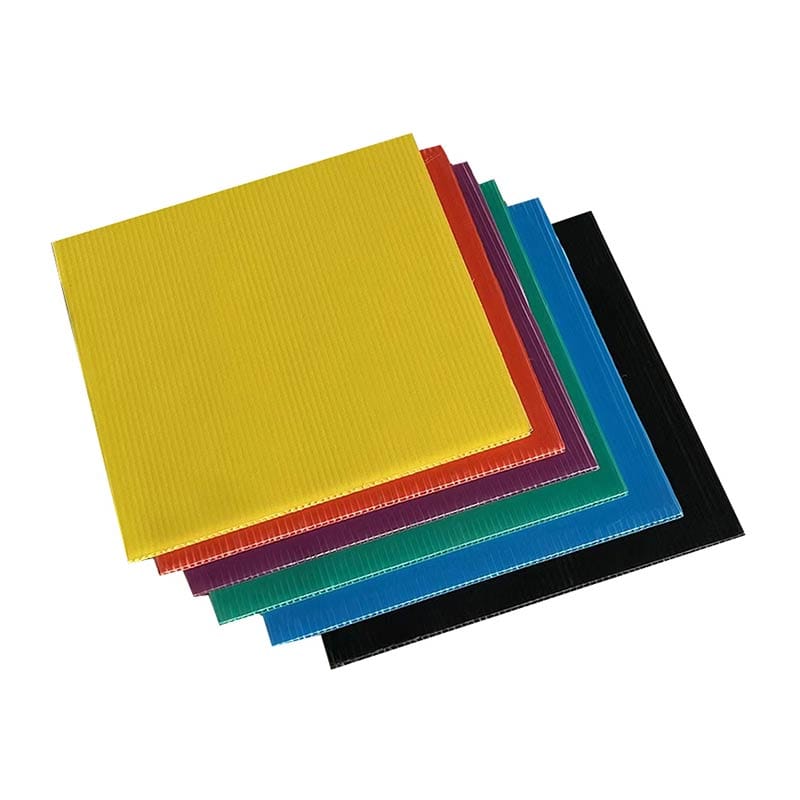
When comparing corrugated plastic signs, hollow PP board used for printing may have a surface treatment intended to support ink adhesion. Confirm which face is supplied for printing and whether both faces are suitable for a double-sided job. Do not infer treatment from gloss or color. Keep bundle labels and supplier information with the stock until the relevant print trial has been completed.
Review storage history when print behavior changes unexpectedly. Dirt, handling residues and time between treatment and printing can affect the practical process. Use the supplier’s recommended checks and a representative print test rather than applying an arbitrary treatment value without context. Keep suspect material separate while determining whether the issue comes from the board, ink, cleaning or machine setup.
The buyer should be able to repeat the comparison and print production-equivalent boards and evaluate adhesion after curing. Use the same identification method for the production batch.
Use a physical proof for color and registration
For a project using corrugated plastic signs, prepare the proof on the actual substrate using the intended print method. Board color and surface structure can influence the appearance of a graphic. Define the lighting and reference sample for approval, and identify which colors or areas are critical. An image on a monitor is useful for artwork discussion but is not a complete physical color standard.
Check trimming, holes, folds and registration marks on the same proof. Keep the artwork revision linked to the substrate and print settings. If a double-sided sign is required, approve both faces after the complete process rather than approving each face independently on unrelated samples. Document acceptable variation so that production inspection does not depend on individual preference.
When reviewing a substitute, return to surface treatment and the complete ink process. Nominally similar material is only a candidate until the relevant checks are complete.
Finish edges without damaging the graphic
When qualifying corrugated plastic signs, evaluate the planned cut path on printed material, including small internal corners and mounting holes. Tooling that gives an acceptable edge on unprinted stock can chip a cured graphic or leave a visible compressed border. Include graphic bleed and the actual cut tolerance in the artwork layout. Support the board according to the cutting equipment’s instructions.
Check both faces after finishing. A clean front edge can conceal a torn rear skin or damaged second-side print. Keep the board orientation and cutting method with the proof record. If a different tool or speed is introduced for production, review the demanding features again before processing the full batch. The finished edge should meet the agreed appearance and mounting needs.
The priority for this project is surface treatment and the complete ink process. Keep it visible when comparing the candidates.
Protect printed faces during storage and dispatch
Before ordering corrugated plastic signs, let the print complete its specified process before stacking or packing. Use a packing arrangement that avoids unacceptable face contact, rubbing and point pressure. Inspect the full bundle configuration rather than only an individual panel. Protect corners and identify which face or orientation requires care during unpacking and installation.
For signs that will be reused, check the storage environment and support the panels flat where the design requires it. Remove dirt before it becomes trapped between printed faces. Keep reusable mounting components together with the correct panel set. A retrieval trial can reveal whether the proposed packaging allows panels to be removed without creasing or scraping them against adjacent stock.
For the situation described here, print production-equivalent boards and evaluate adhesion after curing. Record the result before releasing the order.
Bangun percobaan kecil yang mewakili pekerjaan normal
When inspecting corrugated plastic signs, use the actual product, support, assembly method and handling sequence wherever practical. A simplified test is useful when it isolates a specific uncertainty, but record what it leaves out. Begin with a manageable quantity so unsuitable details can be corrected before tooling or a large order commits the project. Include the least favorable approved configuration when the product range varies.
Mintalah orang-orang yang akan memuat, menangani, mencetak atau memeriksa barang untuk berpartisipasi. Pengamatan mereka sering mengungkapkan masalah akses dan identifikasi yang tidak ditunjukkan oleh gambar dimensi. Jaga waktu, kerusakan dan pengamatan penolakan berbeda. Proses yang lebih cepat bukanlah perbaikan jika meninggalkan produk yang dilindungi atau grafik jadi di luar batas penerimaan yang disepakati.
The decision should demonstrate that the print passes the buyer’s handling and finish criteria. An unexplained pass mark is less useful than the observation behind it.
Selesaikan kegagalan pertama sebelum menambahkan material
For production using corrugated plastic signs, observe where the problem begins. A local tear, global bend, poor surface bond or handling error calls for a different remedy. Photograph the first damaged region and compare it with the load path or process step. Adding thickness everywhere may increase cost while leaving the original weak detail unchanged.
Ubah satu variabel penting pada saat uji coba memungkinkan. Simpan sampel dasar sehingga hasil revisi dapat dibandingkan dalam kondisi yang sama. Jika kegagalan berpindah ke lokasi lain, tinjau kembali desain lengkapnya. Tujuannya adalah konstruksi praktis yang memenuhi persyaratan secara konsisten, daripada serangkaian modifikasi yang tidak tercatat yang diterapkan pada sampel individual.
Keep the qualification focused on surface treatment and the complete ink process. Ask the supplier to explain deviations from the approved construction.
Buat instruksi kerja sesuai dengan proses sebenarnya
When approving corrugated plastic signs, write a short instruction for identification, orientation, assembly and inspection at the point of use. Include a drawing or clear photograph where words alone could be misread. Test the instruction with an operator who did not take part in development. Confusing part codes or hidden orientation marks are design issues that can often be corrected before rollout.
Jaga instruksi konsisten dengan sampel dan gambar yang disetujui. Jika operator harus mengimprovisasi lipatan, potongan, atau lampiran ekstra untuk membuat item berfungsi, catat dan tinjau langkah itu. Proses produksi tidak boleh bergantung pada penyesuaian tidak terdokumentasi yang hanya diketahui oleh satu pekerja berpengalaman. Tinjau instruksi setelah pengiriman pertama untuk menangkap pelajaran praktis tanpa mengubah persyaratan secara informal.
In the operating trial, check whether ink looks correct but rubs off during handling. The relevant observation should determine the next design change.
Compare options for corrugated plastic signs
For corrugated plastic signs, compare the current construction, the proposed alternative and any reduced-material option against the same acceptance statement. Keep changes in dimensions, load arrangement and process conditions visible. The table is a project checklist rather than a claim that one standard grade fits every application.
| Kebutuhan | Apa yang harus dicatat | Bagaimana menilai hasilnya |
|---|---|---|
| Application | a print buyer ordering temporary promotional signs | Gunakan konfigurasi setara produksi |
| Variabel kritis | surface treatment and the complete ink process | Setujui metode berulang sebelum perbandingan |
| Risiko yang relevan | ink looks correct but rubs off during handling | Amati tahap operasi sebenarnya di mana ia dimulai |
| Trial | Print production-equivalent boards and evaluate adhesion after curing | Simpan pengaturan dan contoh identitas dengan catatan |
| Penerimaan | The print passes the buyer's handling and finish criteria | Catat bukti dan penyimpangan yang belum terselesaikan |
| Menyusun ulang | Revisi gambar, kode sampel dan identitas material | Bandingkan batch yang diterima dengan referensi yang disetujui |
Sumber dan informasi produk terkait
Referensi independen: ISTA. Gunakan panduan yang relevan dengan rencana kualifikasi khusus proyek. Referensi ini bukan laporan pengujian atau sertifikasi untuk produk Zenlink.
Untuk format produk yang tersedia, tinjau Zenlink halaman produk plastik bergelombang and kategori produk Hollow-board. Tanyakan dimensi dan modifikasi mana yang dapat disediakan untuk gambar Anda; ketersediaan dan dokumentasi pendukung harus dikonfirmasi untuk pesanan yang tepat.
Pertanyaan yang sering diajukan
What should a buyer specify first for corrugated plastic signs?
Start with surface treatment and the complete ink process. Describe the finished use and identify the relevant drawing or product condition. For this project, the intended result is that the print passes the buyer’s handling and finish criteria.
Apakah ketebalan nominal cukup untuk menyetujui material?
Tidak. Ketebalan adalah salah satu bagian dari konstruksi. Tinjau berat area jika relevan, arah seruling, detail konversi, dan fungsi operasi sebenarnya. Bandingkan sampel yang setara dengan menggunakan metode dan kriteria penerimaan yang sama.
Bagaimana seharusnya sampel pertama diuji?
The first trial should print production-equivalent boards and evaluate adhesion after curing. Record the sample identity, setup, conditions and observations. Review deviations before approving tooling or a larger order.
Bisakah papan yang tampak serupa diganti tanpa peninjauan?
A similar appearance does not establish equivalent behavior. Check the proposed change against surface treatment and the complete ink process and repeat the affected functional or dimensional checks before release.
Informasi apa yang membantu Zenlink menyiapkan kutipan yang berguna?
Menyediakan gambar atau dimensi selesai, kuantitas, aplikasi yang dimaksudkan, persyaratan bahan yang relevan, rincian konversi, tujuan pengiriman dan pemeriksaan yang diperlukan untuk persetujuan sampel. Sertakan kode sampel referensi atau masalah kemasan saat ini jika tersedia.
Diskusikan spesifikasi dengan Zenlink
Send Zenlink the application drawing, required quantity and the issue you need to resolve. For corrugated plastic signs, highlight surface treatment and the complete ink process and describe the trial you expect to use. The team can review the relevant hollow-board or packaging format and discuss sample requirements for your project. Use the inquiry form below or the halaman kontak untuk memberikan rincian kerja.