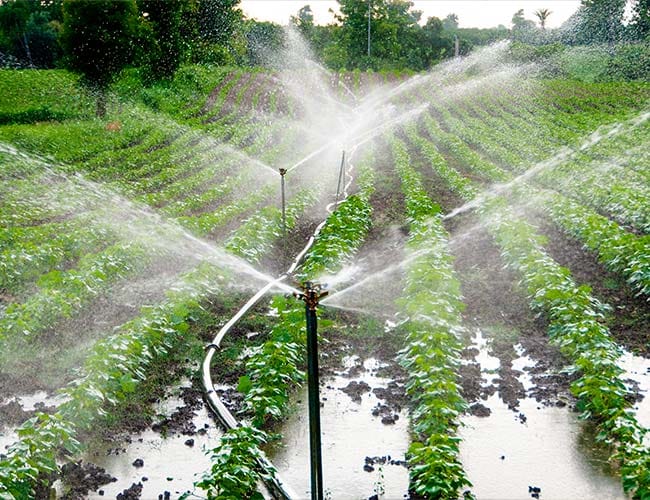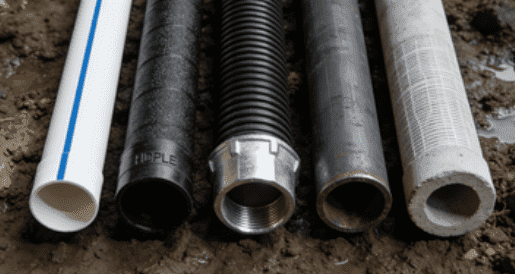
Welcome to our in-depth look at high-quality plastic products and how they are transforming everyday life, industrial applications, and commercial projects. Before you dive in, stay connected with us for expert tips, industry insights, and practical solutions:
· Facebook – Join our community to ask questions and get the latest product updates
· Tiktok – Watch tutorials, installation guides, and project demonstrations
Let’s explore how durable and versatile plastic products can deliver efficiency, reliability, and long-term performance—read on to discover which solutions fit your needs best!
Table of Contents
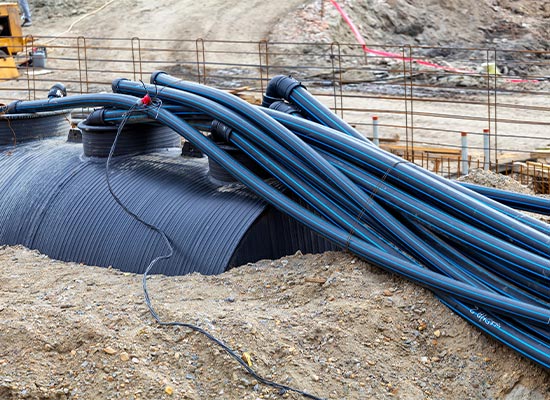
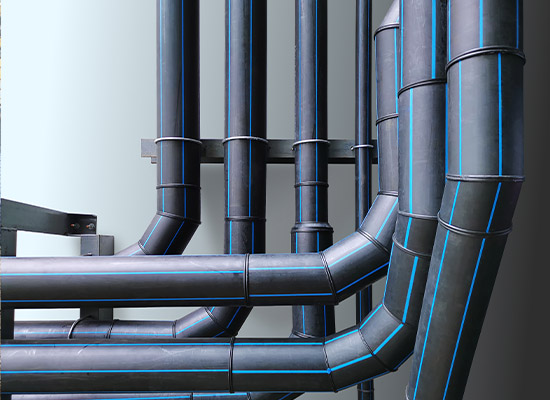
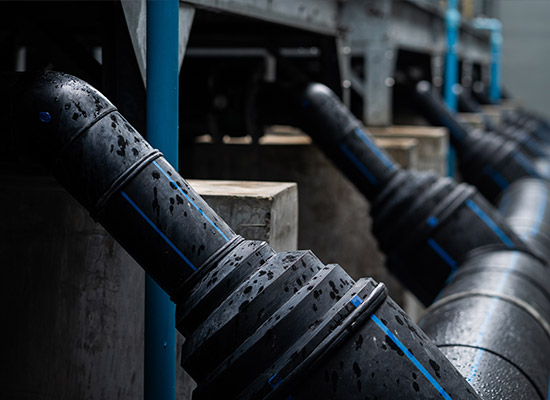
Polyethylene pipe is widely used in water supply, agricultural irrigation, municipal infrastructure, industrial fluid transport, drainage and other piping projects. Its suitability for different installation environments depends on more than the pipe material alone. Buyers must also consider pipe size, wall thickness, pressure rating, connection method, operating conditions and applicable standards.
Zenlink’s plastic pipe product range includes polyethylene products for water supply, irrigation and reinforced pipeline applications. Buyers can also explore the company’s complete plastic products and piping solutions before selecting a specific product.
This guide explains the main concepts buyers need to understand before selecting or ordering polyethylene piping products.
Key points covered in this guide:
- What polyethylene pipe is and how it is manufactured
- Common types of polyethylene piping products
- The difference between outside diameter and inside diameter
- How SDR and wall thickness affect pipe selection
- Typical applications in water supply and irrigation
- Common PE pipe connection methods
- Polyethylene pipe compared with PVC and PPR pipe
- Quality inspection points for international buyers
- Information required for an accurate quotation
- Frequently asked questions about PE piping systems
What Is Polyethylene Pipe?
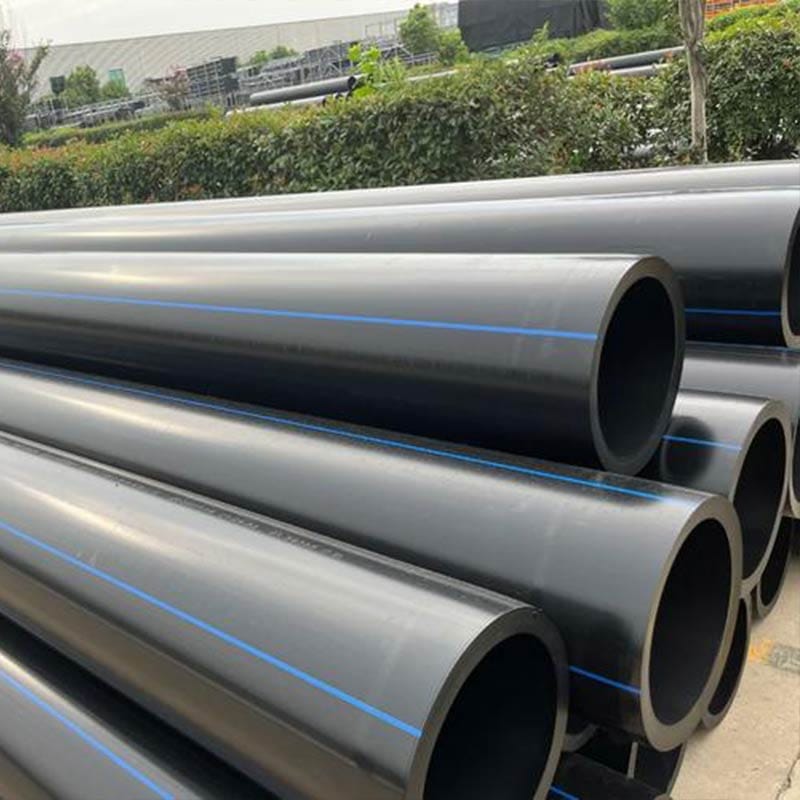
Polyethylene pipe is a thermoplastic piping product made from polyethylene resin. Depending on its material formulation, dimensions and product standard, it can be used for pressure or non-pressure applications.
Unlike metal pipe, polyethylene does not rely on a protective metallic coating to resist rust. It is also available in different diameters, wall thicknesses, pressure classes and delivery forms to meet varied project requirements.
Polyethylene as a Pipe Material
Polyethylene is a family of thermoplastic materials rather than one single product specification. A pipe buyer should therefore confirm the exact material designation, product standard and intended application instead of assuming that all polyethylene products have identical properties.
Different formulations may be selected according to pressure requirements, installation conditions, flexibility, temperature and chemical exposure.
PE Pipe and Polyethylene Pipe
The terms “PE pipe” and “polyethylene pipe” normally refer to the same general product category. PE is the standard abbreviation for polyethylene.
However, commercial descriptions may also include a material grade, dimensional series, pressure class or structural design. These additional details are important because they define the actual product being purchased.
Pressure Pipe and Non-Pressure Pipe
Pressure pipe is designed to transport fluid under specified internal pressure. Water supply mains, irrigation mainlines and certain industrial pipelines are common examples.
Non-pressure products may be used for drainage, protection, conduit or other applications where continuous internal pressure is not the primary design requirement.
How Is Polyethylene Pipe Manufactured?
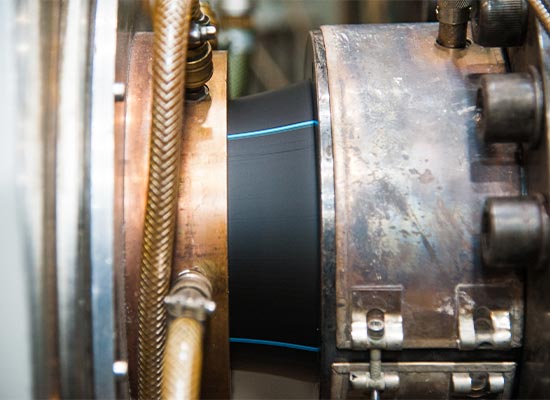
Most solid-wall polyethylene pipes are produced through an extrusion process. The raw material is melted, shaped through a die, cooled, dimensionally controlled and cut or coiled according to the required product format.
The manufacturing process must maintain consistent dimensions and surface quality throughout the production batch.
Raw Material Preparation
Raw material is selected according to the required pipe specification. The manufacturer should control material identification, storage conditions, contamination and batch traceability.
Buyers should request clear information about the material used rather than relying only on general statements such as “high-quality raw material.”
Extrusion and Forming
During extrusion, heated material passes through equipment that forms the pipe profile. Production settings affect diameter, wall thickness, surface condition and dimensional stability.
Consistent process control is necessary because dimensional variation can affect fitting compatibility and pressure performance.
Cooling and Sizing
After forming, the pipe is cooled and sized. Outside diameter, wall thickness and ovality should be monitored according to the applicable specification.
Why Cooling Control Matters
Uneven cooling may contribute to dimensional inconsistency or deformation. This is especially important for larger diameters and thicker-wall products.
Marking and Final Inspection
Finished pipe normally carries product identification such as size, material or product grade, pressure or dimensional class, standard, production date and manufacturer information.
The exact marking requirements depend on the product standard and contract specification.
Buyers evaluating production and supply capabilities can review more information on the About Zenlink page.
Common Types of Polyethylene Pipe
Polyethylene piping products can be classified by application, construction, pressure requirement and delivery form.
Buyers should select a product category that matches the actual system rather than choosing a pipe based only on price or diameter.
Polyethylene Water Supply Pipe
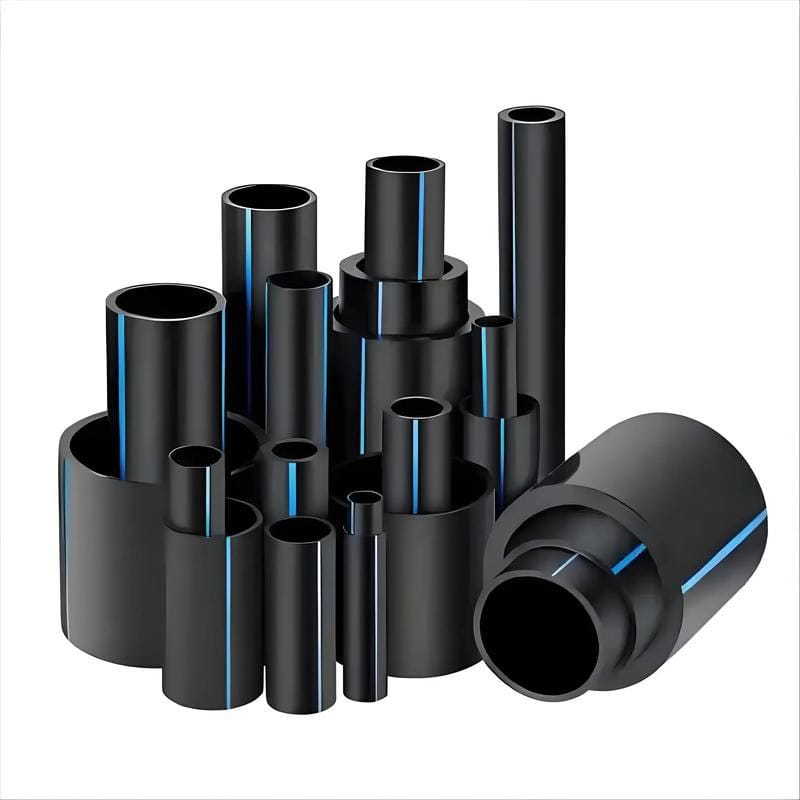
Polyethylene water supply pipe is used to transport raw water, treated water and general-purpose water in suitable piping systems.
The polyethylene water supply pipe page provides a direct product entry for buyers evaluating water distribution and transmission applications.
Typical Applications
- Municipal water distribution
- Rural water supply
- Agricultural water delivery
- Industrial process water
- Water conservancy projects
- Underground transmission lines
The required material, pressure class and compliance documents should be confirmed for each project.
For larger public infrastructure applications, buyers can also review Zenlink’s municipal engineering solutions.
Pipa Irigasi Polyethylene
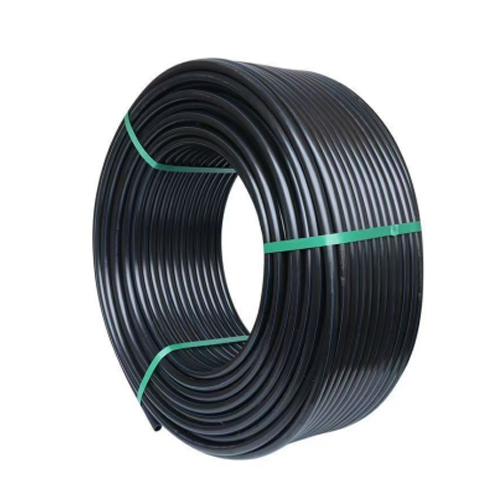
Polyethylene irrigation pipe is used in farm water delivery systems, greenhouse irrigation, orchard irrigation and other agricultural networks.
It may function as a mainline, sub-mainline or branch pipe depending on its size, flow capacity and pressure rating. Buyers seeking a specific agricultural pipeline product can review the polyethylene irrigation pipe page.
Mainline Pipe
The mainline carries the combined water demand of the active irrigation zones. It normally requires careful flow and pressure calculations.
Branch and Lateral Pipe
Branch lines distribute water from the mainline toward smaller sections. Their dimensions depend on outlet demand, route length and acceptable pressure variation.
Projects that include drip tape, irrigation mainlines and field distribution can also refer to Zenlink’s agricultural irrigation solutions.
Steel Wire Reinforced PE Pipe
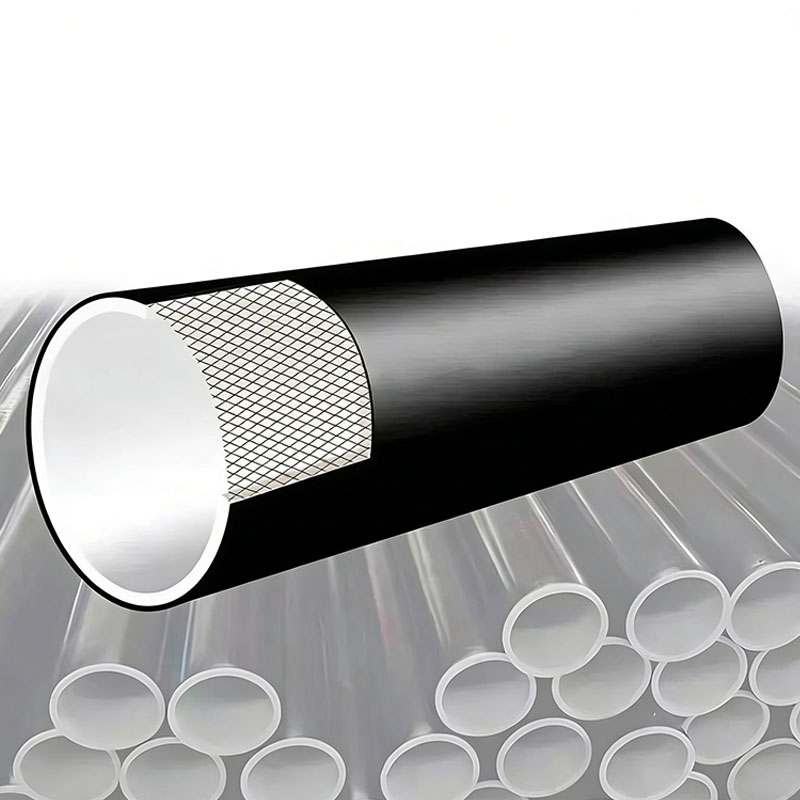
Steel wire reinforced PE pipe uses a composite structure that combines polyethylene layers with a reinforcing wire framework.
This product should not be treated as identical to conventional solid-wall polyethylene pipe. Its pressure performance, joining method, dimensions and quality inspection requirements depend on the specific product design.
Zenlink’s PE steel wire frame reinforced pipe is positioned for applications where greater structural strength and pressure resistance may be required.
Information Buyers Should Confirm
- Pipe structure
- Reinforcement arrangement
- Outside diameter
- Wall thickness
- Pressure class
- Compatible fittings
- Connection method
- Applicable standard
- Required test reports
Polyethylene Pipe for Industrial Applications
Industrial piping requirements vary according to the transported fluid, concentration, temperature, pressure and operating environment.
Chemical compatibility should be confirmed using the actual material formulation and operating conditions. General statements about chemical resistance should not replace a project-specific review.
Buyers planning factory water supply, drainage, wastewater or fire-water networks can review Zenlink’s industrial engineering solutions.
Polyethylene Pipe Fittings

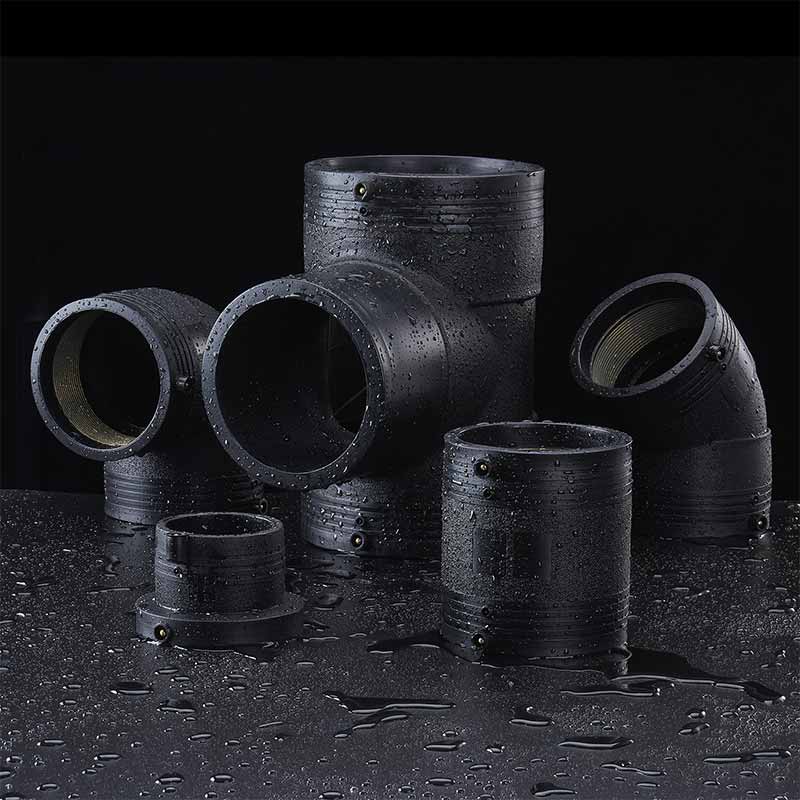
A complete system requires compatible fittings, connectors and transition components. Common configurations include elbows, tees, reducers, end caps, couplings and flange adapters.
Pipe and fittings should be matched by material, outside diameter, dimensional ratio, pressure requirement and connection method.
Zenlink’s pipe fittings category presents the available fitting groups, including electrofusion, PPR and quick-connect products.
Main Advantages of Polyethylene Pipe
The suitability of polyethylene piping depends on proper design and installation, but several material and system characteristics make it useful for many projects.
Corrosion Resistance
Polyethylene is not affected by electrochemical rust in the same way as unprotected steel pipe. This can simplify material selection in buried or wet environments.
However, chemical compatibility and external exposure conditions still need to be reviewed.
Flexible Installation
PE pipe can accommodate a degree of bending and ground movement, depending on pipe size, wall thickness, temperature and installation conditions.
This flexibility may be useful on uneven routes, but the pipe must not be bent below the manufacturer’s recommended radius.
Heat-Fused Connections
Compatible polyethylene pipes and fittings can be joined through heat-fusion methods. When performed using qualified procedures, heat fusion can create a continuous piping system with fewer mechanical joints.
Where electrofusion is required for repairs, branch connections or restricted working areas, buyers can review the available electrofusion pipe fittings.
Range of Sizes and Configurations
Polyethylene piping products are available in multiple outside diameters, wall thicknesses and delivery forms.
This allows buyers to select products for small irrigation branches, local supply networks, municipal projects and industrial systems.
Coil and Straight-Length Options
Smaller or more flexible products may be delivered in coils, while larger products are commonly supplied in straight lengths.
The available delivery form depends on diameter, wall thickness, production capacity and transport limitations.
Understanding Polyethylene Pipe Sizes
Pipe size is one of the most important purchasing variables. A request that includes only one diameter is usually not enough for an accurate quotation.
Buyers must understand how outside diameter, inside diameter and wall thickness are related.
Outside Diameter
Polyethylene pipe is commonly identified according to its controlled outside diameter. This dimension is important for fitting compatibility, fusion equipment and dimensional inspection.
Two pipes with the same outside diameter may still have different wall thicknesses.
Inside Diameter
Inside diameter represents the open flow area within the pipe. It is influenced by outside diameter and wall thickness.
A thicker wall reduces the inside diameter when the outside diameter remains unchanged.
Wall Thickness
Wall thickness affects pipe weight, internal flow area and pressure capability.
The correct thickness should be determined according to material, dimensional ratio, design pressure, operating temperature and applicable standard.
Nominal Size
Nominal size is a commercial or standard designation. It may not always equal an exact measured inside or outside diameter.
Buyers comparing international quotations should confirm which sizing system each supplier is using.
Typical Polyethylene Pipe Size Applications
The following ranges provide a general planning reference. Actual product availability and suitability must be verified against the manufacturer’s specifications.
| Typical Outside Diameter | Common Application | Common Delivery Form | Main Selection Factor |
|---|---|---|---|
| 20–32 mm | Irrigation branches and small water lines | Coil | Outlet flow and fitting size |
| 40–63 mm | Farm distribution and local water supply | Coil or straight length | Route length and pressure loss |
| 75–110 mm | Irrigation mainlines and rural water systems | Coil or straight length | Flow capacity and pressure |
| 125–225 mm | Distribution mains and industrial water | Straight length | SDR, fittings and installation |
| 250–400 mm | Municipal and water conservancy projects | Straight length | Hydraulic design and construction |
| Above 400 mm | Large transmission and infrastructure projects | Straight length | Engineering design and logistics |
These ranges should not be used as a substitute for hydraulic calculations.
What Does SDR Mean in Polyethylene Pipe?
SDR stands for Standard Dimension Ratio. It expresses the relationship between the nominal outside diameter and the nominal wall thickness.
A lower SDR normally represents a thicker wall relative to the outside diameter. A higher SDR normally represents a thinner wall.
Lower SDR Pipe
For the same outside diameter, a lower SDR usually has:
- A thicker wall
- A smaller inside diameter
- A higher material weight
- A different pressure capability
- A higher cost per meter
Higher SDR Pipe
For the same outside diameter, a higher SDR usually has:
- A thinner wall
- A larger inside diameter
- A lower material weight
- A lower material cost
- Different pressure limitations
SDR Is Not the Only Pressure Factor
Buyers should not select a pipe by SDR alone. Material designation, operating temperature, design factor, product standard and service conditions also affect pressure suitability.
Polyethylene Pipe Pressure Ratings
Pressure rating indicates the internal pressure a product is designed to handle under defined conditions.
The rating shown in a catalog should be checked against the real operating environment.
Normal Working Pressure
Normal working pressure is the expected pressure during routine operation.
The selected product should be suitable for this condition throughout the intended service period.
Pressure Surges
Pump starts, valve closures, rapid changes in flow and elevation differences can create temporary pressure increases.
These changes should be considered during engineering design instead of sizing the system only for stable operating pressure.
Temperature Effects
Pressure performance can change with operating temperature. A rating based on one reference temperature should not automatically be applied at another temperature.
The relevant standard and manufacturer’s technical documentation should be used when evaluating temperature-related conditions.
How to Select Polyethylene Pipe for Water Supply
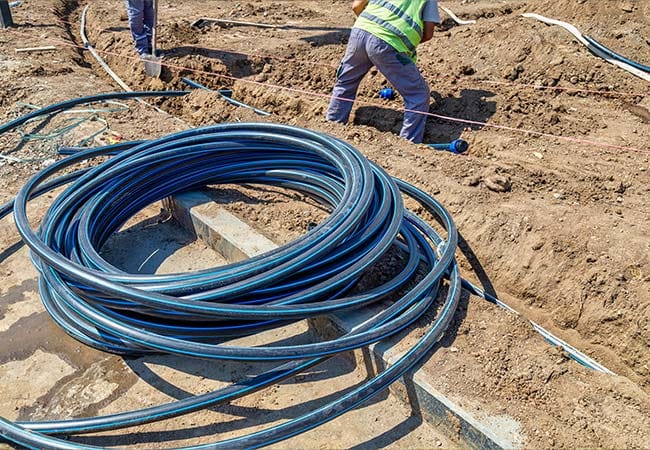
Water supply systems vary widely in scale and operating conditions. The correct pipe should be selected using project data rather than a general product name.
Step 1: Confirm the Required Flow
Determine how much water the system must deliver during peak operation.
Average daily consumption alone may not represent the highest required flow.
Step 2: Confirm the Route Length
Longer pipelines normally experience greater friction loss.
The complete route should include mainline length, branch length, fittings and elevation changes.
Step 3: Determine Working Pressure
Provide the expected inlet pressure, outlet requirement and any pump information.
Pressure should be evaluated together with pipe dimensions and system layout.
Step 4: Review Water Quality and End Use
Drinking-water projects may require specific material approvals, hygiene documentation and product standards.
Industrial or raw-water applications may use different acceptance requirements.
Step 5: Match Pipes and Fittings
Confirm that the fittings match the outside diameter, SDR range, pressure requirement and joining method.
A pipe system should be purchased as a compatible combination rather than as unrelated components.
Projects involving buildings, fire-water systems, drainage or utility networks can also refer to Zenlink’s construction engineering solutions.
How to Select Polyethylene Pipe for Irrigation
Irrigation sizing should begin with the field layout and water demand.
Different sections of the same irrigation system may need different pipe sizes.
Water Source
Identify whether the system uses a well, reservoir, river, municipal source or storage tank.
Available pressure and flow from the source affect the entire system design.
Irrigation Area
Provide the field area, crop type, irrigation zones and number of outlets operating at the same time.
This information helps estimate mainline and branch flow requirements.
Route and Elevation
Long routes and uneven fields can produce pressure differences between near and distant outlets.
A larger diameter may reduce friction loss, but it should be justified through calculation.
Mainline, Sub-Mainline and Lateral
Mainline
Carries the highest combined flow from the water source.
Sub-Mainline
Distributes water to separate field zones.
Lateral
Carries water toward sprinklers, drip tape or individual emitters.
Using one pipe size throughout the entire system may increase cost or reduce performance.
For field-level water delivery, buyers can also review Zenlink’s drip tape product page.
Polyethylene Pipe vs PVC Pipe
PE and PVC are both used in piping systems, but they differ in material behavior, joining and installation.
| Comparison | Polyethylene Pipe | PVC Pipe |
| General flexibility | More flexible | More rigid |
| Common joining methods | Fusion or mechanical fittings | Solvent cement, gasket or mechanical joints |
| Delivery form | Coil or straight length | Mainly straight length |
| Route adaptability | Suitable for curved routes within limits | Generally requires fittings for direction changes |
| Jointing equipment | Fusion equipment may be required | Solvent or gasket tools may be required |
| Typical applications | Water, irrigation, industrial and infrastructure | Water, drainage, building and irrigation |
| Selection priority | SDR, material, fusion and pressure | Schedule/class, joint type and pressure |
Neither material is automatically better for every application. The correct choice depends on standards, design, installation skills, availability and total project cost.
Polyethylene Pipe vs PPR Pipe
PPR pipe is commonly associated with hot- and cold-water systems inside buildings, while many polyethylene products are used in buried supply, irrigation and infrastructure applications.
| Selection Factor | Polyethylene Pipe | PPR Pipe |
| Common project location | Underground and outdoor networks | Building plumbing |
| Flexibility | Generally higher | More rigid |
| Delivery | Coil or straight length | Straight length |
| Joining | Butt fusion, electrofusion or mechanical | Socket fusion |
| Typical focus | Water distribution and project pipelines | Indoor hot and cold water |
| Main buyer concern | Diameter, SDR, pressure and route | Pipe series, temperature and building layout |
The final decision should follow the intended application and relevant project specification.
Buyers working on building plumbing systems can compare PE products with Zenlink’s polypropylene pipe and related PPR products.
Main Polyethylene Pipe Joining Methods
Joint quality directly affects the reliability of a piping system.
Installers should follow the pipe, fitting and equipment manufacturer’s qualified procedures.
Butt Fusion
Butt fusion heats prepared pipe ends and joins them under controlled force.
It is widely used for joining compatible pipe lengths and compatible fittings.
Main Process Steps
- Clamp and align the pipe
- Face the pipe ends
- Check alignment
- Heat the surfaces
- Join under controlled pressure
- Hold during cooling
- Inspect the joint bead
Exact settings depend on pipe, equipment and procedure.
Electrofusion
Electrofusion uses a fitting with an embedded heating element. Electric current generates heat inside the fitting and creates the joint.
Pipe preparation, scraping, cleaning, alignment, restraint and cooling are critical parts of the process.
Common Uses
- Repairs
- Branch connections
- Confined installation areas
- Connections where butt-fusion equipment is difficult to position
- Project-specified electrofusion systems
Mechanical Connections
Mechanical fittings may be used for certain sizes, irrigation systems, temporary installations or transitions to other materials.
Compatibility, pressure rating and installation instructions must be confirmed.
Flange Connections
Flange adapters can connect a PE pipeline to pumps, valves, metal pipe and equipment.
The complete assembly may include a PE flange adapter, backing ring, gasket and bolts.
Polyethylene Pipe Standards and Documentation
Standards depend on application, destination market and contract requirements.
A supplier should not claim compliance with every standard unless the specific product has been manufactured and tested accordingly.
Product-Specific Documents
Buyers may request:
- Product datasheet
- Material certificate
- Dimensional inspection report
- Pressure test report
- Batch inspection record
- Factory quality certificate
- Third-party report
- Packing list
- Certificate of origin
- Compliance declaration
The required documents should be specified before order confirmation.
How to Inspect Polyethylene Pipe Quality
Quality inspection should cover identification, appearance, dimensions and documentation.
The inspection plan should be matched to the ordered specification.
Product Identification
Check:
- Product name
- Material designation
- Outside diameter
- Wall thickness or SDR
- Pressure class
- Standard
- Production batch
- Manufacturer marking
Surface Condition
The internal and external surfaces should be checked for visible defects that exceed the acceptance requirements.
Potential concerns may include contamination, deep scratches, bubbles, irregular coloring or deformation.
Dimensional Inspection
Important dimensions include:
- Outside diameter
- Wall thickness
- Ovality
- Length
- Coil dimensions
- Fitting dimensions
The method and tolerance should follow the agreed standard.
Pressure and Performance Testing
Pressure pipe may require hydrostatic or other performance testing according to its product standard.
Buyers should confirm whether the report applies to the exact product and batch being supplied.
Joint Compatibility
Pipes and fittings should be checked as one system.
A fitting with the correct nominal name may still be unsuitable if its dimensions, pressure class or fusion requirements differ.
Polyethylene Pipe Packaging and Shipping
Packaging should protect the product while supporting efficient container loading and site handling.
Coiled Pipe
Coiled products may be secured with straps and protective packaging.
Buyers should confirm:
- Coil length
- Coil outside diameter
- Coil weight
- Uncoiling method
- Container capacity
Straight-Length Pipe
Straight pipe may be bundled or loaded using supports and restraints.
Long lengths may require special container or shipping arrangements.
Fittings and Accessories
Fittings should be packed by size and type, with labels that match the packing list.
Electrofusion fittings may require additional protection for terminals, barcodes or identification labels.
Marking and Private Labels
When customized marking is required, confirm:
- Brand name
- Product code
- Standard
- Size
- Batch number
- Language
- Packaging label
These requirements should be agreed before production.
What Affects Polyethylene Pipe Price?
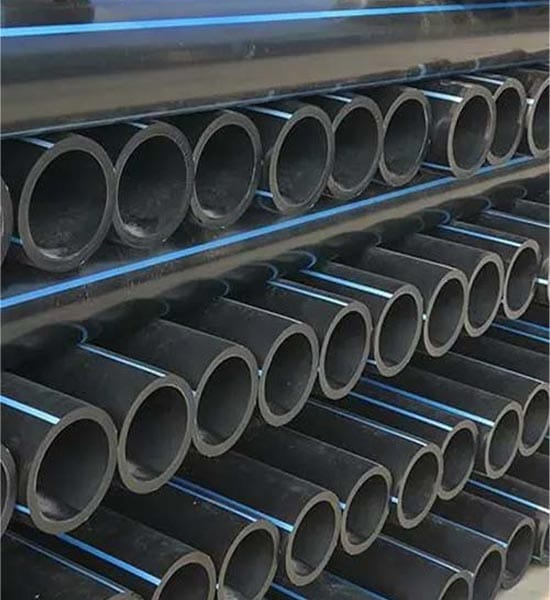
Polyethylene pipe prices vary because a quotation reflects more than diameter.
Material
Material type, formulation, quality requirements and market conditions affect cost.
Diameter and Wall Thickness
Larger diameter and thicker wall normally increase material consumption.
SDR and Pressure Class
Different dimensional and pressure requirements change pipe weight and production cost.
Order Quantity
Quantity affects production planning, packaging and freight allocation.
Fittings
A complete project quotation may include elbows, tees, reducers, valves, flange components and fusion fittings.
Testing and Documentation
Special testing, third-party inspection and destination-market documentation may increase cost and lead time.
Packaging and Shipping
Straight length, coil size, container type, loading plan and destination all affect the delivered cost.
What Information Is Needed for a Polyethylene Pipe Quote?
A complete request for quotation should include the technical and commercial requirements.
Product Information
- Product type
- Outside diameter
- Wall thickness or SDR
- Pressure rating
- Material requirement
- Standard
- Color and marking
- Straight length or coil length
Project Information
- Intended application
- Transported fluid
- Operating pressure
- Operating temperature
- Route length
- Installation environment
- Required fittings
Commercial Information
- Quantity
- Destination country
- Destination port
- Required delivery date
- Packaging
- Inspection requirements
- Trade terms
Example RFQ
We require polyethylene water supply pipe in three outside diameters. Please quote the requested SDR, total quantity, compatible fittings, straight-length options, production lead time, packaging method and available inspection documents. Delivery will be made to the specified destination port.
A structured RFQ allows suppliers to prepare a more accurate and comparable offer.
Buyers can submit their specifications through the Zenlink contact page.
Common Polyethylene Pipe Buying Mistakes
Selecting by Diameter Alone
Diameter does not define wall thickness, pressure capability or internal flow area.
Always review diameter together with SDR, pressure class and application.
Comparing Only Price per Meter
Two pipes with the same listed diameter may have different weights, materials, wall thicknesses or standards.
A valid comparison should use equivalent specifications.
Ignoring Fitting Compatibility
Pipe, fittings and joining equipment must work together.
Confirm the complete system before ordering.
Using Generic Certification Claims
A supplier’s ISO 9001 quality-management certificate does not automatically certify every product to every technical standard.
Ask for product-specific documentation when required.
Forgetting Installation Conditions
Terrain, trench conditions, weather, equipment access and installer experience can affect the selected product and joining method.
Ordering Before Hydraulic Review
A lower-priced small diameter may create excessive pressure loss, while an oversized pipeline can unnecessarily increase cost.
Final sizing should follow project calculations.
Polyethylene Pipe Buyer Checklist
Before placing an order, confirm the following.
Technical Checklist
- Is the product application clearly defined?
- Is the material designation confirmed?
- Is the outside diameter correct?
- Is the wall thickness or SDR stated?
- Is the pressure class suitable?
- Are the fittings compatible?
- Is the connection method confirmed?
- Is the applicable standard listed?
Quality Checklist
- Are production markings clear?
- Are dimensional tolerances specified?
- Are required test reports available?
- Is batch traceability provided?
- Is third-party inspection required?
- Are packaging labels correct?
Commercial Checklist
- Is the total quantity confirmed?
- Are straight and coil lengths specified?
- Is the production lead time acceptable?
- Are fittings included?
- Is the container loading plan available?
- Are destination and trade terms confirmed?
Conclusion
Polyethylene pipe selection requires a complete understanding of the piping system. Material, outside diameter, wall thickness, SDR, pressure rating, joining method, application and product standard must be evaluated together.
For buyers, the most effective purchasing process begins with a clear technical specification. Providing complete project information helps the supplier recommend compatible pipes and fittings, prepare accurate documentation and reduce avoidable changes after production.
Zenlink supplies polyethylene pipes, PE pipe fittings, irrigation products and related plastic products for water supply, agriculture, municipal infrastructure and industrial projects. Explore the complete Zenlink product center or contact the Zenlink team with the required size, pressure rating, quantity, application and destination to request a project-based quotation.
FAQ
What is polyethylene pipe used for?
Polyethylene pipe can be used for water supply, irrigation, municipal networks, industrial fluid transport, drainage, conduit and other applications.
The correct product depends on its material, dimensions, pressure class and standard.
Is PE pipe the same as polyethylene pipe?
Yes. PE is the common abbreviation for polyethylene.
A complete product description should also include size, wall thickness, SDR, pressure rating and intended application.
Is every polyethylene pipe HDPE?
No. Polyethylene is a broad material category.
The actual material designation should be confirmed from the product specification, manufacturer marking and technical documentation.
How do I choose the correct PE pipe size?
Start with required flow, route length, working pressure, elevation and application.
An engineer or qualified supplier can then recommend an outside diameter and wall thickness for evaluation.
What does SDR mean on PE pipe?
SDR describes the relationship between outside diameter and wall thickness.
For the same outside diameter, a lower SDR generally indicates a thicker wall.
Does a lower SDR always mean a better pipe?
No. A lower SDR means a different dimensional configuration, not automatically a better product.
The correct SDR is the one that meets the project’s pressure, flow and installation requirements.
Can PE pipe be used for drinking water?
PE pipe can be used in drinking-water systems when the product complies with the required drinking-water and piping standards for the destination market.
Buyers should request the relevant product-specific approvals and test documents.
What is the difference between butt fusion and electrofusion?
Butt fusion joins prepared pipe ends using controlled heat and force.
Electrofusion uses a fitting with an internal heating element and requires careful scraping, cleaning, alignment and cooling.
Can pipes with different SDR values be connected?
Connection may be possible under specific technical conditions, but it should not be assumed.
The pipe manufacturer, fitting supplier and project engineer should confirm compatibility and joining procedures.
How long does polyethylene pipe last?
Service life depends on material, design pressure, operating temperature, installation, chemical exposure and maintenance.
A supplier should not give a universal service-life promise without knowing the project conditions.
Can PE pipe be supplied in coils?
Many smaller sizes can be supplied in coils, while larger or thicker products are often supplied in straight lengths.
Available coil size and length depend on production and shipping limitations.
What should I check when comparing two suppliers?
Compare material, outside diameter, wall thickness, SDR, pressure rating, standard, unit weight, fittings, testing, packaging and delivery terms.
Do not compare quotations only by product name and price.
What details should I send to a PE pipe manufacturer?
Send the required product, diameter, SDR or wall thickness, pressure, standard, quantity, application, fittings, destination and delivery date.
Project drawings or specifications can improve quotation accuracy.