Welcome to our in-depth look at PE & HDPE pipes and how they are transforming water supply, construction, and agricultural projects. Before you dive in, stay connected with us for expert tips, industry insights, and practical solutions:
· Facebook – Join our community to ask questions and get the latest product updates
· Tiktok – Watch tutorials, installation guides, and project demonstrations
Let’s explore how high-performance plastic pipes can deliver efficiency, reliability, and long-term performance—read on to find out which solutions fit your project best!
Table of Contents
Introduction
Imagine this: you’re overseeing a major construction project, and the plumbing system is the backbone of everything—from water supply to sanitation, heating, and fire safety. Now imagine that a single underground pipe fails after just a few years. The damage is not just physical—it’s reputational, financial, and operational.
PE plumbing pipe has become a go-to solution because it promises durability, flexibility, and resistance to corrosion. But not all PE pipes are created equal, and not every installation is done correctly. This guide is written for professionals and serious buyers who want to understand the real durability facts—not marketing claims.
If you want a plumbing system that lasts decades without frequent repairs, you must know the truth behind PE pipe durability, how it compares to other materials, and what industry standards say about its lifespan.
What You Will Learn in This Guide
- The real lifespan of PE plumbing pipe under different conditions
- Why PE performs better than many alternatives in corrosion and impact resistance
- Key technical factors that affect durability (pressure rating, temperature, UV, etc.)
- How to choose the right PE grade and installation method
- Practical maintenance tips that extend service life
- Common misconceptions and industry expert opinions
- Realistic performance data and comparison tables
- FAQs written in modern, search-friendly question format
What Are PE Plumbing Pipes and Why Are They Popular?
What is PE Plumbing Pipe?
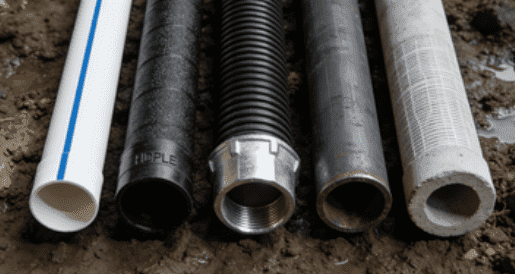
PE plumbing pipe is made from polyethylene, a thermoplastic polymer that can be produced in different density grades. The most common types used in plumbing are:
- HDPE (High-Density Polyethylene)
- MDPE (Medium-Density Polyethylene)
- LDPE (Low-Density Polyethylene) – rarely used for pressure plumbing
These pipes are used in:
- Residential water supply
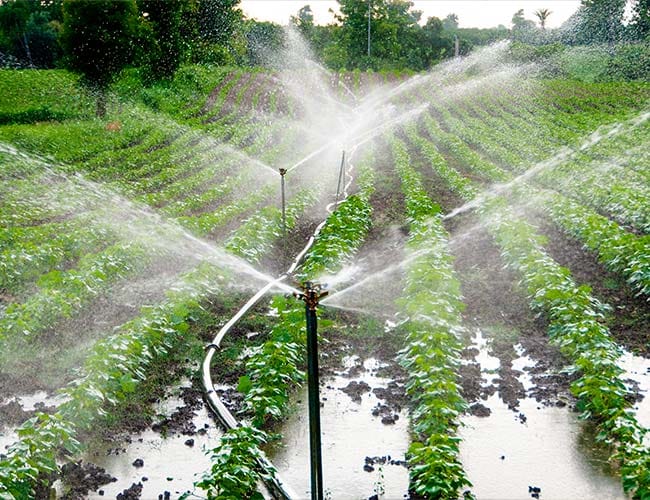
- Underground irrigation systems
- Industrial plumbing
- District heating (with special PE grades)
- Corrosive soil environments
Why PE Pipes Are Favored in Modern Construction
PE plumbing pipe is chosen for several reasons:
- High flexibility allows bending and reduces joint counts
- Excellent impact resistance reduces breakage risk during installation
- Strong chemical resistance prevents corrosion and degradation
- Low thermal conductivity reduces heat loss in hot water systems
- Long expected lifespan reduces lifecycle cost
The Core Durability Facts About PE Plumbing Pipe
Durability Factors That Actually Matter
The long-term durability of a PE plumbing pipe depends on:
- Pressure rating (measured in PN, psi, or bar)
- Operating temperature
- Water quality and chemical exposure
- Installation quality
- Mechanical stress (bending, external loads, ground movement)
- UV exposure (for above-ground installations)
Industry Standards That Define PE Pipe Performance
The most common standards include:
- ISO 4427 (PE pipes for water supply)
- ASTM F714 (Standard Specification for PE Plastic Pipe)
- EN 12201 (PE pipes for water supply and drainage)
- NSF/ANSI 14 (Plastic piping system components and related materials)
These standards define:
- Minimum wall thickness
- Pressure class (PN rating)
- Temperature rating
- Material quality requirements
- Long-term hydrostatic strength
How Long Does PE Plumbing Pipe Actually Last?
Realistic Lifespan Expectations
PE plumbing pipes are engineered to last 50 years or more under normal operating conditions. However, this is a generalized expectation. Lifespan changes depending on:
- Operating pressure
- Operating temperature
- Soil conditions
- Installation quality
- Exposure to chemicals
Lifespan Data Based on Real Usage
In real-world engineering applications, PE pipe longevity is often calculated using hydrostatic stress models. For example:
- A PE pipe rated at PN10 is designed for continuous operation at 10 bar
- If operating pressure is maintained below 70% of rated pressure, lifespan increases significantly
- Temperature above 40°C can reduce lifespan by 20–40% depending on the PE grade
PE Plumbing Pipe Durability Compared to Other Materials
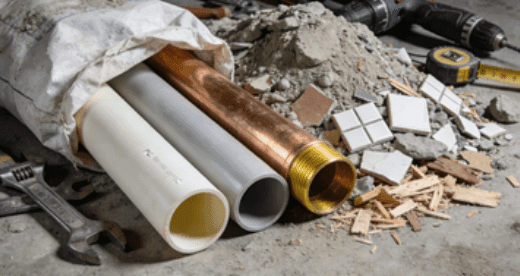
PE vs PVC: Impact Resistance and Longevity
PE:
- Flexible, shock-resistant
- Less likely to crack from ground movement
- Better for underground use
PVC:
- Rigid and brittle in low temperatures
- More likely to crack under heavy loads
- Susceptible to UV degradation if not protected
Conclusion: PE is often more durable for underground and outdoor use.
PE vs PEX: Which Is Better for Hot Water?
PEX:
- Excellent for hot water
- Widely used in residential plumbing
- Can handle higher temperatures than standard PE
PE:
- Best for cold water, underground and industrial environments
- High chemical resistance
Conclusion: For hot water systems, PEX may be better. For outdoor/underground water supply, PE is often superior.
PE vs Copper: Corrosion and Soil Impact
Copper:
- Strong and heat-resistant
- Corrosion occurs in acidic water
- Can suffer from pinhole leaks
PE:
- Non-metallic, so no corrosion
- More flexible and resistant to ground movement
- No electrochemical reaction
Conclusion: In corrosive soil or acidic water environments, PE plumbing pipe is often more durable.
The Truth About PE Pipe Durability: Key Technical Factors
Pressure Rating and How It Affects Lifespan
PE pipe pressure rating is critical. The most common PN ratings are:
- PN6 (6 bar)
- PN10 (10 bar)
- PN16 (16 bar)
Rule of thumb:
For long-term durability, choose a pipe with a higher PN rating than your working pressure. Operating at 70% or less of the rated pressure significantly extends lifespan.
Temperature and Its Real Impact
PE pipe temperature limits are important:
- PE100 (common for water supply): rated up to 40–60°C
- PE100-RC: improved resistance to slow crack growth
High temperature effects:
- Softens the pipe
- Increases creep deformation
- Reduces lifespan
UV Exposure: The Hidden Durability Threat
PE pipes exposed to direct sunlight can degrade over time. This is why:
- Outdoor PE pipes should be UV stabilized
- Or they should be covered/protected
- Or buried underground
Without UV protection, PE pipe can become brittle after long exposure, especially in high-sunlight regions.
Installation Practices That Determine Real Durability
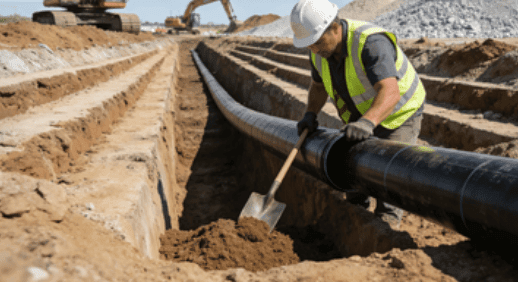
The Most Common Installation Mistakes That Reduce Lifespan
- Poor jointing (improper fusion or poor mechanical fittings)
- Sharp rocks and poor bedding
- Excessive bending beyond the minimum bend radius
- Incorrect pressure rating selection
- Exposing pipes to sunlight without protection
Proper Bedding and Backfill
A critical factor for underground durability:
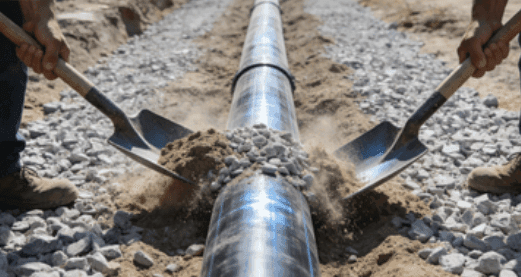
- Use sand or fine soil bedding
- Avoid sharp rocks
- Ensure uniform support along the pipe
- Use proper compaction to prevent ground movement
Correct Jointing Methods
PE plumbing pipe joint methods include:
- Butt fusion (strongest, common for high-pressure systems)
- Electrofusion
- Mechanical fittings (for easier repair or temporary installations)
Industry best practice:
For long-term durability, butt fusion is often recommended for main pipelines.
A Practical Durability Table: PE Pipe Performance in Real Conditions
| Condition | Expected Lifespan | Durability Notes |
|---|---|---|
| Normal water supply, underground | 50+ years | Standard use |
| High temperature water | 20–40 years | Hot water reduces lifespan |
| UV-exposed above-ground | 10–30 years | Must be UV stabilized |
| Harsh chemical exposure | 10–30 years | Depends on chemical type |
| High-pressure operation (near PN limit) | 20–30 years | Overstressed pipes degrade faster |
| Proper installation + low pressure | 50+ years | Best case scenario |
Industry Expert Opinions: What Professionals Say
Expert View on PE Pipe Durability
Construction engineers often say:
“The lifespan of a PE plumbing pipe is not just about the material—it’s about how it’s installed and used. A properly installed PE system can last 50 years or more.”
Water system designers note:
“PE pipes are often the best choice for underground water systems because they resist soil corrosion and movement.”
Safety managers emphasize:
“Pipe failures usually occur due to poor installation, not material failure. Inspection and correct jointing are key.”
Common Misconceptions About PE Plumbing Pipe
Myth: PE Pipes Are Weak Because They Are Plastic
PE pipes are not like ordinary plastic. They are engineered for pressure systems and built to withstand high loads and ground movement.
Myth: PE Cannot Handle Hot Water
Standard PE is best for cold water. However, high-grade PE materials like PE100-RC or specialized hot-water PE pipes can handle higher temperatures.
Myth: PE Pipes Are Hard to Install
PE pipe installation requires proper training and equipment, but modern fusion methods are efficient and reliable.
Maintenance and Inspection: Extending PE Pipe Lifespan
Routine Inspection Practices
Check:
- Pressure loss
- Visible leaks
- Water quality changes
- Unusual noise in the pipe
- External damage signs
Preventive Maintenance
- Avoid chemical spills near pipe routes
- Use protective barriers in high-traffic areas
- Monitor temperature and pressure
- Replace worn fittings and seals
How to Choose the Right PE Plumbing Pipe for Your Project
Step-by-Step Selection Guide
- Identify your water type (cold, hot, chemical, etc.)
- Measure the required flow and pressure
- Choose a suitable PN rating
- Select the correct PE grade (PE80, PE100, PE100-RC)
- Confirm installation method (fusion vs mechanical)
- Verify UV protection if above ground
- Confirm warranty and compliance with standards
Buyer Checklist for PE Plumbing Pipe Durability
- Pressure rating (PN)
- Temperature rating
- Material grade (PE100, PE100-RC, etc.)
- UV stabilization
- Installation method and equipment
- Manufacturer’s warranty and certification
Conclusion
PE plumbing pipe offers excellent durability, flexibility, and resistance to corrosion. It is a strong choice for underground water systems, irrigation, and industrial plumbing. The key to long-lasting performance lies in choosing the right material grade, ensuring correct installation, and maintaining the system properly.
If you follow the guidelines in this article, you can expect a PE plumbing pipe system to provide decades of reliable service with minimal maintenance.
FAQ
How long does a PE plumbing pipe last in real life?
Most PE plumbing pipes can last 50 years or more under normal conditions, especially when properly installed and protected.
Can PE plumbing pipe be used for hot water?
Standard PE is best for cold water. For hot water, choose high-temperature rated PE or consider PEX.
Does PE pipe require special tools for installation?
Yes. PE pipe installation typically requires fusion welding or mechanical fittings. Proper training and equipment ensure long-term performance.
What causes PE pipe failure most often?
Most failures are due to poor installation, incorrect pressure rating, UV exposure, or chemical damage.
Is PE better than PVC for underground plumbing?
Generally yes. PE is more flexible and impact-resistant, making it better for underground use.
Can PE pipes be buried without protection?
Yes, but they require proper bedding, backfill, and protection from sharp rocks and heavy loads.
What is the biggest durability advantage of PE over copper?
PE does not corrode and is more flexible, which reduces the risk of failure due to ground movement or chemical soil conditions.