Welcome to our in-depth look at high-quality plastic products and how they are transforming everyday life, industrial applications, and commercial projects. Before you dive in, stay connected with us for expert tips, industry insights, and practical solutions:
· Facebook – Join our community to ask questions and get the latest product updates
· Tiktok – Watch tutorials, installation guides, and project demonstrations
Let’s explore how durable and versatile plastic products can deliver efficiency, reliability, and long-term performance—read on to discover which solutions fit your needs best!
Table of Contents
Key Takeaways of This Agriculture Irrigation Pipe Guide
- Deep technical comparison of agriculture irrigation pipe vs drip irrigation system
- Engineering principles, hydraulic performance, and material standards explained
- Real water-saving data, agricultural efficiency benchmarks, and global case studies
- Cost structure analysis across installation, operation, and lifecycle
- ISO/FAO-based irrigation efficiency frameworks and industry benchmarks
- Crop suitability matrix for decision-making (field crops, orchards, greenhouse)
- Maintenance, filtration, and system lifespan optimization strategies
- FAQ section based on real farmer and procurement search queries
Introduction
Global agriculture is undergoing a structural transformation driven by climate variability, water scarcity, and rising input costs. According to FAO irrigation reports, agriculture consumes approximately 70% of global freshwater resources, making irrigation system efficiency a key factor in sustainable farming.
In this context, choosing between an agriculture irrigation pipe system and a drip irrigation system is no longer just a technical decision—it is an economic and sustainability strategy.
Modern farms are shifting from traditional flood irrigation to engineered water delivery systems that improve yield per liter of water. Among these systems, irrigation pipe networks and drip irrigation technologies represent two dominant engineering approaches with fundamentally different performance characteristics.
Agriculture Irrigation Pipe System Engineering Fundamentals
An agriculture irrigation pipe system is a pressurized water distribution infrastructure designed to transport water from a central source to agricultural zones through a network of pipes, valves, fittings, and emitters.
Hydraulic Transport Principle
The system operates based on fluid dynamics principles where water is pushed through pipelines under controlled pressure. Flow rate depends on pipe diameter, pressure head, and friction loss coefficient.
Key Hydraulic Equation (Simplified Concept)
Flow efficiency is influenced by:
- Pipe diameter (larger diameter = lower friction loss)
- Pressure level (higher pressure = wider coverage)
- Distance (longer pipelines increase head loss)
Agriculture Irrigation Pipe Material Engineering Standards
PVC Pipe Systems in Agriculture Irrigation
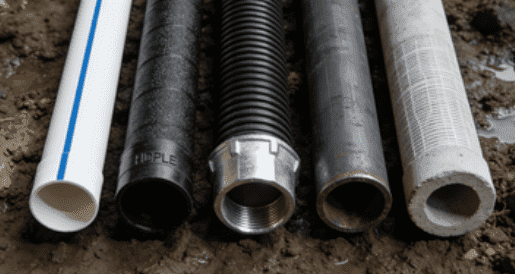
PVC pipes are widely used in irrigation due to their low cost and chemical resistance. They typically comply with ASTM D1785 standards for pressure-rated systems.
Performance Characteristics
- Pressure rating: 4–16 bar
- Service life: 10–20 years
- Temperature resistance: up to 60°C
HDPE Pipe Systems in Agriculture Irrigation
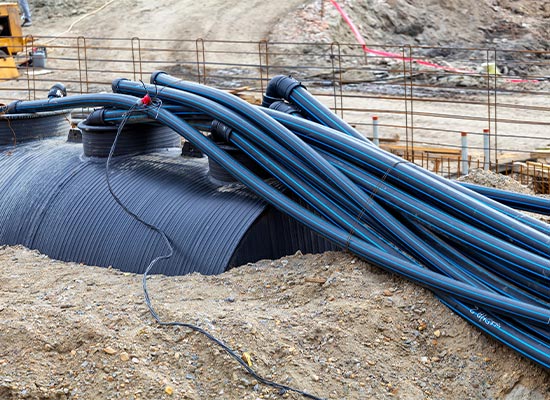
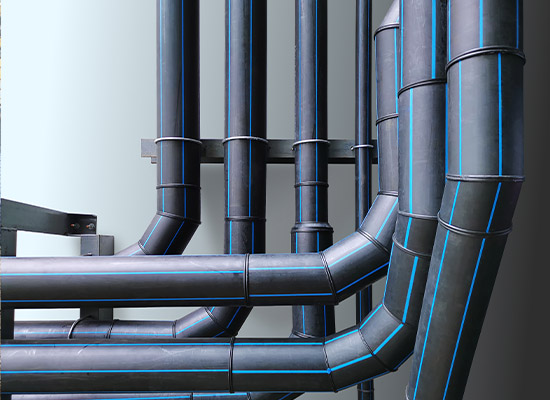
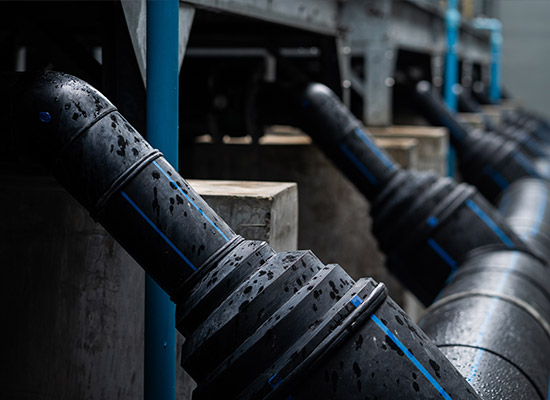
HDPE (High-Density Polyethylene) pipes are preferred for large-scale agricultural infrastructure.
According to ISO 4427 standards:
- High flexibility reduces fracture risk
- Resistant to UV degradation
- Suitable for trenchless installation
Engineering Advantage
HDPE pipes can withstand ground movement and are widely used in uneven terrain irrigation projects.
Drip Irrigation System Engineering Architecture
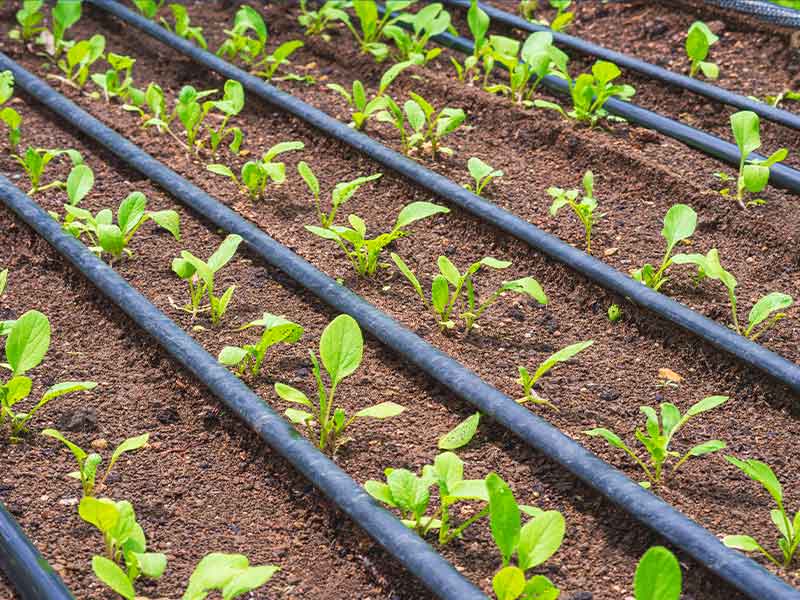
A drip irrigation system is a low-pressure, precision-controlled water delivery system that delivers water directly to plant root zones through emitters.
Precision Hydration Concept
Unlike pipe-based irrigation, drip systems focus on micro-flow delivery rates, typically measured in liters per hour (LPH), such as:
- 1.0 LPH emitters for vegetables
- 2.0–4.0 LPH for orchards
- Pressure range: 0.8–1.5 bar
Drip Irrigation Tape Technology (Advanced Segment)
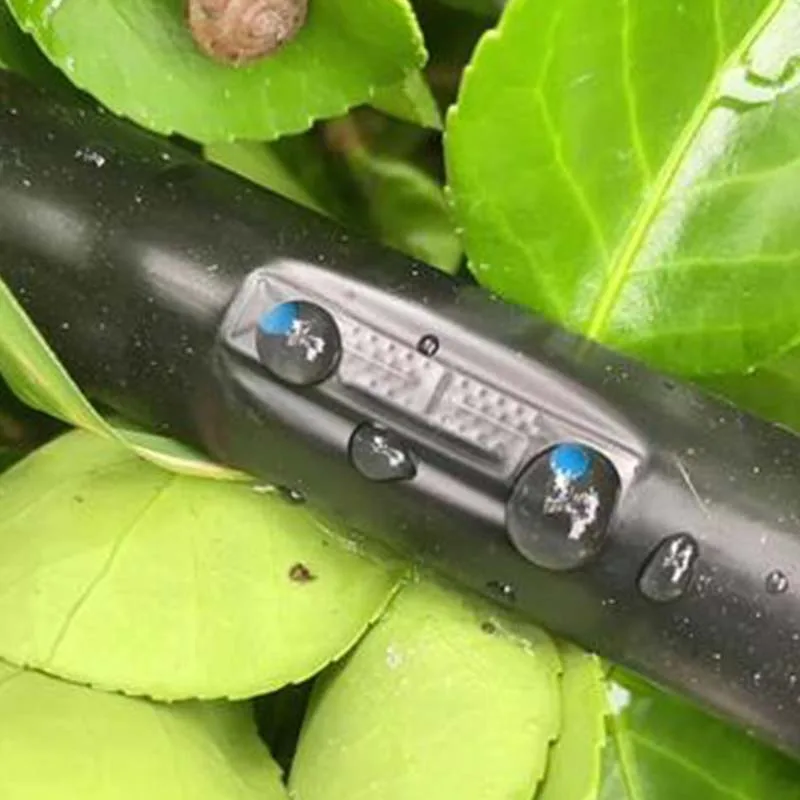
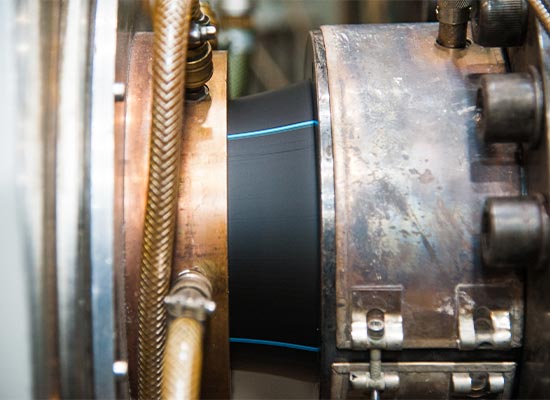
Modern systems use drip tape made from virgin PE materials with embedded emitters.
Structural Engineering Features
Labyrinth Flow Channel Design
The internal emitter uses a zigzag channel structure that:
- Stabilizes flow rate
- Reduces clogging probability
- Maintains pressure compensation
Anti-Clogging Mechanism
- Built-in micro filters
- Wide water outlet design
- Turbulent flow resistance system
Agriculture Irrigation Pipe vs Drip System Hydraulic Efficiency Analysis
Water Distribution Efficiency Comparison
Field studies published in irrigation engineering journals show:
- Flood irrigation efficiency: 40–50%
- Pipe sprinkler irrigation efficiency: 60–75%
- Drip irrigation efficiency: 85–95%
This indicates drip irrigation can reduce water loss by up to 60% compared to conventional pipe systems.
Detailed Performance Benchmark Table
| Performance Metric | Agriculture Irrigation Pipe | Drip Irrigation System |
|---|---|---|
| Water Efficiency | Medium (60–75%) | High (85–95%) |
| Fertilizer Efficiency | Low–Medium | High (Integrated fertigation) |
| Installation Cost | Lower (large-scale) | Medium |
| Maintenance Frequency | Low | Medium–High |
| Pressure Requirement | Medium–High | Low |
| Crop Precision | Low | Very High |
| Energy Consumption | Higher | Lower |
Agriculture Irrigation Pipe System Application Engineering
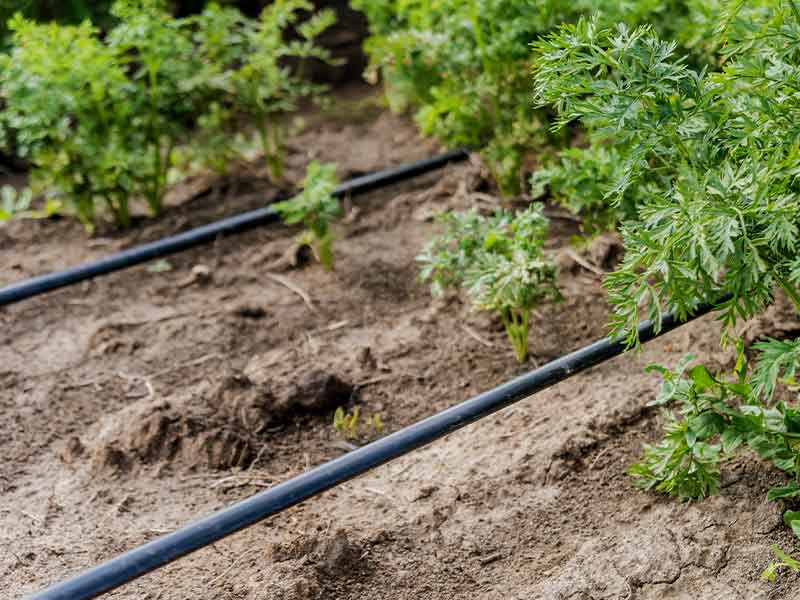
Field Crop Irrigation Design
Common crops include:
- Wheat
- Corn
- Rice
- Soybean
Pipe systems are suitable because uniform water distribution is more important than precision delivery.
Sprinkler-Based Pipe Systems
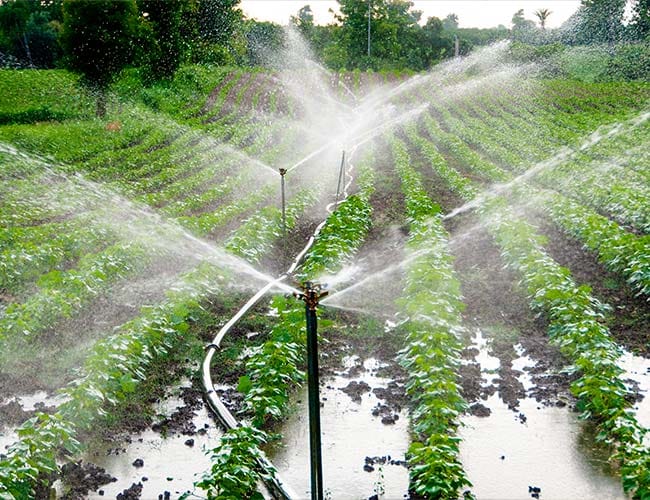
Sprinkler irrigation using pipe networks simulates rainfall conditions and is widely used in:
- Flat terrain agriculture
- Large acreage farms
- Pasture irrigation
Drip Irrigation System Application Engineering
High-Value Crop Optimization
Drip systems are ideal for:
- Tomatoes
- Strawberries
- Grapes
- Citrus orchards
Greenhouse Agriculture Systems
Controlled environment agriculture benefits from:
- Stable humidity control
- Precise fertigation
- Reduced disease risk
Cost Structure Analysis: Agriculture Irrigation Pipe vs Drip System
Initial Investment Structure
Pipe systems:
- Lower upfront material cost
- Higher pumping infrastructure cost
Drip systems:
- Higher emitter and filtration cost
- Lower long-term operational cost
5-Year Lifecycle Cost Comparison (Average Global Data)
| Cost Category | Pipe System | Drip System |
|---|---|---|
| Installation | Low–Medium | Medium–High |
| Water Cost | High | Low |
| Fertilizer Waste | High | Low |
| Maintenance | Low | Medium |
| Total 5-Year Cost | Medium | Lower |
FAO & World Bank Irrigation Efficiency Reports Insight
According to FAO AQUASTAT data:
- Global irrigation efficiency averages: 55%
- Drip irrigation can improve efficiency up to 90%
- Pipe sprinkler systems typically reach 70% efficiency ceiling
World Bank agricultural modernization reports highlight drip irrigation as a key technology for water-scarce regions such as:
- Middle East
- North Africa
- South Asia
Agriculture Irrigation Pipe Installation Engineering Process
System Design Stages
- Water source assessment
- Pressure calculation
- Pipe diameter selection
- Layout mapping
- Valve positioning
Pressure Loss Consideration
Long-distance pipelines must consider:
- Friction loss coefficient
- Elevation changes
- Flow velocity optimization
Drip Irrigation System Installation Engineering Process
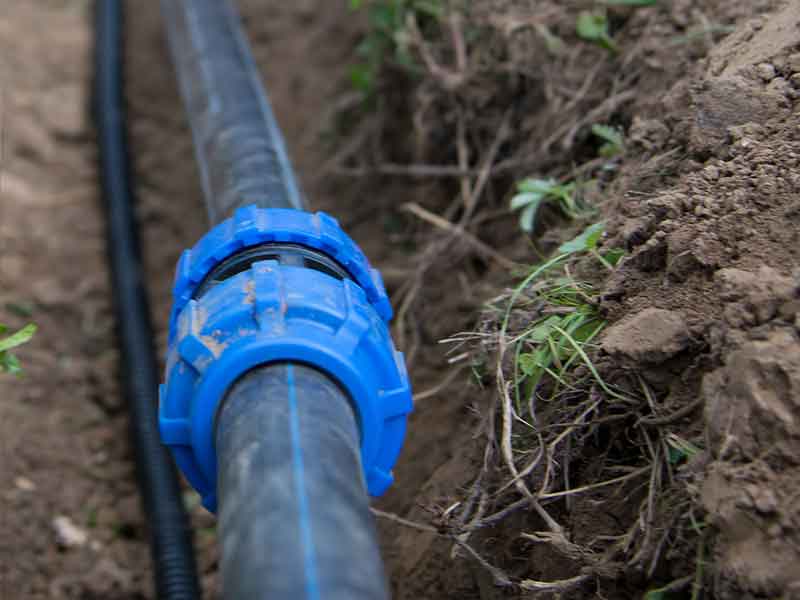
Layout Design Flexibility
Drip systems allow:
- Custom emitter spacing
- Modular expansion
- Zone-based irrigation control
Filtration System Requirement
Essential components include:
- Sand filter
- Screen filter
- Fertilizer injector
Real Agricultural Case Study: China Greenhouse Tomato Farm
A 50-hectare greenhouse project implemented drip irrigation:
Results after 1 growing cycle:
- Water consumption reduced by 48%
- Yield increased by 22%
- Fertilizer usage reduced by 35%
In contrast, adjacent pipe-irrigated fields showed higher water loss due to evaporation and runoff.
Agriculture Irrigation Pipe Maintenance Engineering
Pipe System Maintenance Requirements
- Seasonal flushing
- Leak inspection
- Valve calibration
Common Failure Points
- Joint leakage
- Pressure imbalance
- Sediment blockage
Drip Irrigation Maintenance Engineering
System Cleaning Protocol
- Weekly flushing recommended
- Filter replacement every 2–4 weeks (depending on water quality)
Clogging Prevention Strategy
- Use of anti-clog emitters
- Regular acid flushing in hard water areas
Climate Adaptation and Sustainability Perspective
Water Scarcity Impact
Regions facing water stress increasingly adopt drip irrigation to maximize yield per cubic meter of water.
Carbon Footprint Reduction
Drip systems reduce:
- Pumping energy consumption
- Fertilizer runoff pollution
- Water transportation losses
Agriculture Irrigation Pipe vs Drip System Selection Framework
Choose Pipe Irrigation When:
- Large-scale grain farming
- Low crop value per hectare
- Budget-limited infrastructure
Choose Drip Irrigation When:
- High-value crops
- Water scarcity conditions
- Precision farming requirements
Hybrid Irrigation Strategy (Emerging Trend)
Many modern farms now combine both systems:
- Pipe system for base irrigation
- Drip system for high-value crop zones
This hybrid approach maximizes both coverage efficiency and precision control.
FAQ
Which system saves more water in agriculture?
Drip irrigation systems save significantly more water due to direct root-zone delivery and reduced evaporation.
Is agriculture irrigation pipe outdated?
No, pipe irrigation remains essential for large-scale field crops where precision is less critical.
Can drip irrigation replace all pipe systems?
Not entirely. Drip systems are better for precision farming, while pipe systems remain dominant in large acreage farming.
What is the lifespan of irrigation pipes?
PVC pipes last 10–20 years, while HDPE systems can exceed 25 years under proper maintenance.
What is the biggest limitation of drip irrigation?
Higher maintenance requirements due to clogging risk and filtration needs.
Conclusion
Agriculture irrigation pipe systems and drip irrigation systems are not competitors but complementary technologies serving different agricultural objectives.
Pipe systems excel in large-scale coverage and infrastructure simplicity, while drip systems dominate in precision agriculture, water conservation, and high-value crop production.
As global agriculture moves toward sustainability and resource efficiency, the integration of both systems—based on crop type, climate conditions, and economic goals—will define the next generation of smart farming systems.