
Table of Contents
Corrugated Plastic Sheet: Choosing the Flute Direction addresses a specific B2B decision: flute orientation relative to the span and crease. The right choice depends on the finished application and the way it is handled, not just the product name. Use the checks below to compare samples, prepare a clear request for quotation and approve a repeatable supply specification.
The decision for corrugated plastic sheet
The practical starting point is an engineer laying out fold lines and load-bearing spans. The risk is specific: the strongest direction is assigned to the wrong axis. A decision about corrugated plastic sheet should therefore begin with flute orientation relative to the span and crease, rather than a comparison based only on a photograph or the nominal material name. This article sets out a qualification and purchasing method for that situation. It does not assign a universal load rating, service life or certification to an unspecified grade.
A useful acceptance statement is that the drawing shows channel direction and the part passes its functional trial. Translate that statement into a short inspection record before asking for quotations or changing the current design. Decide who will observe the result and which product condition must remain unchanged. Where a drawing dimension is involved, agree the measurement position and method. Where appearance or handling matters, retain a physical reference or a clear operating example.
The first trial should mark the channels on each prototype before bending and loading. Keep the actual product, its support arrangement and the relevant operating sequence in the comparison. Record the sample code, drawing revision, conditions and observations together. If a detail is changed during the trial, identify the revised sample separately. This makes it possible to distinguish a useful improvement from a different setup that was never compared fairly.
The most informative failure to investigate is the one connected to flute orientation relative to the span and crease. Photograph the relevant area before and after the trial and record whether the problem appeared during preparation, operation or unpacking. Do not merge distinct failure causes into one rejected-sample count. That distinction helps determine whether the next action belongs in material selection, conversion, packing or the working method.
For the order, keep flute orientation relative to the span and crease visible in the drawing or acceptance sheet. Ask the supplier to identify any proposed deviation before production. The release decision should refer to the sample and evidence that were actually reviewed. An appealing prototype is a starting point; repeatability in the supplied batch is what allows corrugated plastic sheet to work as a dependable purchasing specification.
Define the finished part before choosing the board
When specifying corrugated plastic sheet, begin with the component that the board will become. A flat separator, folded sleeve and removable liner put different demands on the same hollow structure. Mark the supported regions, contact points, cutouts and assembly direction on a sketch. Identify which dimensions control fit and which surfaces are visible. This prevents a material comparison from drifting into a comparison of different finished designs.
Use one drawing revision throughout the trial. If a sample is trimmed, reinforced or rotated during evaluation, record that change rather than treating the modified part as evidence for the original design. Keep a labeled reference piece with the drawing. When a new delivery arrives, the inspector should be able to identify the approved geometry and compare the relevant features directly.
For the situation described here, mark the channels on each prototype before bending and loading. Record the result before releasing the order.
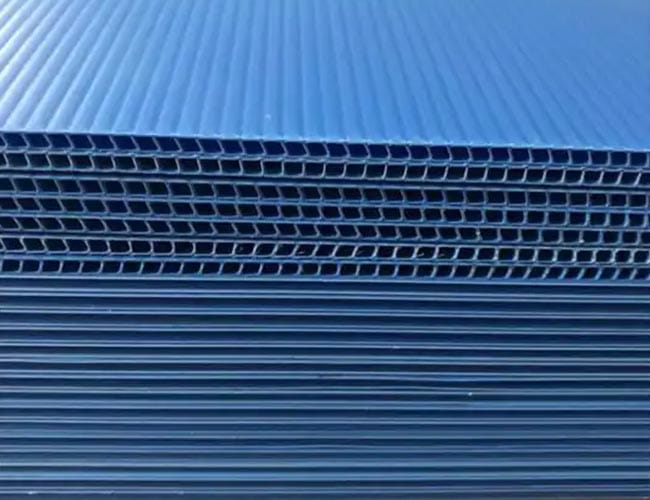
Keep flute direction visible through conversion
When comparing corrugated plastic sheet, mark the channels before cutting. Once a blank has been printed, scored or assembled, flute direction can become difficult to identify without looking closely at an edge. A rotated nesting layout may improve material yield while changing bending behavior or the position of fold lines. Treat the approved direction as a drawing requirement whenever the finished function depends on it.
Evaluate both directions on the same support arrangement if orientation is still undecided. Record the direction, span, contact area, load duration and observed response. A quick hand bend can help compare feel, but it cannot establish a general load rating. Recheck the selected direction after conversion, because slots, creases and fastener holes may dominate the response of the finished part.
The decision should demonstrate that the drawing shows channel direction and the part passes its functional trial. An unexplained pass mark is less useful than the observation behind it.
Test the actual span and contact pattern
For a project using corrugated plastic sheet, a broad distributed load and a small concentrated contact can produce very different damage. Reproduce the real support surface and the actual product contact geometry. If the board rests on pallet deck gaps, a conveyor or a frame, include that feature in the fixture. Observe both the loaded condition and recovery after removal so that temporary flexing is distinguished from permanent damage.
Set the functional limit before comparing candidates. The limit might be clearance to another component, acceptable sag, absence of product marking or successful assembly after loading. Record dwell time and relevant conditions. Passing a short demonstration should not be extended into a service-life claim. A longer operating trial is needed where the board will carry a sustained load or undergo repeated handling.
Keep the qualification focused on flute orientation relative to the span and crease. Ask the supplier to explain deviations from the approved construction.
Control the cut edge and crease process
When qualifying corrugated plastic sheet, examine the finished edge rather than judging only the uncut sheet. An unsupported cut can crush channels or leave ragged skins that interfere with a close-fitting assembly. Trial the planned tooling on the smallest notches, tightest corners and most demanding fold lines. Follow equipment instructions and keep operators’ hands outside the cutting path. A clean sample made by a different process may not represent production.
A crease should guide the intended fold without weakening adjacent areas unnecessarily. Evaluate the actual fold sequence, including reopening if the part is returnable. Keep the tooling setting, board orientation and sample identity together in the trial record. If a processing adjustment solves one defect, confirm that it has not created excessive springback, a torn skin or a dimensional change elsewhere.
In the operating trial, check whether the strongest direction is assigned to the wrong axis. The relevant observation should determine the next design change.
Calculate yield from the approved orientation
Before ordering corrugated plastic sheet, lay out the complete order on a cutting plan, including cutting clearance, edge trim and unusable areas. Count finished acceptable pieces rather than simply dividing total sheet area by part area. Channel direction and print orientation may restrict rotation. A larger stock blank can improve one layout while increasing handling difficulty or producing awkward offcuts for another.
Compare candidate blank sizes with the same order mix. Record pieces per sheet, residual areas, bundle quantities and the handling method. If useful offcuts are counted as recoverable stock, assign a real future use and an identification method. Otherwise they are trim in the cost calculation. This avoids showing a yield benefit that depends on offcuts accumulating indefinitely without being used.
The reference sample should support one clear conclusion: the drawing shows channel direction and the part passes its functional trial. Preserve the conditions that made that result possible.

Build a small trial that represents normal work
When inspecting corrugated plastic sheet, use the actual product, support, assembly method and handling sequence wherever practical. A simplified test is useful when it isolates a specific uncertainty, but record what it leaves out. Begin with a manageable quantity so unsuitable details can be corrected before tooling or a large order commits the project. Include the least favorable approved configuration when the product range varies.
Ask the people who will load, handle, print or inspect the item to participate. Their observations often reveal access and identification problems that a dimensional drawing does not show. Keep timing, damage and rejection observations distinct. A faster process is not an improvement if it leaves the protected product or finished graphic outside the agreed acceptance limits.
The buyer should be able to repeat the comparison and mark the channels on each prototype before bending and loading. Use the same identification method for the production batch.
Define the environmental conditions that matter
For production using corrugated plastic sheet, list the exposures relevant to the intended job: storage temperature, sunlight, moisture, cleaning, abrasion and duration under load. Do not assume that success in a clean indoor sample room establishes performance in a different environment. Ask for grade-specific information and use representative trials where the exposure could change fit, appearance or a required property.
Keep the conditions proportionate to the real application. A temporary indoor display and a repeatedly washed return box do not need the same qualification plan. Record why each condition was included and what observation it addresses. This makes the evaluation easier to interpret and helps determine which checks need to be repeated if the route or operating environment changes.
When reviewing a substitute, return to flute orientation relative to the span and crease. Nominally similar material is only a candidate until the relevant checks are complete.
Plan storage and traceability after approval
When approving corrugated plastic sheet, assign an identifiable stock location and keep different specifications apart. Similar color and thickness can conceal a difference in treatment, area weight or conversion layout. Bundle labels should remain useful after partial withdrawal. Record the lot or delivery identity where it helps trace an operating issue back to material received.
Protect the approved stock from unnecessary compression, dirt and rough handling. Include a simple check before conversion or use when long storage could affect condition. If returned items are part of the system, separate clean usable material from material awaiting inspection. Clear storage rules help preserve the value of a successful qualification through day-to-day operation.
The priority for this project is flute orientation relative to the span and crease. Keep it visible when comparing the candidates.
Compare options for corrugated plastic sheet
For corrugated plastic sheet, compare the current construction, the proposed alternative and any reduced-material option against the same acceptance statement. Keep changes in dimensions, load arrangement and process conditions visible. The table is a project checklist rather than a claim that one standard grade fits every application.
| Requirement | What to record | How to judge the result |
|---|---|---|
| Application | an engineer laying out fold lines and load-bearing spans | Use a production-equivalent configuration |
| Critical variable | flute orientation relative to the span and crease | Agree a repeatable method before the comparison |
| Relevant risk | the strongest direction is assigned to the wrong axis | Observe the actual operating stage where it begins |
| Trial | Mark the channels on each prototype before bending and loading | Keep setup and sample identity with the record |
| Acceptance | The drawing shows channel direction and the part passes its functional trial | Record evidence and unresolved deviations |
| Reorder | Drawing revision, sample code and material identity | Compare the received batch with the approved reference |
Sources and related product information
Independent reference: ISTA. Use the relevant guidance with the project-specific qualification plan. This reference is not a test report or certification for a Zenlink product.
For available product formats, review Zenlink’s corrugated plastic product page and hollow-board product category. Ask which dimensions and modifications can be supplied for your drawing; availability and supporting documentation should be confirmed for the exact order.
Frequently asked questions
What should a buyer specify first for corrugated plastic sheet?
Start with flute orientation relative to the span and crease. Describe the finished use and identify the relevant drawing or product condition. For this project, the intended result is that the drawing shows channel direction and the part passes its functional trial.
Is nominal thickness enough to approve the material?
No. Thickness is one part of the construction. Review area weight where relevant, flute direction, conversion details and the actual operating function. Compare equivalent samples using the same method and acceptance criteria.
How should the first sample be tested?
The first trial should mark the channels on each prototype before bending and loading. Record the sample identity, setup, conditions and observations. Review deviations before approving tooling or a larger order.
Can a similar-looking board be substituted without review?
A similar appearance does not establish equivalent behavior. Check the proposed change against flute orientation relative to the span and crease and repeat the affected functional or dimensional checks before release.
What information helps Zenlink prepare a useful quotation?
Provide the drawing or finished dimensions, quantity, intended application, relevant material requirements, conversion details, delivery destination and the checks required for sample approval. Include a reference sample code or current packaging problem where available.
Discuss the specification with Zenlink
Send Zenlink the application drawing, required quantity and the issue you need to resolve. For corrugated plastic sheet, highlight flute orientation relative to the span and crease and describe the trial you expect to use. The team can review the relevant hollow-board or packaging format and discuss sample requirements for your project. Use the inquiry form below or the contact page to provide the working details.