Table of Contents
Introduction
Meta Description: Learn how to choose corrugated plastic sheets by material, thickness, structure, strength, printing, packaging and application requirements.
SEO Keywords: corrugated plastic sheets, corrugated plastic, corrugated plastic sheet, plastic corrugated sheets, PP corrugated plastic sheet, corrugated plastic panels
Corrugated plastic sheets are widely used in industrial packaging, logistics, advertising, construction protection, agriculture and reusable container systems because they combine low weight with a durable hollow structure.
However, buyers often discover that “corrugated plastic sheet” describes a broad product category rather than one universal material. Two sheets that look similar can perform very differently depending on polymer grade, thickness, sheet weight, flute structure, surface treatment, additives and manufacturing consistency.
For distributors, packaging companies, construction contractors and industrial buyers, the most effective selection process therefore starts with the application rather than simply asking for a sheet of a certain thickness.
This guide explains how corrugated plastic sheets are made, what specifications matter most, how PP corrugated plastic compares with cardboard and solid plastic sheet, and what information buyers should provide when preparing a commercial enquiry.
What Are Corrugated Plastic Sheets?
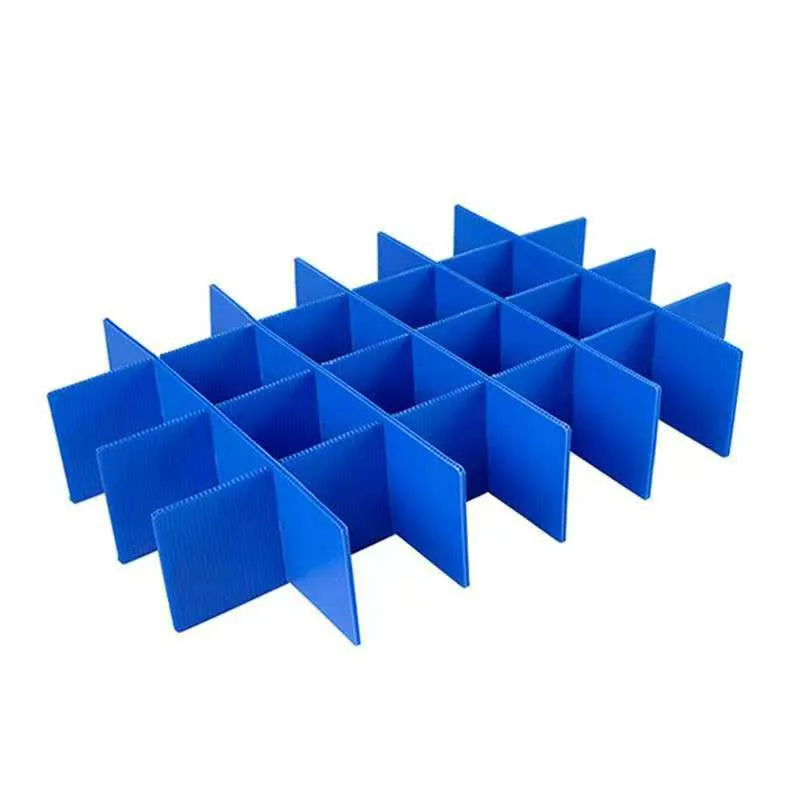
Corrugated plastic sheets are lightweight hollow plastic panels typically produced by extrusion.
Unlike solid plastic sheet, the material usually consists of two relatively flat outer layers connected by an internal rib or flute structure. This creates a hollow cross-section that improves stiffness while keeping material weight relatively low.
Polypropylene, commonly abbreviated as PP, is one of the most widely used materials for this type of sheet.
Zenlink’s Corrugated Plastic Sheet is primarily manufactured using PP, with PE potentially incorporated depending on the required toughness and application. The product is formed through extrusion into a hollow structural sheet and can be supplied in different thicknesses and colors.
Corrugated plastic is also commonly described using terms such as:
- PP hollow sheet
- twin-wall plastic sheet
- corrugated polypropylene sheet
- hollow polypropylene board
- flute plastic sheet
- plastic corrugated board
Although these names may describe similar products, buyers should always confirm the actual structure and material specification instead of relying on terminology alone.
Why Polypropylene Is Commonly Used
Polypropylene offers a useful combination of low density, stiffness, chemical resistance and processability.
Different PP grades can be formulated for sheet extrusion, packaging and impact-resistant applications. Material databases such as MatWeb show that polypropylene grades are available specifically for sheet and thermoforming applications, with properties varying substantially depending on resin formulation and additives.
For corrugated board applications, appropriate PP grades may be selected to improve:
- stiffness
- impact resistance
- extrusion stability
- toughness
- surface quality
- temperature performance
This means that the quality of a corrugated plastic board depends not only on its thickness but also on the polymer formulation used to manufacture it.
How Corrugated Plastic Sheets Are Made
Corrugated plastic sheets are commonly produced through continuous extrusion.
In a simplified production process:
- Polymer resin and required additives are prepared.
- Material is melted in an extrusion system.
- Molten plastic passes through a specially designed die.
- The die forms the external skins and internal hollow structure.
- The sheet is cooled and stabilized.
- Thickness and dimensions are controlled.
- The finished sheet is cut to size.
Zenlink’s product information describes one-time extrusion molding with a lattice-shaped hollow cross-section designed to combine structural stability with low weight.
Depending on application requirements, additional compounds may also be introduced to provide properties such as:
- UV resistance
- flame retardancy
- anti-static performance
- conductive properties
- color customization
For buyers, this means that two products with the same nominal thickness may not necessarily have the same performance.
Corrugated Plastic Sheet Structure Explained
The hollow internal structure is one of the main reasons these sheets can remain relatively lightweight while providing useful stiffness.
A basic sheet consists of:
| Structure | Function |
|---|---|
| Top skin | Provides surface protection and print area |
| Bottom skin | Adds stiffness and structural support |
| Internal ribs | Maintain separation between outer skins |
| Hollow channels | Reduce weight compared with solid sheet |
| Edge profile | Influences finishing and fabrication |
The internal flute geometry affects how the sheet responds to bending, compression and impact.
A well-formed internal structure should remain consistent across the panel. Irregular ribs, uneven walls or inconsistent extrusion may lead to variable stiffness.
For industrial packaging applications, this structural consistency can matter as much as the nominal thickness printed on a specification sheet.
Corrugated Plastic Sheet Thickness Options
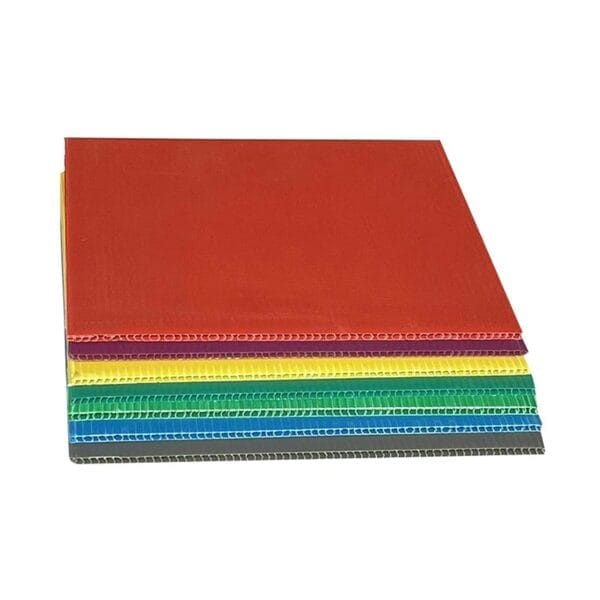
Thickness is one of the first specifications buyers normally consider.
Zenlink currently lists conventional thickness options in the approximately 2–8 mm range, with customized products available up to 12 mm depending on project requirements.
Typical thickness selection depends on the application.
| Approximate Thickness | Typical Considerations |
|---|---|
| 2–3 mm | Lightweight dividers, signs and temporary protection |
| 4 mm | General packaging, signage and partitions |
| 5 mm | Boxes, separators and reusable packaging |
| 6–8 mm | Heavier-duty packaging and protective panels |
| 10–12 mm | Applications requiring greater panel stiffness |
These are general application tendencies rather than universal engineering rules.
Thickness alone does not determine strength.
A sheet’s performance also depends on:
- GSM or sheet weight
- polymer formulation
- rib spacing
- rib thickness
- skin thickness
- recycled-content ratio
- orientation
- additives
A heavier 4 mm sheet may therefore outperform a very lightweight 5 mm sheet in some applications.
Thickness vs GSM: Which Matters More?
Professional buyers should evaluate both.
GSM means grams per square meter and is often used as an indication of how much material is present in a sheet of a given area.
For two sheets of equal thickness:
- a higher-GSM sheet generally contains more polymer
- a lower-GSM sheet generally contains less material
However, even GSM does not provide the complete performance picture because internal geometry also matters.
A sensible purchasing specification should therefore identify:
Thickness + Sheet Weight + Material + Application
rather than thickness alone.
For example:
4 mm PP corrugated plastic sheet, specified GSM, blue, for reusable industrial packaging.
This provides much more useful information to a manufacturer than:
Need 4 mm plastic sheet.
Corrugated Plastic Sheet vs Solid Plastic Sheet
Corrugated and solid plastic sheets serve different purposes.
Solid sheet contains material throughout its cross-section. Corrugated sheet uses a hollow structure.
This creates several important differences.
| Factor | Corrugated Plastic | Solid Plastic Sheet |
|---|---|---|
| Structure | Hollow twin-wall | Solid |
| Weight | Usually lower | Usually higher |
| Stiffness-to-weight | High | Depends on material |
| Cutting | Relatively easy | May require heavier equipment |
| Folding | Can be designed for folding | Generally more difficult |
| Packaging use | Excellent | Application dependent |
| Reusable boxes | Common | Less economical in many cases |
| Surface rigidity | Moderate | Usually higher |
| Material usage | Lower | Higher |
Corrugated sheet is often attractive when buyers require structural stiffness without the weight and material consumption of a completely solid panel.
Corrugated Plastic vs Cardboard
One of the most important purchasing comparisons is corrugated plastic versus corrugated cardboard.
Both materials can be used for packaging, dividers, boxes and protective sheets, but they behave differently when exposed to moisture and repeated handling.
| Feature | Corrugated Plastic | Corrugated Cardboard |
|---|---|---|
| Moisture resistance | High | Generally limited |
| Reusability | High potential | Usually lower |
| Cleaning | Easier | Limited |
| Oil resistance | Better | Usually poorer |
| Outdoor use | Possible with proper specification | Limited |
| Printability | Good with suitable treatment | Good |
| Folding | Good | Excellent |
| Initial material cost | Often higher | Often lower |
| Repeated-use economics | Can be favorable | Depends on replacement frequency |
Zenlink positions corrugated plastic as a reusable alternative in applications where cardboard may be damaged by water, humidity or repeated handling. The company’s existing product information highlights moisture resistance, impact resistance and reusability as important characteristics.
This does not mean plastic is automatically better for every package.
For a one-way dry shipment, conventional cardboard may remain perfectly suitable.
Corrugated plastic becomes more attractive where packages are repeatedly circulated, exposed to moisture, cleaned or used in industrial handling environments.
Corrugated Plastic vs Injection-Molded Containers
Reusable packaging buyers may also compare corrugated plastic boxes with injection-molded plastic bins.
Injection-molded containers are generally rigid and can provide excellent long-term durability.
However, molded tooling and container geometry can make customization less flexible for some project volumes.
Corrugated plastic boxes can often be:
- cut to custom dimensions
- scored
- folded
- welded
- stapled
- fitted with dividers
- printed
- combined with handles or closures
This makes them useful where customers need application-specific packaging without necessarily requiring a rigid molded container.
Zenlink also provides Corrugated Plastic Boxes within the same product category, making it possible to develop sheets into packaging and storage formats.
Waterproof and Moisture-Resistant Performance
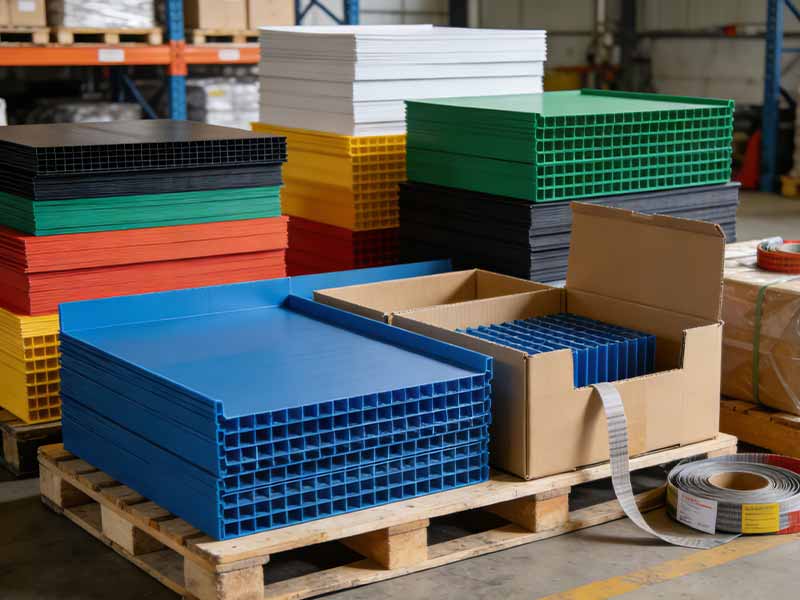
One major advantage of plastic hollow board is its resistance to water absorption compared with paper-based products.
This makes corrugated plastic useful for:
- refrigerated logistics
- agricultural packaging
- warehouse circulation
- humid environments
- outdoor temporary protection
- wet industrial areas
However, the term “waterproof” should be interpreted carefully.
The polypropylene sheet itself can resist water, but a fabricated box may contain:
- open edges
- seams
- weld lines
- handles
- cut-outs
- fasteners
These features can affect how much water penetrates the finished container.
Buyers requiring a highly sealed system should therefore evaluate the complete fabricated product rather than only the raw sheet.
Impact Resistance for Packaging
Reusable industrial packaging is frequently exposed to repeated handling.
Packages may be:
- stacked
- slid across surfaces
- loaded into vehicles
- dropped during handling
- contacted by components
- moved by conveyor systems
Polypropylene formulations can provide useful impact resistance, particularly when suitable copolymer grades are selected.
Material references for PP sheet and industrial corrugated-board applications identify grades designed around properties such as stiffness, toughness and impact resistance.
When impact protection is important, buyers should not focus only on sheet thickness.
The complete package design may also require:
- internal dividers
- foam inserts
- edge reinforcement
- double walls
- fitted lids
- corner protection
Can Corrugated Plastic Sheets Be Reused?
Yes, many corrugated plastic products are selected specifically for repeated-use systems.
Typical reusable applications include:
- automotive component packaging
- warehouse totes
- industrial parts boxes
- agricultural containers
- logistics separators
- layer pads
- returnable packaging
However, actual reuse life depends on:
- material grade
- sheet weight
- package design
- load
- temperature
- cleaning method
- impact frequency
- storage conditions
It is therefore better to evaluate expected circulation cycles than to make a generic claim that every sheet lasts a fixed number of years.
For returnable logistics, buyers should calculate packaging economics on a cost-per-use basis rather than only purchase price.
Corrugated Plastic for Industrial Packaging
Industrial packaging is one of the strongest applications for PP corrugated sheet.
A single sheet can be converted into:
- boxes
- trays
- dividers
- partitions
- layer pads
- pallet sleeves
- protective liners
- component separators
These solutions are particularly useful when products require separation during transport.
For automotive, electronics and mechanical components, customized dividers can reduce part-to-part contact and help organize quantities within each container.
Anti-static or conductive grades may also be considered where sensitive electronic components require ESD-related packaging controls.
Anti-Static and Conductive Corrugated Plastic
Standard polypropylene is an electrical insulator.
For electronics packaging, additives can be incorporated to modify surface electrical behavior.
Zenlink’s corrugated plastic product can be customized in anti-static and conductive configurations for applications involving electronic components.
Depending on the application, buyers may need to specify:
- desired surface resistance
- product sensitivity
- packaging method
- storage environment
- grounding requirements
- applicable ESD standard
The terms anti-static, static dissipative and conductive should not be used interchangeably without confirming actual electrical resistance values.
If ESD control is essential, request measured specifications rather than simply asking for “anti-static plastic.”
UV-Resistant Corrugated Plastic Sheets
Standard plastic can gradually degrade under prolonged ultraviolet exposure.
Outdoor products may therefore require UV stabilizers.
UV-enhanced corrugated plastic can be considered for:
- outdoor signs
- agricultural applications
- greenhouse-related components
- temporary fencing
- outdoor construction barriers
The required stabilization level depends on:
- climate
- sunlight intensity
- exposure duration
- color
- temperature
- mechanical load
Zenlink lists UV-resistant customization among its available functional options.
For long-term outdoor projects, buyers should clearly state expected exposure time so the formulation can be evaluated appropriately.
Flame-Retardant Corrugated Plastic
Some applications may require improved fire behavior.
Possible examples include:
- construction enclosures
- exhibition materials
- industrial partitions
- temporary building protection
- public-space signage
Flame-retardant additives can modify how the material responds to ignition.
However, “flame retardant” does not mean “non-combustible.”
The exact fire-performance requirement should be tied to a relevant test method or local regulation where necessary.
Buyers should specify:
- required test standard
- flame classification
- end-use environment
- documentation requirements
before production begins.
Corrugated Plastic for Construction Protection
Construction is another important application area for corrugated plastic panels.
Sheets may be used for:
- temporary partitions
- floor protection
- wall protection
- site separation
- temporary signage
- dust-control barriers
- equipment protection
Zenlink currently identifies bridge and tunnel projects as one application where corrugated plastic sheet can be combined with debris netting for temporary isolation, wind protection and dust control.
For these applications, lightweight panels can simplify movement and installation compared with some heavier temporary materials.
Selection should still consider:
- fire requirements
- wind exposure
- fastening
- thickness
- UV exposure
- expected service period
Corrugated Plastic for Agriculture
Agriculture can use hollow plastic sheet in several ways.
Potential applications include:
- seedling trays
- partitions
- reusable boxes
- greenhouse components
- crop handling
- moisture-resistant separators
Because polypropylene does not absorb moisture like paperboard, it can be useful in environments where irrigation, condensation or cleaning water may be present.
For outdoor agricultural applications, UV resistance becomes especially important.
Corrugated Plastic for Signs and Displays
Corrugated plastic is also widely associated with lightweight signs.
The flat surface provides an area for:
- direct printing
- screen printing
- digital printing
- labels
- adhesive graphics
Applications include:
- temporary signs
- directional signs
- promotional displays
- construction notices
- warehouse identification
However, printing quality depends partly on surface energy.
Polypropylene naturally has relatively low surface energy, so surface treatment such as corona treatment may be used when improved ink adhesion is needed.
Buyers requiring printing should tell the manufacturer whether the sheet will be:
- screen printed
- digitally printed
- laminated
- labeled
so an appropriate surface treatment can be considered.
What Is Corona Treatment?
Corona treatment is a surface-modification process used to increase the surface energy of certain plastics.
For PP sheet, this can improve the ability of inks, adhesives and coatings to bond to the surface.
This matters because untreated polypropylene can sometimes be difficult to print reliably.
Buyers purchasing corrugated plastic for signage or branded packaging should therefore ask whether:
- corona treatment is available
- one or both sides are treated
- the required surface dyne level is specified
- printing will occur immediately or after long storage
Treatment effectiveness can decrease over time, making production and printing schedules relevant.
How to Choose Corrugated Plastic Sheet Color
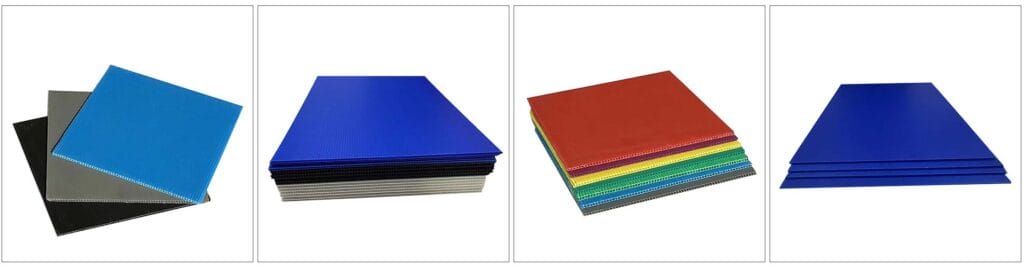
Common colors include:
- white
- black
- blue
- gray
- green
- red
Custom colors may also be possible depending on order quantity.
Color selection may be based on:
- brand identification
- warehouse coding
- product separation
- light transmission
- outdoor use
- printing contrast
For example, different colors can be assigned to different parts or production areas in a closed-loop logistics system.
This makes color useful not only aesthetically but also operationally.
How to Select Sheet Size
Standard sheet dimensions vary between manufacturers and markets.
Custom cutting may be available depending on production and order volume.
When selecting dimensions, consider:
- finished box size
- cutting plan
- material utilization
- shipping dimensions
- pallet size
- printing layout
- fabrication method
A poorly optimized sheet size can produce unnecessary scrap.
For high-volume packaging projects, manufacturers may help optimize the panel dimensions around the finished box or divider design.
Sheet Direction Matters
Corrugated plastic is not necessarily equally stiff in every direction.
The orientation of the internal flutes can influence bending behavior.
For fabricated packaging, flute direction can therefore affect:
- folding
- compression
- panel stiffness
- load distribution
Designers should define how the blank will be cut relative to the flute direction.
This becomes increasingly important for larger boxes and structural dividers.
How Corrugated Plastic Sheets Are Fabricated
One of the main advantages of hollow PP sheet is its processing flexibility.
Common fabrication methods include:
- cutting
- die cutting
- scoring
- folding
- heat welding
- ultrasonic welding
- riveting
- stapling
- printing
- laminating
This makes the material suitable for both flat sheet applications and finished packaging structures.
Buyers looking for custom packaging should ideally provide drawings or finished dimensions rather than only requesting raw sheet.
Common Corrugated Plastic Sheet Applications
Corrugated plastic is used across many industries.
| Industry | Typical Application |
|---|---|
| Logistics | Returnable boxes and pallet separators |
| Automotive | Component dividers and packaging |
| Electronics | Anti-static packaging |
| Agriculture | Trays, dividers and containers |
| Construction | Temporary protection and barriers |
| Advertising | Signs and displays |
| Warehousing | Bins and separators |
| Food handling | Application-specific washable packaging |
| Industrial manufacturing | Work-in-process containers |
This broad application range is one reason corrugated plastic is often considered an engineering packaging material rather than simply a substitute for cardboard.
How to Choose a Corrugated Plastic Sheet Supplier
For B2B procurement, buyers should compare more than unit price.
A professional evaluation should include:
Material Control
Confirm whether the supplier can identify resin type and formulation.
Thickness Consistency
Uneven sheet thickness can affect fabrication and stacking.
Weight Control
GSM should remain within agreed tolerances.
Flute Uniformity
Internal ribs should be consistent.
Color Consistency
Important for branded or coded packaging.
Functional Additives
Confirm whether UV, flame-retardant, anti-static or conductive versions are genuinely supported.
Fabrication Capability
Some buyers require finished boxes, partitions or printing rather than raw sheets alone.
Quality Documentation
Technical specifications and testing should match project requirements.
Zenlink provides a dedicated Corrugated Plastic Sheet product category covering sheets and related corrugated plastic packaging products.
Common Buying Mistakes
Choosing Only by Thickness
Thickness does not provide enough information about sheet strength.
Ignoring GSM
Two sheets of identical thickness may contain different quantities of material.
Assuming All PP Grades Are Equal
Different polypropylene formulations can have very different mechanical properties.
Forgetting Flute Direction
Panel orientation can influence stiffness and fabrication.
Using Standard Sheet Outdoors Without Checking UV Resistance
Long outdoor exposure may require stabilization.
Ordering Anti-Static Sheet Without a Resistance Specification
Functional electrical properties need measurable requirements.
Assuming “Waterproof Sheet” Means “Waterproof Box”
Fabricated seams and openings may still allow water entry.
Ignoring Printing Requirements Until After Production
Surface treatment may need to be specified before shipment.
Corrugated Plastic Sheet Procurement Checklist
Before requesting a quotation, prepare the following information:
| Requirement | Information to Provide |
|---|---|
| Application | Packaging, signage, construction or agriculture |
| Material | PP or required formulation |
| Thickness | e.g. 3 mm, 4 mm, 5 mm |
| GSM | Required sheet weight |
| Width | Required dimension |
| Length | Required dimension |
| Color | Standard or custom |
| Printing | Yes / No |
| Surface treatment | If required |
| UV resistance | Yes / No |
| Flame retardancy | If required |
| Anti-static | Required resistance range |
| Quantity | Sheets or square meters |
| Fabrication | Raw sheet or finished product |
| Destination | Country and port |
This information allows a supplier to recommend a much more accurate product specification.
Frequently Asked Questions
What are corrugated plastic sheets made from?
Many corrugated plastic sheets are manufactured from polypropylene. Depending on product design and application, other polymers or additives may also be incorporated.
Are corrugated plastic sheets waterproof?
The PP material itself has strong moisture resistance and does not absorb water like cardboard. Finished fabricated products may still include seams or openings that affect water protection.
What thickness corrugated plastic sheet should I use?
The correct thickness depends on load, panel dimensions, GSM, internal structure and application. Lightweight signs may use thinner material, while reusable industrial packaging may require heavier sheets.
Is corrugated plastic stronger than cardboard?
Corrugated plastic generally provides better moisture resistance and repeated-use durability, but performance depends on the exact grades and constructions being compared.
Can corrugated plastic sheets be printed?
Yes. PP corrugated sheets can support several printing methods, although surface treatment may be required to improve ink adhesion.
Can corrugated plastic be used outdoors?
Yes, but longer-term outdoor applications should consider UV stabilization and environmental exposure.
Are corrugated plastic sheets recyclable?
Polypropylene is a thermoplastic and can be recyclable where suitable collection and recycling systems exist. Actual recyclability depends on local infrastructure, additives, contamination and any materials attached to the sheet.
Can corrugated plastic sheets be made anti-static?
Yes. Appropriate additives can be used to modify electrical surface properties for electronics packaging and related applications.
Can corrugated plastic sheets replace cardboard boxes?
They can replace cardboard in applications where moisture resistance, repeated use, cleaning or increased durability is valuable. For simple one-way shipments, cardboard may still be more appropriate.
What information should I send a manufacturer for a quotation?
Provide thickness, GSM, dimensions, color, material, functional requirements, printing needs, quantity, application and delivery destination.
Conclusion
Corrugated plastic sheets are versatile because their hollow structure combines relatively low weight with useful stiffness, moisture resistance and fabrication flexibility.
However, selecting the right sheet requires more than specifying thickness. Material grade, GSM, flute design, dimensions, surface treatment, UV resistance, electrical properties and finished application all influence performance.
For packaging projects, buyers should think in terms of the complete system: sheet specification, box design, dividers, printing, handling cycles and reuse requirements. For construction, agricultural and signage applications, environmental exposure and functional additives become equally important.
Zenlink provides Corrugated Plastic Sheets along with related corrugated plastic packaging solutions for industrial packaging, logistics, construction, agriculture and other applications.
Polypropylene grades used in corrugated sheet applications can vary significantly in stiffness, impact behavior and processing properties, so technical specifications should always be matched to the intended end use rather than assuming every PP sheet performs identically. MatWeb’s polypropylene material database provides useful independent material-property references for understanding these differences.
For custom thicknesses, colors, sheet dimensions, UV-resistant, flame-retardant, anti-static or conductive configurations, contact Zenlink with your application, dimensions, quantity and required performance so that a suitable corrugated plastic specification can be evaluated.