Table of Contents
When buyers compare HDPE pipe for a water supply, irrigation, municipal or industrial project, the first commercial question is often simple: how much does HDPE pipe cost?
The actual answer is more complicated.
HDPE pipe is not a single standardized product with one universal value per meter. Diameter, SDR, pressure rating, PE resin grade, pipe length, fittings, connection method, project quantity, testing requirements and transportation can all change the final commercial calculation.
More importantly, the lowest pipe-only figure does not always result in the lowest installed pipeline expenditure. A pipeline with unsuitable dimensions, excessive friction loss, difficult installation or unnecessary fittings can create additional costs during construction and operation.
This guide explains the major factors that influence HDPE pipe pricing and shows how contractors, distributors and engineering buyers can compare quotations more accurately.
Why HDPE Pipe Prices Vary So Much
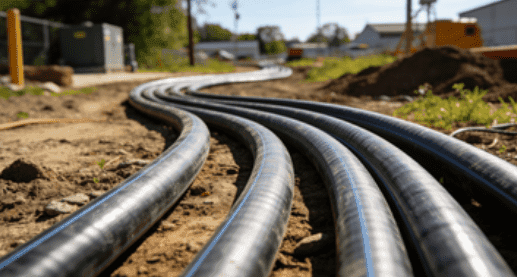
Two quotations for what appears to be the same HDPE pipe can differ significantly because the underlying specifications may not actually be identical.
For example, two suppliers may both quote a 110 mm PE pipe, but one product may be SDR 11 while another is SDR 17.
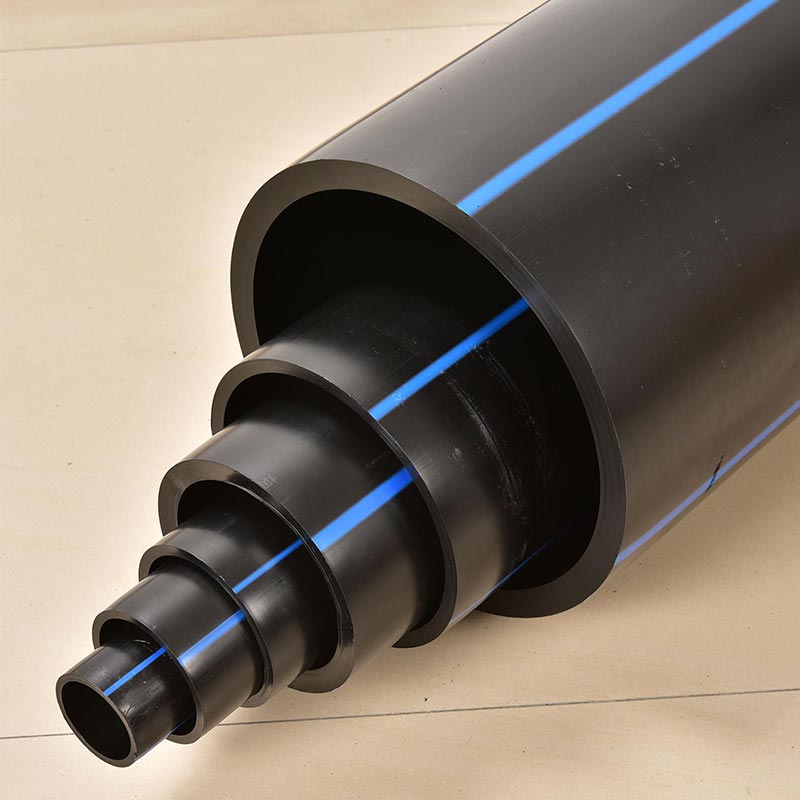
Zenlink’s current PE100 water-supply pipe range illustrates the dimensional difference clearly. Its 110 mm pipe is listed with approximately 10.0 mm nominal wall thickness at SDR 11, compared with 6.6 mm at SDR 17.
That additional wall thickness requires more polyethylene material per meter and also changes the internal diameter of the pipe.
This means a meaningful comparison must consider the complete specification rather than only outside diameter.
Important factors include:
- outside diameter
- SDR or wall thickness
- material grade
- pressure requirement
- pipe form
- total quantity
- fittings
- joining method
- manufacturing standard
- testing requirements
- shipment destination
Without these details, comparing HDPE pipe quotations can be misleading.
Pipe Diameter Is One of the Biggest Cost Factors
Larger-diameter pipe requires substantially more raw material.
As outside diameter increases, both circumference and wall area increase. If wall thickness also rises proportionally, the amount of polyethylene per meter grows rapidly.
This is why moving from a small service pipe to a large municipal water main is not a linear price change.
For example, Zenlink’s PE100 water-pipe range includes outside diameters extending from small-diameter products to large sizes such as 630 mm, 800 mm, 1000 mm and 1200 mm for selected SDR classes.
A larger pipe also influences:
- handling equipment
- storage space
- container utilization
- welding equipment
- excavation width
- installation labor
The commercial impact of diameter therefore extends beyond the pipe itself.
SDR Changes Material Consumption
SDR stands for Standard Dimension Ratio and expresses the relationship between outside diameter and minimum wall thickness.
A lower SDR means a thicker wall for the same outside diameter.
For example:
| OD | SDR 11 Wall | SDR 17 Wall |
|---|---|---|
| 110 mm | about 10.0 mm | about 6.6 mm |
| 160 mm | about 14.6 mm | about 9.5 mm |
| 200 mm | about 18.2 mm | about 11.9 mm |
| 315 mm | about 28.6 mm | about 18.7 mm |
These values correspond closely with Zenlink’s current PE100 product specification table.
Because SDR 11 contains more polyethylene per meter than SDR 17, it generally requires more raw material.
However, buyers should not simply choose the higher SDR to reduce pipe cost.
The selected SDR must still satisfy pressure, temperature and project requirements.
Reducing wall thickness without engineering justification can create far greater lifecycle risk than the initial material savings.
Pressure Rating Influences the Required Pipe Structure
HDPE pressure piping must be selected according to the actual operating environment.
Zenlink’s current PE100 water pipe table lists nominal pressure classes ranging from approximately 0.6 MPa at SDR 26 through 1.6 MPa at SDR 11 for the listed system.
Higher pressure requirements generally lead to thicker walls or different material/design requirements.
When defining pressure needs, project teams should consider:
- normal working pressure
- pump discharge pressure
- static pressure
- elevation changes
- pressure surge
- operating temperature
- testing conditions
This is why a quotation request that only states “HDPE water pipe” is incomplete.
The supplier needs enough technical information to identify the correct pipe class.
PE Material Grade Matters
Raw material is another major factor.
Different polyethylene piping systems may use different PE compound classifications, with PE100 widely used for modern pressure-pipe applications.
Zenlink states that its polyethylene pipes for water supply are manufactured using PE100 raw material.
Material specifications matter because they affect:
- long-term hydrostatic performance
- crack resistance
- pressure design
- processing consistency
- durability
Standards also define requirements beyond simple resin naming.
For example, ASTM D2737 covers pressure-rated PE tubing for water and includes requirements relating to compounds, workmanship, dimensions, sustained pressure, burst pressure and marking.
ASTM F714 similarly covers pressure-rated polyethylene pipe based on outside diameter and includes material and performance requirements.
For procurement teams, material grade should therefore be treated as part of the technical specification, not as a marketing description.
Raw Material Market Conditions Affect Manufacturing Cost
Polyethylene is derived from petrochemical feedstocks, so resin markets can change over time.
Manufacturers may experience changes in:
- PE resin availability
- energy costs
- production demand
- freight conditions
- regional supply
- currency exchange rates
This means an HDPE pipe quotation is usually valid for a defined commercial period rather than indefinitely.
For large infrastructure projects, procurement teams should also consider whether delivery will occur in one shipment or multiple production batches.
A long delivery schedule can expose the project to changing raw-material and logistics conditions.
Straight Pipe and Coil Pipe Have Different Logistics
HDPE pipe can be supplied in straight lengths or coils depending on diameter and wall thickness.
Zenlink currently states that its PE100 water pipes may be supplied in straight lengths such as 6 m or 8 m, while other lengths can be produced according to project needs.
Coiled pipe may be practical for smaller diameters because fewer joints are required over long installation runs.
However, coil size also affects:
- container loading
- unloading equipment
- transport volume
- site handling
- uncoiling procedures
Straight pipe requires more individual sections and generally more field joints, but it may be easier to handle for larger diameters.
The most economical format therefore depends on the entire installation and logistics chain.
Pipe Length Can Affect Installation Efficiency
Standard pipe lengths can influence the number of joints required.
Consider two project options covering the same pipeline distance.
If one configuration uses longer pipe sections, the project may require:
- fewer butt-fusion joints
- less joining labor
- fewer joint inspection points
However, longer sections may also be more difficult to transport or handle.
A complete cost comparison should therefore consider both manufacturing format and site productivity.
Fittings Can Significantly Change Total Project Cost
A pipeline is rarely made from straight pipe alone.
Typical systems may require:
- elbows
- tees
- reducers
- couplers
- flange adapters
- end caps
- transition fittings
- valves
- electrofusion fittings
Complex layouts can require a large quantity of fittings relative to total pipe length.
For this reason, Zenlink’s pipe and fitting solutions should be evaluated as a complete system rather than purchasing pipe first and determining connection components later.
Fitting requirements should ideally be taken from project drawings before a final commercial comparison is made.
Butt Fusion vs Electrofusion Can Affect Project Expenditure
HDPE pipelines commonly use heat-fusion connection technologies.
Zenlink’s PE water-pipe product information identifies electrofusion, butt fusion and hot-fusion socket methods among supported connection approaches.
Each joining method creates different requirements.
Butt Fusion
Butt fusion commonly requires:
- fusion equipment
- trained operators
- pipe alignment
- controlled heating
- cooling time
It can be highly efficient for long continuous pipelines.
Electrofusion
Electrofusion uses specialized fittings containing heating elements.
It may be especially useful for:
- repairs
- branch connections
- restricted installation areas
- complex pipeline layouts
However, electrofusion fittings add individual component costs.
The cheapest pipe quotation therefore does not tell buyers what the completed jointed pipeline will cost.
Pipe Weight Influences Transport
International buyers should pay close attention to pipe weight and shipment volume.
The final freight requirement depends on:
- pipe diameter
- wall thickness
- length
- coil size
- total quantity
- container loading method
Large-diameter pipe may fill a container by volume before reaching its allowable payload.
Smaller dense products may be more limited by weight.
Shipment planning is therefore particularly important for overseas projects.
A supplier capable of optimizing pipe length, stacking and container loading may reduce unnecessary logistics expenditure.
Delivery Destination Matters
The same HDPE pipe order can have different landed costs depending on destination.
International project costs may include:
- inland freight
- port handling
- ocean freight
- insurance
- import duties
- local taxes
- customs clearance
- destination transport
These variables are not properties of the pipe itself, but they affect the buyer’s final project expenditure.
This is why quotations should clearly identify commercial terms and delivery scope.
Quantity Influences Production Efficiency
Order quantity can also affect commercial structure.
Manufacturing lines require:
- setup
- material preparation
- extrusion adjustments
- quality inspection
- packaging
A very small custom production run may distribute setup requirements across fewer meters of pipe.
A larger project quantity may improve production efficiency.
However, larger orders can also create additional warehouse, transport and scheduling requirements.
Instead of asking only for the lowest per-meter figure, buyers should provide the realistic project quantity so suppliers can evaluate manufacturing and logistics efficiently.
Custom Specifications Can Add Complexity
Standard production is generally more efficient than highly customized requirements.
Custom requirements might include:
- special lengths
- unusual dimensions
- special marking
- unique packaging
- specific raw material
- extra testing
- third-party inspection
- project documentation
- custom color
None of these requirements is inherently problematic, but they should be declared before commercial terms are finalized.
Late specification changes often create avoidable production delays and cost adjustments.
Testing and Certification Affect Procurement
Infrastructure projects may require specific inspection and documentation.
Depending on the market and application, buyers may request:
- dimensional inspection
- material certificates
- hydrostatic testing
- batch records
- third-party inspection
- drinking-water approvals
- manufacturing-standard compliance
ASTM D2737, for example, includes requirements related to dimensions, sustained pressure, burst pressure and product marking for covered PE tubing.
ASTM F714 likewise includes material criteria and performance testing for covered PE pipe products.
Where additional inspection is required, it should be stated in the RFQ rather than added after production.
Installation Conditions Affect Total Pipeline Cost
Pipe purchase value is only one component of underground pipeline economics.
Installation conditions can have an equally important influence.
Factors include:
- trench depth
- soil type
- groundwater
- bedding requirements
- traffic conditions
- site accessibility
- excavation method
- fusion equipment
- labor availability
For example, installing a pipeline in open agricultural land is different from installing the same pipe under an urban roadway.
The pipe may be identical, but the installed project cost can be very different.
Hydraulic Efficiency Can Affect Long-Term Operating Cost
HDPE pipe typically has a smooth internal surface, which can help maintain favorable hydraulic performance.
Zenlink highlights the smooth inner wall and low friction characteristics of its PE water-supply pipe as factors supporting fluid transportation and reduced pressure loss.
This matters because pipeline economics continue after construction.
A system that experiences higher friction losses may require more pumping energy over its service life.
Therefore, engineering teams should evaluate:
- internal diameter
- design flow
- velocity
- pressure loss
- pump efficiency
Choosing a smaller pipe merely to reduce initial material expenditure can increase operational energy demand.
Lifecycle Cost Is More Important Than Pipe-Only Cost
For infrastructure procurement, a useful comparison should include the entire lifecycle.
Consider:
Initial Cost
- pipe
- fittings
- transportation
Installation Cost
- excavation
- bedding
- fusion
- labor
- equipment
Operating Cost
- pumping energy
- inspection
- maintenance
Failure Cost
- excavation
- service interruption
- replacement materials
- labor
End-of-Life Considerations
- replacement
- recycling or disposal
A pipeline that offers better long-term reliability may justify a different initial procurement value.
HDPE vs Traditional Pipe Materials
Buyers also commonly compare HDPE with PVC, steel, ductile iron and other materials.
Each has different cost structures.
| Factor | HDPE | Steel | Ductile Iron |
|---|---|---|---|
| Corrosion behavior | Does not rust | Protection usually required | Protection may be required |
| Weight | Relatively low | Higher | Higher |
| Flexibility | High | Low | Low |
| Joining | Fusion possible | Welding/flanges | Mechanical joints |
| Handling | Generally easier | Heavier equipment | Heavier equipment |
| Internal surface | Smooth | Depends on lining | Depends on lining |
| Ground movement tolerance | Relatively good | Application dependent | Application dependent |
The correct choice depends on local engineering requirements.
Price per meter alone cannot determine which material delivers the best project result.
Why Very Low HDPE Pipe Quotes Need Careful Review
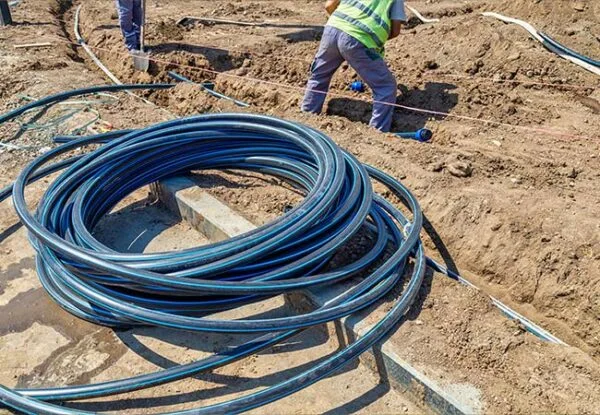
An unusually low quotation is not automatically problematic, but buyers should determine why it is lower.
Possible reasons include:
- different SDR
- lower material content
- different resin grade
- shorter pipe length
- excluded fittings
- excluded testing
- different delivery terms
- reduced documentation
- different applicable standard
The buyer should normalize the technical specification before comparing suppliers.
A useful comparison sheet should place each quotation against exactly the same requirements.
How to Compare HDPE Pipe Quotations Correctly
Use a comparison table such as:
| Requirement | Supplier A | Supplier B | Supplier C |
|---|---|---|---|
| PE grade | |||
| OD | |||
| SDR | |||
| Wall thickness | |||
| Pressure class | |||
| Standard | |||
| Pipe length | |||
| Fittings included | |||
| Testing | |||
| Packaging | |||
| Delivery term | |||
| Lead time |
Once these factors are normalized, the commercial comparison becomes much more meaningful.
What Information Should You Send for an Accurate HDPE Pipe Quote?
A complete RFQ should include as much of the following information as possible:
| RFQ Information | Example |
|---|---|
| Application | Municipal water supply |
| Fluid | Potable water |
| Material | PE100 |
| Outside diameter | 160 mm |
| SDR | SDR 11 |
| Pressure requirement | Project specification |
| Total quantity | Required meters |
| Length | Straight or coil |
| Fittings | Required types and quantities |
| Joining | Butt fusion / electrofusion |
| Standard | Applicable specification |
| Testing | Required inspection |
| Destination | Country and port |
| Delivery schedule | Project timeline |
Zenlink currently provides PE100 polyethylene pipes for water supply for municipal, underground, residential, industrial and water-treatment systems, with multiple SDR and diameter configurations.
Providing complete project information helps avoid repeated specification changes during quotation.
Frequently Asked Questions
Why does HDPE pipe price vary by SDR?
Different SDR values use different wall thicknesses. A lower SDR generally means a thicker wall and more polyethylene material for the same outside diameter.
Does larger HDPE pipe always cost more?
Larger pipe generally requires more raw material and can also increase transportation and handling requirements, although the final commercial calculation depends on the full specification.
Is SDR 11 more expensive than SDR 17?
For the same outside diameter and material, SDR 11 generally contains more polyethylene because of its thicker wall, so manufacturing requirements are typically higher.
Does PE100 affect pipe price?
Raw-material grade is one of the factors affecting manufacturing specification. Buyers should compare pipes with equivalent material and performance requirements.
Are HDPE fittings included with pipe?
Not automatically. Fittings should be identified separately unless the supplier’s quotation specifically includes them.
Does pipe length affect project cost?
Yes. Pipe length can influence transport efficiency, number of field joints, joining labor and site handling.
Why should I include my destination port when requesting a quote?
International freight can represent a meaningful part of landed project expenditure, particularly for bulky large-diameter pipe.
Is the cheapest HDPE pipe always the most economical option?
Not necessarily. Pipe dimensions, pressure capability, fittings, installation, hydraulic efficiency, maintenance and service life should all be evaluated.
Conclusion
HDPE pipe price is determined by far more than pipe diameter.
SDR, wall thickness, PE material grade, pressure requirements, pipe length, fittings, fusion method, quantity, testing, shipment and installation conditions all influence the final project calculation.
For this reason, professional buyers should compare equivalent technical specifications rather than simply comparing a price per meter.
The most useful commercial evaluation considers the entire pipeline system, including installation and long-term operation.
Zenlink’s PE100 water supply pipes are available across multiple diameters and SDR configurations for municipal, building, underground and industrial water systems. The company also supplies related pipe and connection products for complete project requirements.
For independent technical reference, ASTM’s current D2737 specification for PE pressure tubing covers PE compounds, dimensions, sustained pressure, burst performance and marking requirements.
For project-specific pipe selection, contact Zenlink with the required diameter, SDR, pressure, quantity, fittings, applicable standard and destination so the complete piping configuration can be evaluated.