Welcome to our in-depth look at high-quality plastic products and how they are transforming everyday life, industrial applications, and commercial projects. Before you dive in, stay connected with us for expert tips, industry insights, and practical solutions:
· Facebook – Join our community to ask questions and get the latest product updates
· Tiktok – Watch tutorials, installation guides, and project demonstrations
Let’s explore how durable and versatile plastic products can deliver efficiency, reliability, and long-term performance—read on to discover which solutions fit your needs best!
Table of Contents
Selecting the right PE pipe sizes is not simply a matter of choosing a diameter from a product catalog. Pipe diameter, wall thickness, pressure rating, flow demand, installation conditions, and connection method must work together as one system.
For buyers, contractors, and project planners, understanding these basic size concepts can reduce quotation errors, prevent underperforming pipelines, and make communication with a PE pipe supplier much more efficient.
Key points covered in this guide:
- How PE pipe diameter is normally described
- The difference between outside diameter and inside diameter
- How wall thickness affects flow and pressure capacity
- What SDR means when comparing PE pipe sizes
- How to select pipe size for water supply and irrigation
- What information buyers should include in a quotation request
- Common sizing mistakes that can increase project costs
- Frequently asked questions about PE pipe dimensions
What Do PE Pipe Sizes Actually Mean?
PE pipe size usually refers to the outside diameter of the pipe rather than the internal opening through which water flows. This distinction is important because two pipes with the same outside diameter may have different wall thicknesses and therefore different inside diameters.
A thicker pipe wall can improve pressure performance, but it also reduces the available internal flow area. Buyers should therefore avoid selecting a pipe based only on its outside diameter.
Outside Diameter
The outside diameter is measured across the external surface of the pipe. It is commonly used for product identification, fitting compatibility, fusion equipment selection, and manufacturing control.
For many PE piping systems, fittings and fusion machines are matched according to outside diameter. Accurate diameter information is therefore essential when purchasing pipes and fittings from different suppliers.
Inside Diameter
The inside diameter represents the open space available for fluid flow. It changes according to both the outside diameter and the wall thickness.
A larger inside diameter generally allows more water to pass through at the same velocity. However, selecting a larger pipe without checking the complete hydraulic design may increase material, transportation, and installation costs unnecessarily.
Nominal Diameter
Nominal diameter is a convenient designation used to identify a general pipe size. It does not always represent an exact physical measurement.
Buyers should confirm whether a quotation is based on outside diameter, nominal diameter, or another sizing convention. This is particularly important when comparing offers prepared under different standards.
Common PE Pipe Size Concepts Buyers Should Know
Several technical terms appear repeatedly in PE pipe catalogs and project specifications. Understanding these concepts makes it easier to compare products correctly.
Wall Thickness
Wall thickness is the distance between the outside surface and inside surface of the pipe wall. It directly affects pressure resistance, internal diameter, weight, and material consumption.
For two pipes with the same outside diameter, the pipe with the thicker wall usually has a smaller internal flow area and a higher material cost.
Standard Dimension Ratio
SDR is the relationship between the pipe’s outside diameter and wall thickness. A lower SDR usually indicates a thicker wall relative to the outside diameter.
Lower SDR
A lower SDR generally means a thicker pipe wall. It may be selected for higher-pressure systems or more demanding operating conditions, subject to material grade and applicable standards.
Higher SDR
A higher SDR generally means a thinner wall. It can provide a larger internal flow area and lower pipe weight, but it may not be appropriate for the same pressure conditions as a lower-SDR pipe.
Pressure Rating
Pressure rating indicates the level of internal pressure a pipe is designed to handle under specified conditions. It should not be selected independently from material grade, SDR, operating temperature, jointing method, and service requirements.
A pipe that works well in a low-pressure irrigation system may not be suitable for a pressurized municipal water project, even when the outside diameter is identical.
Typical PE Pipe Sizes by Application
The following table provides a general selection reference. It is intended for early project planning rather than final engineering design because actual requirements depend on flow, pressure, distance, elevation, material, and local standards.
| Typical Outside Diameter | Common Application | Installation Form | Main Selection Concern |
|---|---|---|---|
| 20–32 mm | Small irrigation branches, water distribution lines | Coil | Flow demand and connection size |
| 40–63 mm | Farm irrigation, small water supply systems | Coil or straight length | Pressure loss over distance |
| 75–110 mm | Main irrigation lines, residential or rural water supply | Coil or straight length | Flow capacity and pressure rating |
| 125–225 mm | Agricultural mainlines, industrial water, local distribution | Straight length | SDR, fittings, transport and fusion |
| 250–400 mm | Municipal supply, water conservancy and industrial projects | Straight length | Hydraulic calculation and installation equipment |
| Above 400 mm | Large infrastructure and transmission systems | Straight length | Engineering design, logistics and jointing plan |
These ranges are illustrative. A manufacturer’s available PE pipe sizes may vary according to production equipment, product structure, material, and project requirements.
How Do I Choose the Right PE Pipe Size?
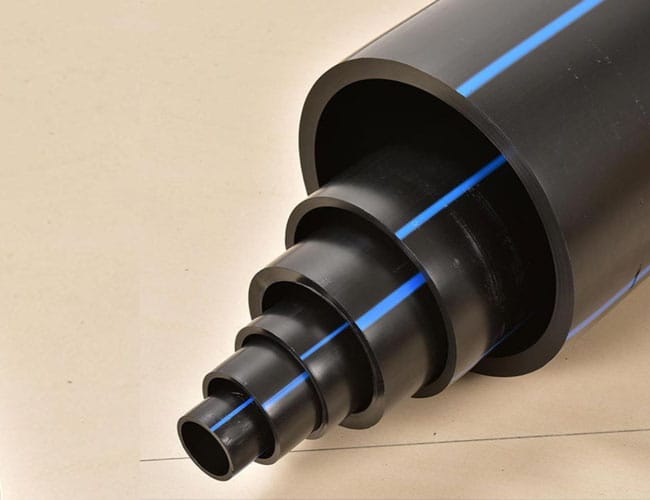
The correct selection begins with the operating conditions rather than the pipe catalog. Buyers should first define what the pipeline needs to do.
Step 1: Confirm the Required Flow Rate
Flow rate describes how much water or fluid must pass through the pipeline within a certain period. A higher flow requirement normally needs a larger internal diameter.
Using a pipe that is too small may increase water velocity and pressure loss. Using a pipe that is much larger than necessary may increase purchasing and installation costs without providing a practical benefit.
Step 2: Measure the Pipeline Length
Long pipelines usually experience more friction loss than short pipelines. A size that works for a short section may not deliver the same pressure at the end of a long route.
For agricultural irrigation, buyers should provide the mainline length, branch length, field area, water source, and expected outlet demand.
Step 3: Check the Working Pressure
Working pressure is one of the most important factors when comparing PE pipe sizes. The selected pipe must support the actual operating pressure, including expected changes during system operation.
Normal Operating Pressure
This is the pressure expected during regular use. It should be clearly stated in the project specification.
Temporary Pressure Changes
Pump starts, valve operation, elevation changes, and sudden flow changes can cause temporary pressure variations. These conditions should be considered during system design.
Step 4: Consider Elevation Changes
Water moving uphill requires additional pressure, while downhill sections may create different pressure conditions. A pipeline that crosses uneven terrain should not be sized using horizontal distance alone.
Providing an elevation profile can help engineers evaluate whether the proposed diameter and pressure class are suitable.
Step 5: Confirm the Connection Method
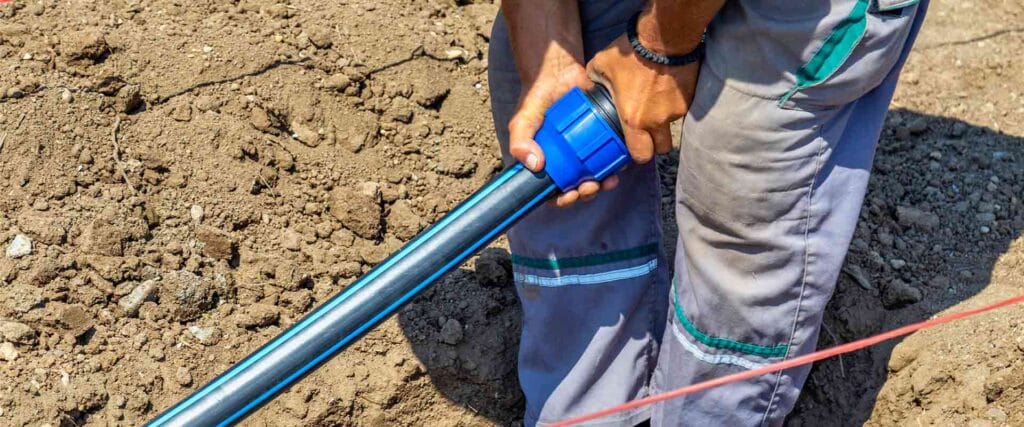
The selected pipe size must match the intended fittings and installation equipment. Common connection methods may include heat fusion, electrofusion, flange connections, or mechanical connections.
Larger PE pipe sizes may require heavier fusion machines, lifting equipment, more working space, and trained installers. These installation factors should be considered before placing an order.
Outside Diameter vs Inside Diameter
Buyers often ask: “If two PE pipes have the same outside diameter, will they carry the same amount of water?”
The answer is not always. If their wall thicknesses are different, their internal diameters will also be different.
| Comparison Factor | Thicker-Wall PE Pipe | Thinner-Wall PE Pipe |
| Outside diameter | Can be the same | Can be the same |
| Inside diameter | Smaller | Larger |
| Material weight | Higher | Lower |
| Potential pressure capability | Generally higher | Generally lower |
| Flow area | Smaller | Larger |
| Cost per meter | Usually higher | Usually lower |
This comparison shows why outside diameter alone cannot determine the final hydraulic performance of a pipeline.
PE Pipe Size vs Flow Capacity
A larger pipe generally provides more internal flow area, but pipe sizing should not be based only on the idea that “bigger is better.”
Undersized Pipe
An undersized pipe may create:
- Excessive pressure loss
- High flow velocity
- Reduced water delivery at the end of the line
- Increased pump energy requirements
- Uneven irrigation performance
- Greater operational stress
Oversized Pipe
An oversized pipe may create:
- Higher product cost
- Higher transportation expense
- Larger fittings and valves
- More expensive installation equipment
- Unnecessary construction difficulty
- Slower return on project investment
Balanced Selection
A balanced design considers both performance and total project cost. The goal is to choose a diameter that delivers the required flow while keeping pressure loss and material cost within an acceptable range.
How to Select PE Pipe Sizes for Water Supply

Water supply systems may serve homes, farms, industrial facilities, rural communities, or municipal networks. Each application has different flow, pressure, safety, and maintenance requirements.
Small Water Distribution Systems
Smaller PE pipe sizes may be suitable for local branches, individual buildings, small farms, or short-distance water delivery.
The buyer should still confirm peak water demand rather than relying only on average daily usage.
Rural Water Supply
Rural projects may involve long distances, uneven terrain, limited maintenance access, and multiple distribution points. Pipe size should be selected with pressure loss and future expansion in mind.
A slightly larger mainline may sometimes provide more flexibility, but the decision should be supported by hydraulic calculations.
Municipal and Infrastructure Projects
Larger projects normally require detailed technical specifications, documented material requirements, pressure testing, compatible fittings, and controlled installation procedures.
The purchasing team should coordinate with project engineers before confirming the final PE pipe dimensions.
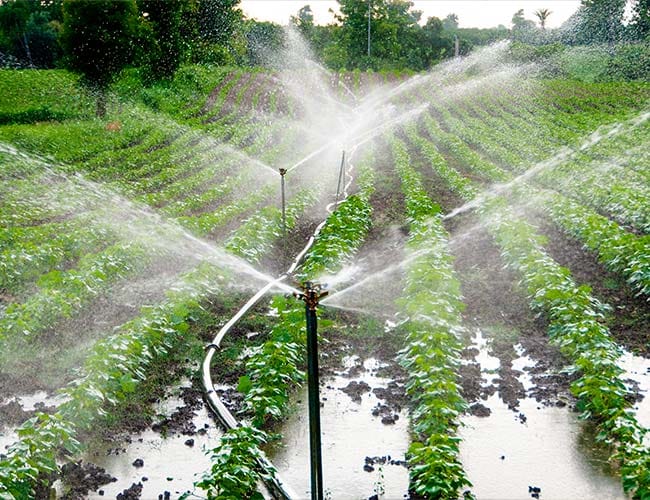
How to Select PE Pipe Sizes for Irrigation
Irrigation systems normally include mainlines, sub-mainlines, laterals, connectors, and water outlets. These parts do not necessarily use the same pipe size.
Irrigation Mainline
The mainline carries water from the source or pump to the larger distribution area. It generally handles a higher total flow than branch lines.
Mainline sizing should consider the total simultaneous water demand of the active irrigation zones.
Sub-Mainline
A sub-mainline distributes water from the mainline to individual field sections. Its diameter depends on the number of laterals, irrigation schedule, and required operating pressure.
Lateral Line
Lateral lines deliver water closer to emitters, sprinklers, or drip lines. They are usually smaller than the mainline but must still maintain acceptable pressure uniformity.
Why Irrigation Pipe Size Matters
When the diameter is too small, outlets near the water source may receive more pressure than outlets at the far end. Correct sizing helps create more uniform water distribution across the field.
PE Pipe in Coils vs Straight Lengths
The delivery form is another important part of PE pipe size selection.
Coiled PE Pipe
Smaller and more flexible PE pipe sizes may be supplied in coils. Coils can reduce the number of joints and may simplify installation on long, open routes.
However, coil diameter, handling method, transport volume, and uncoiling space should be confirmed before shipment.
Straight-Length PE Pipe
Larger or thicker pipes are commonly supplied in straight lengths. Straight pipes are easier to stack and handle in some projects, but they usually require more field joints.
Buyers should confirm the standard pipe length, container loading method, unloading equipment, and storage conditions.
PE Pipe Size Comparison for Different Projects
| Project Type | Typical Priority | Recommended Sizing Approach |
| Small farm irrigation | Affordable distribution and easy installation | Calculate flow by irrigation zone |
| Large agricultural project | Uniform pressure across long distances | Separate mainline, sub-mainline and lateral sizing |
| Rural water supply | Long-distance delivery and elevation control | Evaluate friction loss and terrain |
| Municipal water network | Reliability, pressure and standard compliance | Use professional hydraulic design |
| Industrial water transport | Fluid type, temperature and operating conditions | Confirm compatibility and pressure requirements |
| Water conservancy project | Large flow and project durability | Coordinate pipe, fittings and construction plan |
The table should be used as a planning guide. Final sizing should always reflect the real operating conditions.
What Information Should Buyers Send for a PE Pipe Quote?
A vague request such as “Please quote 100 mm PE pipe” is usually not enough for an accurate quotation.
Buyers should provide the following information:
- Required outside diameter
- Required wall thickness or SDR
- Working pressure
- Material or product standard
- Pipe length or coil length
- Total required quantity
- Intended application
- Required connection method
- Fittings and accessories
- Project location
- Destination port
- Packaging requirements
- Required delivery date
Diameter and Quantity
State the required pipe size and total length clearly. If several sizes are required, prepare a separate list for each diameter.
Pressure and Application
Explain whether the product will be used for water supply, irrigation, industrial transport, drainage, or another application.
Standard and Documentation
Specify any required standard, inspection document, material certificate, test report, marking, or third-party inspection requirement.
Example RFQ Format
A practical request may look like this:
PE water supply pipe, outside diameter 110 mm, required SDR according to a working pressure of 1.0 MPa, total quantity 3,000 meters, straight length preferred, delivery to the specified destination port. Please quote compatible fittings, packaging details, lead time, and available inspection documents.
This type of request allows the supplier to prepare a more complete and comparable offer.
Common Mistakes When Selecting PE Pipe Sizes
Selecting by Diameter Alone
Outside diameter does not provide complete information about wall thickness, pressure performance, or internal flow area.
Always compare diameter, SDR, pressure rating, material, and application together.
Ignoring Pressure Loss
A pipe may have enough theoretical flow area but still lose too much pressure over a long route.
This is especially important for irrigation fields, rural water systems, and pipelines with many fittings.
Mixing Incompatible Pipes and Fittings
Pipe fittings must match the outside diameter, connection method, and technical requirements of the pipe.
Do not assume that fittings from one system will automatically work with every pipe of a similar nominal size.
Using the Same Size Throughout the Entire System
Mainlines, branches, and laterals may require different dimensions. Using one size everywhere can increase costs or reduce system performance.
A properly planned network often uses several PE pipe sizes according to the flow in each section.
Forgetting Transportation Limits
Larger pipes occupy significant container space and may require special loading arrangements.
Before confirming the order, check straight length, coil dimensions, bundling method, container type, unloading equipment, and site access.
How Can Buyers Compare Two PE Pipe Quotations?
Two quotations may appear similar because they list the same diameter, but the products may not be technically equivalent.
Compare the following items line by line:
| Quotation Item | Why It Matters |
| Outside diameter | Confirms basic fitting compatibility |
| Wall thickness | Affects inside diameter and material weight |
| SDR | Helps compare pipe structure |
| Pressure rating | Must match operating conditions |
| Material description | Affects product suitability |
| Standard | Defines dimensional and testing requirements |
| Length | Influences joint quantity and transport |
| Unit weight | Helps identify major specification differences |
| Fittings included | Affects total system cost |
| Packaging | Influences shipping and site handling |
| Inspection documents | Supports quality verification |
| Lead time | Affects project scheduling |
The lowest price per meter may not represent the lowest total project cost. A complete comparison should include fittings, shipping, installation, testing, service, and replacement risk.
A Simple PE Pipe Size Selection Checklist
Before confirming an order, verify the following:
Project Conditions
- What fluid will the pipe carry?
- What is the required flow?
- What is the operating pressure?
- How long is the route?
- Are there major elevation changes?
- Will the pipe be buried, exposed, or suspended?
Product Specifications
- Is the outside diameter clearly stated?
- Is the wall thickness or SDR stated?
- Is the pressure rating stated?
- Is the material clearly identified?
- Are the pipe and fittings compatible?
Delivery Conditions
- Will the pipe be delivered in coils or straight lengths?
- What is the standard length?
- How will the pipe be loaded and unloaded?
- Is special packaging required?
- Are certificates or inspection documents required?
Conclusion
Choosing the correct PE pipe sizes requires more than selecting a number from a catalog. Buyers need to consider outside diameter, inside diameter, wall thickness, SDR, pressure rating, flow demand, route length, elevation, connection method, and delivery form.
For water supply and irrigation projects, the most reliable approach is to define the operating conditions first and then select the pipe dimensions. This avoids overspending on an unnecessarily large pipe while reducing the risk of pressure loss, insufficient flow, or incompatible fittings.
Zenlink supplies polyethylene pipes and related products for water supply, irrigation, industrial, and infrastructure applications. Buyers can submit their required diameter, pressure, quantity, application, and destination to request product recommendations and a project-based quotation.
FAQ
What size PE pipe do I need for water supply?
The required size depends on flow demand, route length, working pressure, elevation, and acceptable pressure loss. A small local supply line and a municipal transmission line cannot be selected using the same assumptions.
Provide the supplier or engineer with the required flow, distance, pressure, and application before confirming the diameter.
Is PE pipe size measured by inside or outside diameter?
PE pipe is commonly identified by its outside diameter. The inside diameter changes according to wall thickness and SDR.
This is why two pipes with the same outside diameter may have different flow capacities.
What is the most common PE pipe size?
There is no single size suitable for every project. Smaller diameters are common in irrigation branches and local water lines, while larger diameters are used for mainlines, municipal networks, and industrial projects.
The most suitable size is the one that meets the project’s actual flow and pressure requirements.
Does a larger PE pipe always provide better performance?
A larger pipe can reduce water velocity and friction loss, but it also increases purchasing, fitting, transport, and installation costs.
The best choice is usually the smallest diameter that can reliably meet the required flow and pressure conditions with an appropriate safety margin.
How does SDR affect PE pipe size?
SDR describes the relationship between outside diameter and wall thickness. For the same outside diameter, a lower SDR generally means a thicker wall and a smaller inside diameter.
Buyers should compare SDR together with pressure rating, material, and operating conditions.
Can I connect PE pipes with different sizes?
Yes, different PE pipe sizes can be connected using suitable reducers, tees, couplings, or transition fittings.
The fittings must be compatible with the selected pipe dimensions, pressure requirements, and connection method.
Should irrigation mainlines and lateral pipes use the same size?
Usually not. The mainline carries a larger combined flow, while laterals carry water to smaller sections or individual outlets.
Using several pipe sizes can improve hydraulic performance and reduce unnecessary material cost.
What details should I provide to get an accurate PE pipe quotation?
Provide diameter, wall thickness or SDR, pressure, quantity, application, length, fittings, required standard, destination, and delivery schedule.
The more complete the request, the easier it is to compare supplier quotations accurately.