Welcome to our in-depth look at high-quality plastic products and how they are transforming everyday life, industrial applications, and commercial projects. Before you dive in, stay connected with us for expert tips, industry insights, and practical solutions:
· Facebook – Join our community to ask questions and get the latest product updates
· Tiktok – Watch tutorials, installation guides, and project demonstrations
Let’s explore how durable and versatile plastic products can deliver efficiency, reliability, and long-term performance—read on to discover which solutions fit your needs best!
Table of Contents
Key Takeaways in This Guide
- Why safety debris netting is critical for modern construction projects
- International safety standards and compliance requirements
- How safety debris netting reduces accidents and liability risks
- Material comparisons for different construction environments
- Wind load, tensile strength, and UV resistance considerations
- Best installation practices for scaffolding and high-rise projects
- Cost analysis and long-term ROI for contractors
- Smart safety netting technologies and future market trends
- Real project case studies from industrial and commercial construction sites
- FAQ covering practical buyer and contractor questions
Introduction

Construction sites are becoming taller, faster, and more complex than ever before. As global urbanization accelerates and infrastructure investment continues to grow, the importance of workplace safety has become a major priority for contractors, developers, and government regulators. One overlooked falling object from a scaffold or high-rise structure can result in severe injuries, expensive lawsuits, delayed projects, or even permanent site shutdowns.
This is why safety debris netting has become an essential protection system across modern construction sites. From commercial skyscrapers and bridge projects to industrial plants and residential developments, debris netting serves as the first line of defense against falling materials, airborne dust, and accidental tool drops.
According to occupational safety reports from multiple international construction organizations, falling objects remain one of the leading causes of construction injuries worldwide. Industry data suggests that properly installed netting systems can reduce falling-debris-related incidents by more than 70% on active worksites.
Today’s construction industry demands more than basic protection. Modern projects require:
- High-strength impact resistance
- UV and weather durability
- Fire-retardant performance
- Wind-load stability
- Easy installation and maintenance
- Compliance with OSHA, EN, and ISO safety standards
As a result, the global market for safety protection systems continues to expand rapidly. Analysts project that the construction safety equipment market could exceed USD 15 billion within the next decade, driven largely by stricter regulations and increasing investment in smart infrastructure.
For contractors, project managers, and procurement teams, understanding how to choose the right safety debris netting system is now a critical part of risk management and operational efficiency.
Understanding Safety Debris Netting
What is Safety Debris Netting?
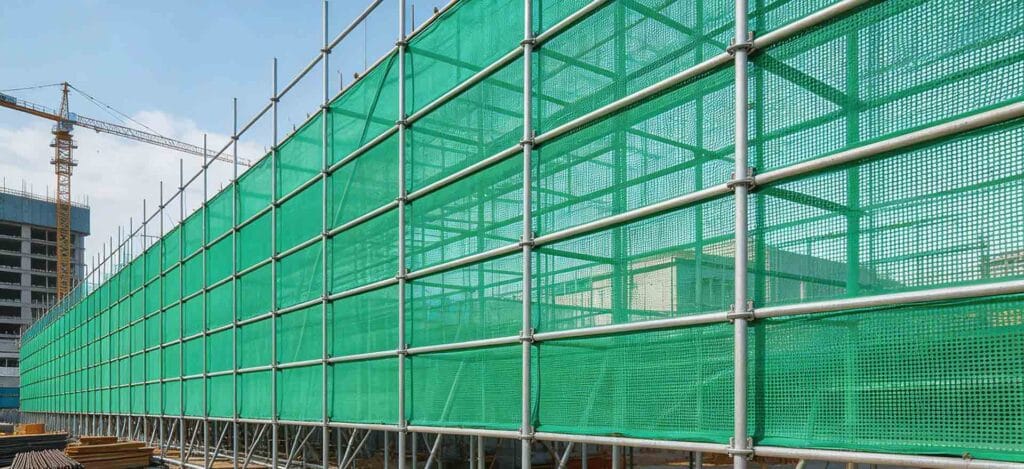
Safety debris netting is a protective mesh system installed around scaffolding, elevated work platforms, and construction perimeters to prevent falling materials from injuring workers or pedestrians below.
The netting acts as a containment barrier capable of catching:
- Small debris particles
- Construction waste
- Hand tools
- Loose building materials
- Dust and lightweight fragments
Unlike rigid barriers, netting allows airflow and visibility while maintaining effective containment.
Core Purpose of Safety Debris Netting
Modern construction environments involve constant movement of equipment and materials. Debris netting provides multiple safety benefits simultaneously:
- Protects workers below elevated work areas
- Reduces liability exposure for contractors
- Minimizes public safety risks near urban construction zones
- Helps projects comply with local safety regulations
- Controls dust dispersion and environmental contamination
In dense urban environments, debris protection systems are often legally required before exterior construction work begins.
Evolution of Safety Debris Netting Technology
Traditional Protection Systems
Earlier construction sites relied heavily on:
- Wooden barricades
- Metal guardrails
- Canvas barriers
- Temporary fencing
While these systems offered limited protection, they lacked flexibility and efficient debris containment.
Modern High-Performance Netting
Today’s netting systems incorporate advanced polymer engineering:
- UV-stabilized polypropylene fibers
- Flame-retardant coatings
- Reinforced edge borders
- High-tensile woven structures
- Anti-tear mesh patterns
Modern systems are engineered to withstand harsh weather, prolonged exposure, and heavy construction use.
International Standards and Compliance
OSHA Requirements
In the United States, OSHA requires construction employers to protect workers from falling objects using systems such as:
- Toe boards
- Canopies
- Debris nets
- Guardrails
Failure to comply may result in substantial fines and project shutdowns.
European Safety Standards
European projects commonly follow EN standards including:
| Standard | Purpose |
|---|---|
| EN 1263-1 | Safety net performance requirements |
| EN 1263-2 | Installation and testing standards |
| ISO 1806 | Tensile testing for net materials |
| ISO 2307 | Rope and mesh testing methods |
These standards ensure reliable load capacity and durability performance.
Fire Retardancy Requirements
Many public infrastructure projects now require flame-retardant debris netting, particularly for:
- Tunnel construction
- Petrochemical facilities
- Airports
- High-rise towers
Fire-rated netting helps reduce secondary hazards during emergencies.
Types of Safety Debris Netting

Knitted Safety Debris Netting
Knitted netting offers excellent flexibility and tear resistance.
Advantages
- Lightweight structure
- Easy installation
- Good airflow performance
- Suitable for temporary scaffolding systems
Woven Safety Debris Netting
Woven netting provides higher tensile strength and durability.
Applications
- Industrial construction
- Long-term infrastructure projects
- High-wind environments
- Bridge construction
Flame-Retardant Netting
Special chemical treatments improve fire resistance.
Typical Usage
- Oil and gas facilities
- Shipyards
- Chemical plants
- Subway construction projects
Dust-Control Netting
Fine-mesh debris netting helps reduce airborne dust emissions.
Benefits
- Improves environmental compliance
- Reduces neighborhood complaints
- Enhances worker breathing conditions
Material Analysis for Safety Debris Netting
Polypropylene Netting
Polypropylene is among the most common materials used in construction safety netting.
Key Characteristics
- Excellent UV resistance
- High tensile strength
- Lightweight structure
- Cost-effective production
Polyethylene Netting
Polyethylene provides excellent moisture and chemical resistance.
Ideal Applications
- Coastal construction
- Humid climates
- Chemical exposure environments
Nylon Netting
Nylon netting is valued for flexibility and impact absorption.
Advantages
- Superior elasticity
- High shock absorption
- Suitable for heavy falling debris
Technical Performance Metrics
Tensile Strength
Tensile strength determines how much force the net can withstand before failure.
| Material | Average Tensile Strength |
|---|---|
| Polypropylene | 55–75 MPa |
| Nylon | 70–95 MPa |
| Polyethylene | 20–40 MPa |
Higher tensile values are preferred for high-rise projects.
UV Resistance
Extended sun exposure can degrade low-quality netting.
Professional-grade systems typically include:
- UV stabilizers
- Anti-oxidation additives
- Heat-resistant coatings
High-quality UV-treated netting can maintain performance for 3–5 years outdoors.
Wind Load Performance
Wind load is critical for skyscraper projects.
Netting systems must withstand:
- Dynamic wind pressure
- Storm conditions
- Structural movement
Improperly secured netting can create dangerous sail effects during high winds.
Safety Debris Netting Installation Best Practices
Scaffolding Integration
Proper integration with scaffolding systems is essential.
Recommended Practices
- Use reinforced attachment points
- Maintain consistent tension
- Avoid oversized unsupported spans
Edge Protection Systems
Perimeter edges are the highest-risk areas.
Netting should extend beyond working zones to maximize falling object capture capability.
Overlap and Coverage
Industry best practice recommends:
- Minimum overlap: 10–15 cm
- Continuous perimeter coverage
- Gap-free corner installation
Inspection Protocols
Daily inspection routines help identify:
- Fraying
- UV degradation
- Loose connectors
- Torn mesh sections
Routine inspections dramatically reduce failure risks.
Wind Engineering and Aerodynamic Considerations
Wind Pressure Challenges
Tall buildings generate strong upward and lateral wind forces.
Engineers evaluate:
- Wind tunnel simulation data
- Local climate patterns
- Building orientation
Mesh Density vs Wind Resistance
Higher-density mesh improves debris containment but increases wind resistance.
| Mesh Type | Airflow | Debris Control |
|---|---|---|
| Fine Mesh | Lower | Excellent |
| Medium Mesh | Balanced | High |
| Wide Mesh | High | Moderate |
Choosing the correct balance is critical.
Applications Across Different Industries

High-Rise Commercial Construction
Debris netting protects both workers and surrounding pedestrian traffic.
Bridge and Infrastructure Projects
Bridge projects require heavy-duty netting systems capable of withstanding high wind exposure.
Industrial Facilities
Factories and refineries use flame-retardant netting for enhanced safety compliance.
Shipbuilding and Marine Projects
Marine environments demand corrosion-resistant netting systems with superior moisture resistance.
Smart Safety Debris Netting Systems
Sensor-Integrated Netting
Emerging technologies now integrate sensors capable of monitoring:
- Net tension
- Structural movement
- Wind load stress
- Impact events
IoT Safety Monitoring
IoT-connected systems provide:
- Real-time alerts
- Maintenance scheduling
- Predictive failure analysis
This improves site safety management efficiency.
Environmental Benefits
Dust Reduction
Fine debris netting significantly reduces airborne particles.
Environmental studies show:
- Dust emissions reduced by 40–60%
- Improved nearby air quality
- Better compliance with urban environmental regulations
Noise Reduction
Dense mesh systems can also reduce construction noise levels.
Economic Benefits of Safety Debris Netting
Reduced Accident Costs
Construction accidents create major financial losses:
- Medical expenses
- Legal claims
- Insurance increases
- Project delays
Preventative safety systems reduce these risks substantially.
Lower Maintenance Costs
High-quality netting requires less replacement and maintenance over time.
Increased Productivity
Safer work environments improve worker confidence and operational efficiency.
Real Construction Case Studies
Singapore High-Rise Tower Project
A 42-story commercial tower implemented reinforced polypropylene netting systems.
Results
- 82% reduction in falling debris incidents
- Improved compliance audit scores
- Faster scaffold inspection approvals
European Bridge Renovation
A major bridge repair project utilized flame-retardant woven netting.
Outcomes
- Zero public safety incidents
- Reduced dust contamination
- Successful compliance with EU safety standards
Middle East Infrastructure Expansion
Extreme heat conditions required advanced UV-resistant netting.
Performance
- Maintained structural integrity at 48°C temperatures
- Reduced replacement frequency by 35%
Common Mistakes When Choosing Safety Debris Netting
Ignoring UV Ratings
Low-quality materials deteriorate rapidly under sunlight exposure.
Choosing Incorrect Mesh Size
Incorrect mesh density may compromise either airflow or debris containment.
Improper Installation
Even premium netting fails if installed incorrectly.
Overlooking Fire Safety Standards
Certain industries require certified flame-retardant materials.
Future Trends in Safety Debris Netting
Sustainable Materials
Manufacturers are developing recyclable and biodegradable netting materials.
AI-Assisted Safety Monitoring
AI systems may soon predict net failure risks before damage becomes visible.
Modular Quick-Install Systems
Future designs prioritize:
- Faster installation
- Reduced labor costs
- Reusable modular sections
Conclusion
Modern construction projects require advanced safety systems capable of protecting workers, nearby pedestrians, and valuable infrastructure assets. Properly selected and installed safety debris netting plays a critical role in reducing accidents, improving regulatory compliance, and enhancing overall project efficiency.
As construction technology evolves, debris netting systems are becoming smarter, stronger, and more environmentally sustainable. From high-rise towers and industrial plants to bridge infrastructure and urban redevelopment, high-performance netting solutions remain an essential investment for safe and efficient construction operations.
FAQ
What is the best material for safety debris netting?
Polypropylene is widely preferred due to its strength, UV resistance, and affordability.
How long does safety debris netting last?
High-quality UV-treated netting typically lasts 3–5 years depending on climate and usage conditions.
Is safety debris netting required by law?
Many countries mandate debris protection systems for elevated construction projects.
Can safety debris netting reduce dust?
Yes. Fine-mesh systems significantly reduce airborne construction dust.
What mesh size is best for construction sites?
Medium-density mesh generally provides the best balance between airflow and debris containment.
How often should debris netting be inspected?
Professional sites usually conduct daily visual inspections and detailed weekly safety checks.