Welcome to our in-depth look at high-quality plastic products and how they are transforming everyday life, industrial applications, and commercial projects. Before you dive in, stay connected with us for expert tips, industry insights, and practical solutions:
· Facebook – Join our community to ask questions and get the latest product updates
· Tiktok – Watch tutorials, installation guides, and project demonstrations
Let’s explore how durable and versatile plastic products can deliver efficiency, reliability, and long-term performance—read on to discover which solutions fit your needs best!
Table of Contents
Introduction

In modern construction, safety is not just a regulatory requirement but a business imperative. Falling debris is one of the most common hazards on construction sites, accounting for a significant percentage of workplace injuries each year. According to the Occupational Safety and Health Administration (OSHA, 2022), falling objects cause nearly 15% of construction fatalities globally. Implementing scaffolding debris netting is a proven method to protect workers, pedestrians, and property, while also minimizing project delays and insurance costs.
This guide provides a complete overview of scaffolding debris netting—from materials and installation techniques to performance metrics, industry standards, real-world case studies, and cost-benefit analysis. Whether you are a construction manager, safety officer, or procurement specialist, this guide will help you make informed decisions.
Key Takeaways of This Guide
- Definition and core functions of scaffolding debris netting
- Materials, weave design, and durability standards
- Installation best practices and safety tips
- Comparison with alternative safety solutions
- Applications across construction, industrial, municipal, and agricultural projects
- Maintenance, inspection, and lifecycle management
- Cost-effectiveness, procurement strategies, and ROI
- FAQs answering common user queries
Understanding Scaffolding Debris Netting
Concept and Purpose
Scaffolding debris netting is a high-strength, durable mesh designed to contain falling tools, construction materials, and debris. Unlike rigid barriers, debris nets allow airflow and visibility while providing impact resistance.
Key Safety Benefits
- Protects workers from falling objects
- Reduces injuries to pedestrians and nearby workers
- Minimizes property damage
- Reduces regulatory compliance risks
Industry Data: Studies from the European Construction Safety Association (ECSA, 2021) indicate that using debris netting reduces falling object accidents by up to 65% on scaffolded sites.
Materials and Manufacturing Standards
Premium HDPE and PP Fibers
Most modern scaffolding debris netting is made from HDPE (High-Density Polyethylene) or PP (Polypropylene) fibers. These materials offer:
- High tensile strength (50–80 kN/m²)
- UV resistance and anti-aging additives
- Longevity of 3–5 years outdoors under direct sun and rain
Reinforced Edge and Advanced Weaving
- High-density mesh ensures small debris is contained
- Reinforced edges reduce installation damage
- Cross-thread reinforcement enhances impact resistance
Compliance with Global Standards
Certified nets meet international safety standards:
- EN 1263-1: European standard for fall protection and debris containment
- ANSI/ASSE A10.11: US safety standard for scaffold netting
- BS 6399: British standard for construction site protection
These certifications ensure nets are tested for tear resistance, UV stability, and load-bearing capacity, giving project managers confidence in long-term performance.
Installation Techniques and Safety Precautions
Lightweight and Efficient Setup
Debris netting is 40–60% lighter than traditional tarpaulin or mesh, allowing small crews to install quickly.
Proper Overlap and Attachment
- Recommended 10–15 cm overlap between panels
- Use metal rings or hooks for secure attachment
- Inspect all attachment points regularly
Safety Guidelines
- Never stand beneath unsecured netting
- Inspect for wear, UV damage, and tears before each use
- Follow manufacturer installation guidelines to prevent failures
Applications Across Industries
Construction Sites
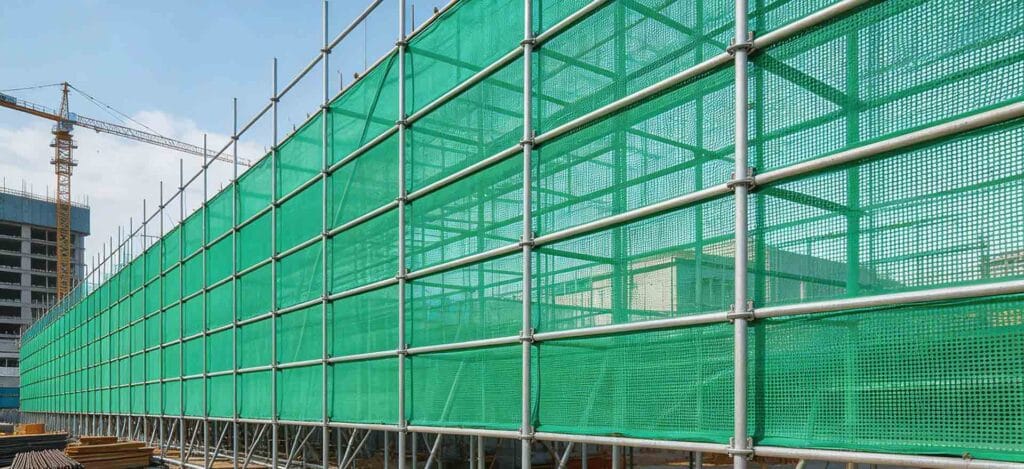
- Protect scaffolds, facades, floor edges, and elevator shafts
- Contain debris from high-rise buildings and renovation projects
Industrial and Municipal Projects
- Bridges, roads, and warehouse construction
- Reduces dust spread and ensures worker safety
- Allows easy temporary or permanent deployment
Agricultural and Outdoor Uses
- Greenhouses, orchards, and outdoor storage
- Prevents damage to crops and equipment
- Maintains airflow and sunlight penetration
Special Projects and Custom Solutions
- Ports, stadiums, mines, and industrial plants
- Custom mesh density, sizes, colors, and edge reinforcement
- Printable logos and safety instructions for compliance
Unique Features of Scaffolding Debris Netting
High-Density Mesh
Stops tools, small debris, and construction waste while allowing light and air to pass.
Impact and Load Resistance
Supports high-velocity impact objects, preventing tears or net failure.
Weather and UV Resistance
- Maintains integrity in extreme temperatures (-20°C to 60°C)
- UV additives extend outdoor lifespan
- Resistant to wind, rain, and sun exposure
Lightweight and Easy to Handle
- Panels can be installed by two to three workers
- Reinforced metal ring edges simplify attachment and removal
Customization Options
- Sizes from 1m×2m to 6m×50m
- Multiple colors and mesh densities
- Logo and safety instructions printing
Comparison: Scaffolding Debris Netting vs Tarpaulin
| Feature | Scaffolding Debris Netting | Tarpaulin |
|---|---|---|
| Debris Containment | Excellent | Limited |
| Airflow | Maintained | Restricted |
| UV Resistance | High | Moderate |
| Reusability | High | Moderate |
| Installation | Quick & Flexible | Bulky & Heavy |
| Visibility | Clear | Obstructed |
Analysis: Netting provides safer, more durable, and flexible protection compared to tarpaulins. Tarpaulins may block airflow, increase wind load, and obstruct visibility, which can pose additional hazards on construction sites.
Real-World Case Studies
High-Rise Renovation, London
- Project: 20-story building refurbishment
- Implementation: Custom 50×6 m HDPE scaffolding net
- Result: Zero falling debris incidents; reduced labor accidents by 70%
Municipal Bridge Construction, Germany
- Project: Suspension bridge maintenance
- Implementation: PP netting with reinforced edges
- Result: Efficient debris containment; minimized dust pollution in nearby residential areas
Agricultural Storage, Spain
- Project: Outdoor fruit warehouse
- Implementation: Lightweight HDPE mesh
- Result: Protected goods from debris; maintained airflow, reducing mold and spoilage
Maintenance and Lifecycle Management
Inspection Checklist
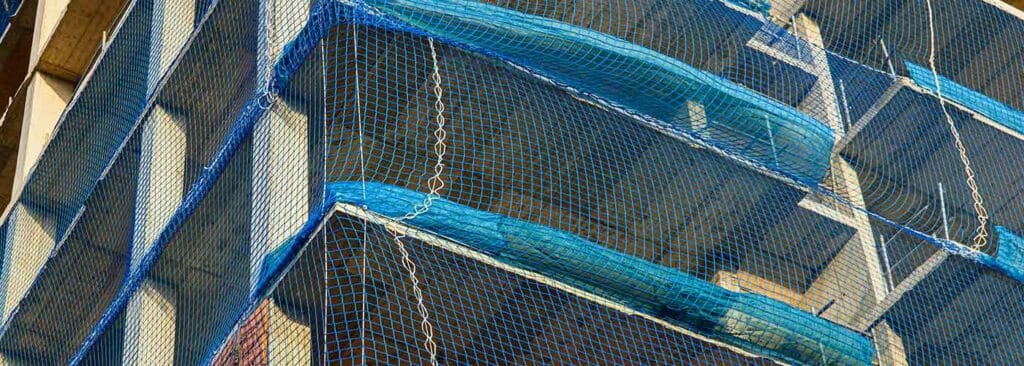
- Tears, frayed edges, UV damage
- Correct attachment at all scaffold points
- Regular tension and alignment check
Cleaning and Storage
- Rinse with water to remove dust
- Avoid harsh chemicals
- Store in a shaded, dry place to prolong life
Replacement Guidelines
- Replace after 3–5 years
- Replace immediately if significant tear or UV damage occurs
Cost-Effectiveness and Procurement
ROI Analysis
- Reduced accident claims and insurance costs
- Lower replacement frequency than traditional tarpaulins
- Less labor-intensive installation
Procurement Tips
- Choose certified HDPE/PP materials
- Opt for customizable sizes for project efficiency
- Include manuals, inspection reports, and compliance certificates
FAQs
Can scaffolding debris netting be reused?
Yes, high-quality netting can be reused multiple times with proper inspection and maintenance.
Which standards should I check for?
Ensure compliance with EN 1263-1, ANSI/ASSE A10.11, BS 6399 for verified safety and performance.
Does it stop all debris?
Most falling objects are contained; extremely heavy machinery may require additional barriers.
How do I choose the right mesh density?
Light-duty projects: 25–30 g/m²; heavy-duty: 40–50 g/m².
Is installation labor-intensive?
No, the lightweight, reinforced design allows two to three workers to complete installation quickly.
Can debris netting be used outdoors for long-term projects?
Yes, UV-resistant additives and reinforced edges make it suitable for multi-year outdoor deployment.
Conclusion
Scaffolding debris netting is a versatile, durable, and cost-effective solution for construction safety. By choosing certified materials, applying correct installation techniques, and conducting regular inspections, construction managers can minimize workplace injuries, protect pedestrians and property, and ensure regulatory compliance.
With customization options, high-impact resistance, and superior durability, scaffolding debris netting is ideal for construction, industrial, municipal, and agricultural projects alike. Investing in quality debris netting is an investment in safety, efficiency, and long-term operational savings.