Welcome to our in-depth look at high-quality plastic products and how they are transforming everyday life, industrial applications, and commercial projects. Before you dive in, stay connected with us for expert tips, industry insights, and practical solutions:
· Facebook – Join our community to ask questions and get the latest product updates
· Tiktok – Watch tutorials, installation guides, and project demonstrations
Let’s explore how durable and versatile plastic products can deliver efficiency, reliability, and long-term performance—read on to discover which solutions fit your needs best!
Table of Contents
Introduction
Global infrastructure development in 2026 is undergoing a significant transformation driven by sustainability targets, urban expansion, water security challenges, and industrial modernization. Among pipeline systems used worldwide, PE (polyethylene) piping has become one of the most strategically important materials in municipal engineering, agriculture, energy distribution, and industrial fluid systems.
When engineers, contractors, or procurement teams search for what is pe pipe, they are typically evaluating more than just material definition—they are assessing performance reliability, installation efficiency, compliance with international standards, and long-term lifecycle cost efficiency.
According to multiple global infrastructure modernization reports, polymer-based piping systems continue to replace traditional metal and concrete pipelines due to:
- Corrosion-free performance in underground environments
- Faster installation using fusion welding systems
- Reduced maintenance cycles over long-term operation
- Improved hydraulic efficiency due to smooth inner wall structure
This extended guide provides a deep technical and procurement-level understanding of PE pipe systems, including engineering principles, cost structures, international standards, application logic, case studies, and industry adoption trends.
Executive Summary: What This Extended Guide Covers
- Engineering definition and molecular structure of PE pipe systems
- PE80 vs PE100 material classification and performance differences
- Global standards and certification frameworks (ISO, EN, GB systems)
- Full lifecycle cost analysis and procurement optimization models
- Installation technologies including fusion welding systems
- Application-specific engineering scenarios across industries
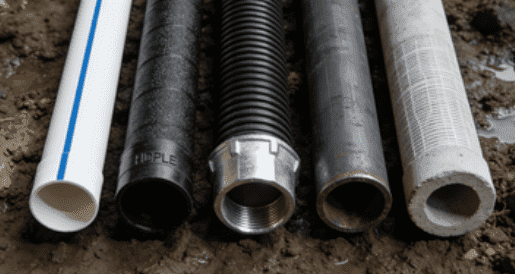
- Comparative analysis with PVC, steel, ductile iron pipelines
- Real-world infrastructure case applications
- Risk assessment and failure prevention strategies
- Market trends and industry adoption forecasts
Global Market Evolution of PE Pipe Systems
Infrastructure Modernization and Material Shift
The global pipeline industry is shifting from rigid material systems to flexible polymer-based systems. PE pipes are at the center of this transformation due to their adaptability in complex environments.
Key global drivers include:
- Aging municipal water infrastructure replacement programs
- Expansion of agricultural irrigation systems
- Increased demand for gas distribution safety upgrades
- Industrial corrosion resistance requirements
Industry White Paper Insight: Water Loss Reduction Strategy
Recent global water management reports indicate that leakage reduction is a major priority in urban infrastructure systems. PE piping systems are widely adopted due to their fusion-welded joint integrity, which significantly reduces leakage risk compared to mechanical joint systems.
What Is PE Pipe? Engineering Deep Definition
Technical Definition
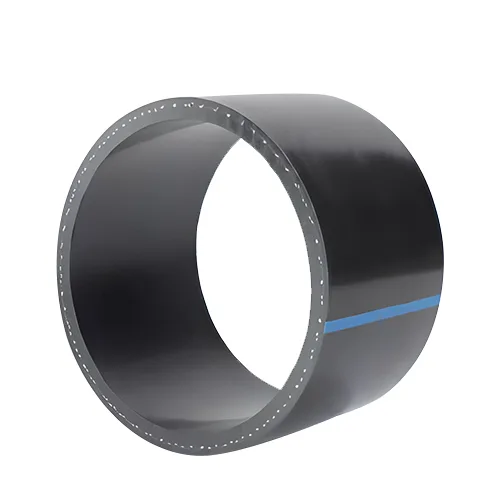
PE pipe is a thermoplastic pressure pipeline made from polyethylene resin, engineered for fluid transport systems under pressure or gravity-based flow conditions.
Molecular Engineering Concept
Polymer Chain Structure Stability
PE pipes are formed by long-chain ethylene molecules that provide flexibility and impact resistance while maintaining structural integrity under load.
Hydraulic Efficiency Concept
The smooth inner surface reduces friction loss, improving flow efficiency in water and fluid transport systems.
PE Pipe Classification System (Engineering Grade Structure)
PE80 vs PE100 Engineering Grades
| Material Grade | Density Strength | Pressure Resistance | Application Scope |
|---|---|---|---|
| PE80 | Standard polymer structure | Medium pressure | Rural water systems |
| PE100 | High-density structure | High pressure | Municipal & gas systems |
Engineering Interpretation
Stress Resistance Capability
PE100 systems can withstand higher internal pressure due to improved molecular density and structural alignment.
PE Pipe Standards and Compliance Framework
Global Standard Systems
PE pipes are commonly manufactured under:
- ISO 4427 (Water supply systems)
- EN 12201 (Plastic piping systems)
- GB/T 13663 (China polyethylene pipe standard)
- ASTM D3035 (Pressure pipe classification)
GB/T 13663 Standard Insight
This standard defines:
- Material classification requirements
- Dimensional tolerances
- Pressure rating systems
- Long-term hydrostatic strength testing
Engineering Testing Requirements
Hydrostatic Pressure Test
Ensures pipe integrity under sustained internal pressure conditions.
Environmental Stress Crack Resistance (ESCR)
Evaluates resistance to slow crack growth under environmental stress.
Thermal Aging Test
Simulates long-term temperature exposure effects on material performance.
PE Pipe Manufacturing Process Engineering
Extrusion Production System
PE pipes are manufactured using continuous extrusion technology.
Key steps include:
- Raw resin melting
- Extrusion molding
- Cooling calibration
- Cutting and sizing
- Quality inspection
Fusion Welding Compatibility Principle
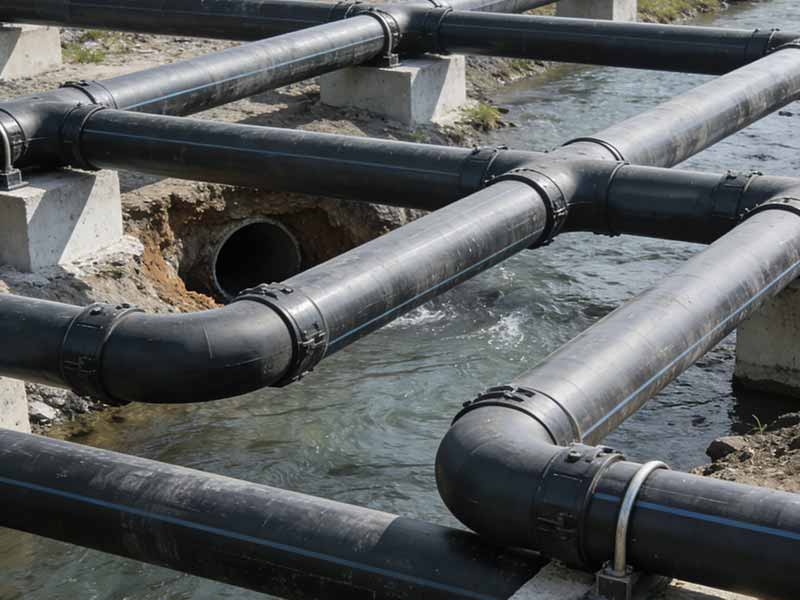
PE pipe systems are designed for thermal fusion bonding, creating a continuous monolithic pipeline system without mechanical joints.
PE Pipe Installation Engineering Systems
Butt Fusion Welding System
Concept: Molecular Bonding Process
Pipe ends are heated and fused under controlled pressure, forming a continuous molecular structure.
Electrofusion System
Embedded heating coils create controlled fusion bonding between pipe sections.
Installation Efficiency Concept
PE systems significantly reduce installation time compared to steel or concrete pipelines due to lightweight handling and modular connection systems.
PE Pipe vs Alternative Pipeline Systems (Advanced Engineering Comparison)
Technical Comparison Table
| Feature | PE Pipe | PVC Pipe | Steel Pipe | Ductile Iron |
| Flexibility | Very High | Medium | Low | Low |
| Corrosion Resistance | Excellent | Good | Poor | Medium |
| Installation Speed | Fast | Fast | Slow | Slow |
| Leakage Risk | Very Low | Low | Medium | Medium |
| Lifecycle Cost | Low | Medium | High | High |
Engineering Concept Analysis
Flexibility vs Structural Rigidity
PE pipes adapt to soil movement, while rigid systems rely on structural resistance, increasing failure risk under ground shift conditions.
Cost Structure of PE Pipe Systems
Full Cost Breakdown Model
| Cost Component | Description | Impact Level |
| Raw Material | HDPE resin cost | Very High |
| Manufacturing | Extrusion process | High |
| Pressure Class | PN rating system | High |
| Installation | Fusion welding labor | Medium |
| Logistics | Transport & handling | Medium |
| Compliance | Testing & certification | Medium |
| Maintenance | Lifecycle servicing | Low |
Cost Engineering Insight
Material Grade Influence
Higher PE grades (PE100) increase upfront cost but reduce long-term maintenance expenses.
Application Engineering of PE Pipe Systems
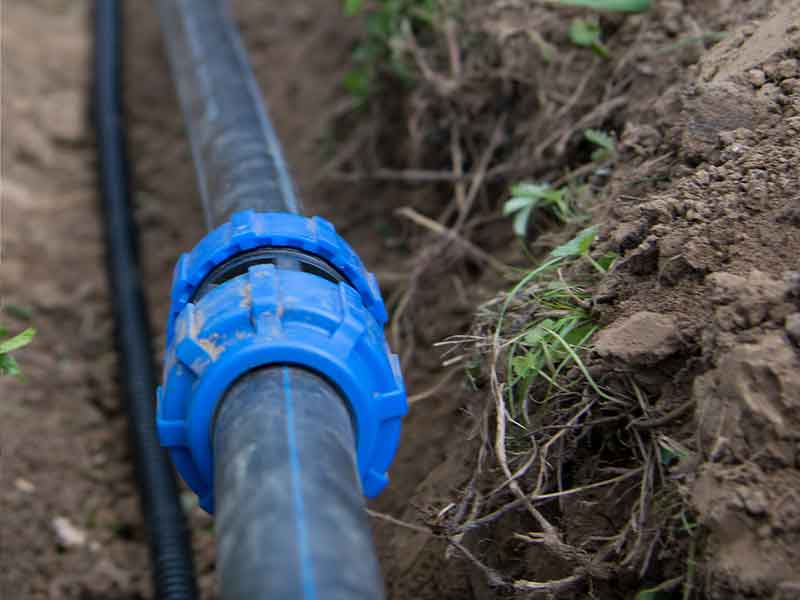
Municipal Water Supply Systems
PE pipes are widely used due to:
- Leak-free fusion joints
- Corrosion resistance
- Long-term durability
Gas Distribution Systems
Safety Engineering Concept
PE pipes reduce leakage risk in underground gas systems due to seamless fusion connections.
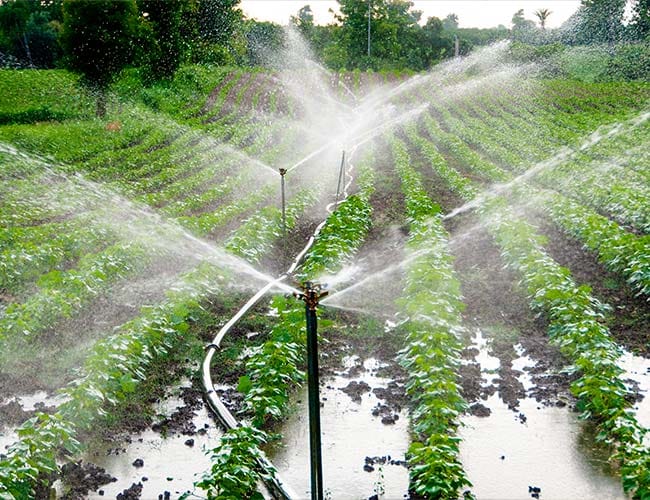
Agricultural Irrigation Systems
Concept: Controlled Water Efficiency Network
PE pipes enable efficient irrigation with reduced pressure loss and flexible installation layout.
Industrial Fluid Systems
Used in:
- Chemical transport
- Cooling water systems
- Wastewater discharge
Real Engineering Case Studies
Case Study 1: Urban Water Network Replacement
A municipal authority replaces aging steel pipelines with PE systems.
Key results:
- Reduced leakage rates
- Lower maintenance frequency
- Improved water distribution efficiency
Case Study 2: Agricultural Irrigation Expansion
Large farmland adopts PE pipe systems for scalable irrigation.
Benefits:
- Rapid deployment
- Flexible terrain adaptation
- Reduced installation cost
Case Study 3: Industrial Chemical Transport System
Factories use PE pipes for corrosion-resistant chemical fluid transport.
Risk Analysis and Engineering Failure Prevention
Key Risk Factors
- Improper fusion welding
- Incorrect pressure class selection
- Poor soil condition assessment
- Thermal expansion mismanagement
Failure Prevention Strategy
Engineering Verification System
Proper testing ensures:
- Joint integrity
- Pressure resistance
- Long-term durability
PE Pipe Lifecycle Cost and ROI Model
Lifecycle Cost Components
- Initial procurement cost
- Installation cost
- Maintenance cost
- Replacement cost
ROI Optimization Concept
PE pipe systems reduce lifecycle cost through:
- Minimal leakage maintenance
- Long service life
- Reduced installation labor
Procurement Decision Framework for Buyers
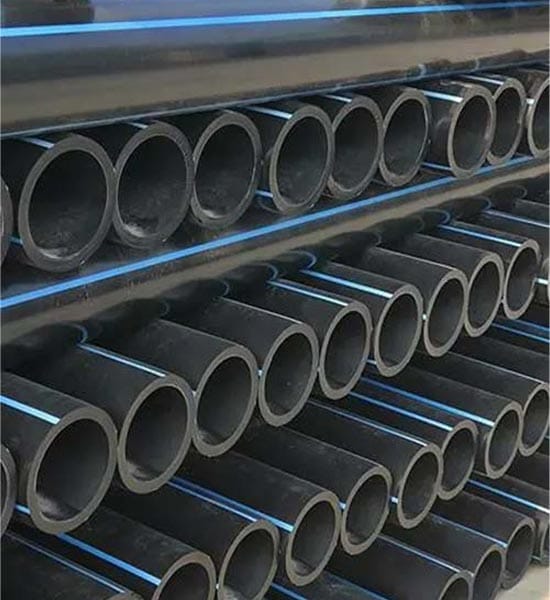
Key Buyer Questions (Search Intent Based)
- “What is PE pipe used for in water systems?”
- “Which PE pipe grade should I choose?”
- “Is PE pipe better than PVC for underground use?”
- “How long does PE pipe last in real projects?”
Engineering Selection Checklist
Pressure Requirement Analysis
Select pipe class based on internal system pressure.
Environmental Assessment
Evaluate soil chemistry and temperature conditions.
Application Matching
Match PE grade to municipal, industrial, or agricultural use.
Conclusion
Understanding what is pe pipe is essential for modern infrastructure planning, procurement decision-making, and engineering system design. PE pipe systems provide a high-performance solution that combines flexibility, corrosion resistance, installation efficiency, and long-term cost optimization.
As global infrastructure continues to evolve toward sustainable and efficient systems in 2026, PE piping technology will remain a foundational component in municipal, industrial, agricultural, and energy pipeline networks worldwide.
FAQ
What is PE pipe mainly used for?
PE pipes are used in water supply, gas distribution, irrigation, and industrial fluid transport systems.
Is PE pipe safe for drinking water?
Yes. When manufactured under ISO and GB standards, PE pipes are widely used in potable water systems.
What is the difference between PE80 and PE100?
PE100 has higher density and pressure resistance, making it suitable for high-demand engineering systems.·
Can PE pipe be used underground?
Yes. PE pipe is widely used in buried pipeline systems due to its flexibility and corrosion resistance.
How long does PE pipe last?
With proper installation, PE pipe systems can operate for long service cycles in underground conditions.
What is the biggest advantage of PE pipe?
The biggest advantage is corrosion-free performance combined with flexible installation and low lifecycle cost.